
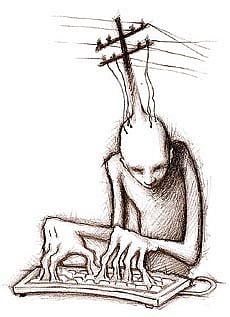
Since they didn't find Bush or bin Laden newsworthy enough to put on their year-end cover, Time magazine decided to name "You" the person of the year. 'You' is anyone using Web 2.0 technologies – web platforms that allow for ordinary individuals to be both creators and consumers of media, thus empowering anyone and everyone. The Indian media jumped on this bandwagon, including 'You' in a number of its own year-end lists. This could have been an opportunity to look into issues such as the digital divide, Jurassic-era e-governance in the time of Web 2.0, or even what Web 3.0 would entail. But the overarching concern in the mainstream papers and online was that 'bloggers can write anything they want without fear of law'. Reminders were also ubiquitous of cases such as that of the social networking site Orkut, which has been getting in trouble in India this winter for its 'Dawood Ibrahim fan club'.
Such coverage of new, web-based media, especially on the part of Indian television channels, perhaps came from the experience of having been at the receiving end of unflattering if not sometimes slanderous comments on a blog called 'War for News'. This blog (from web log) is almost dead now, as the journalist who runs it is rumoured to have been found out and threatened. 'War for News' would pronounce regular judgements on the coverage of events on TV news and make comments about the capabilities of a reporter or the pronunciation of an anchor that were not taken kindly. What was worse, the blog would refuse to censor objectionable anonymous comments on its posts that often had to do with who was sleeping with whom. The blog claimed to be committed to free speech, but it left a bad taste in the mouth of those at the receiving end of its attentions.
"Why is there so much hate and venom on blogs?" "Why do blogs hate the mainstream media?" I was asked these questions on a TV show the day Time came out with its 'You' gimmick, and I was expected to defend the blogging community against such charges. But I wouldn't: blogs carry hate and venom because there is hate and venom in the real world. The only difference is that the venom now has a medium for expression. While everyone else is exposed to the critical eye of the media, the media itself is used to playing judge, jury and executioner. No wonder, then, that senior journalists are feeling uncomfortable at being nonchalantly criticised. Anonymous blogs seem to cause the most unease, but it can be argued that these are the blogs that help push the boundaries of fearless speech.
The conflictual relationship imagined between blogs and mainstream media ('MSM' in blogging lingo) because of the criticism conventional media often faces in the blogosphere ignores the fact that many bloggers in India and across the world are journalists. Indeed, the writer and most readers of 'War for News' were journalists. Recent instances in which plagiarism in film reviews and other articles in the Indian press have been brought to light by bloggers perhaps can also be explained by this close cohabitation. If there is a war, it is as much within as it is without. But the relationship of cooperation between blogs and MSM is one that is often not acknowledged: journalists in India and the world over follow blogs for story ideas, leads and contacts and to track what their audiences are interested in.