
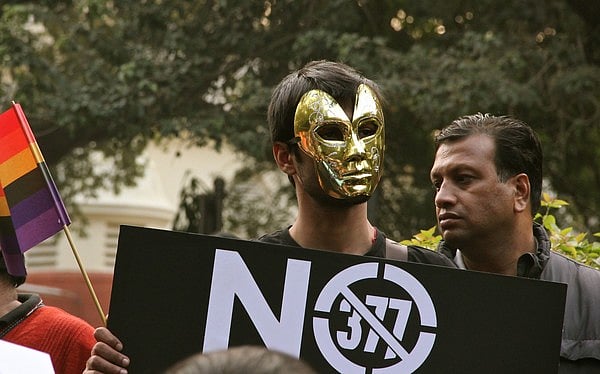
India's Supreme Court's decision on 6 September 2018 to read down the anti-sodomy provisions of Section 377 of the Indian Penal Code was met with widespread celebration among the queer community and its supporters as the culmination of a long struggle by activists. The Raj-era law's prohibition of same-sex sexual activity had hindered efforts for queer justice by treating queers as criminals before the law. Tempering the jubilation of a section of the activists, however, was an awareness of the verdict's limited impact. As many activists and allies celebrated, others stressed the work that remained to be done. Yet, both supporters and critics of the verdict seemed sure that the Court's decision marked a watershed moment in the politics and culture of sex in India. Rightwing opponents warned that it signaled the country's descent into Western-inspired libertinism and sexual perversion. The left saw the decision as a rejection of Victorian sexual mores imposed by the British Empire.
How did a 150-year-old law with few homosexuality-related convictions become the focal point of queer politics in a country of over a billion? First, the paucity of actual convictions under the law belied its use as an instrument of widespread blackmail and intimidation. Its continued existence on the statute books ensured that, in the eyes of the law, queer people remained criminals with little ground to petition for rights and other protections. Also, for activist groups like the Naz Foundation Trust, challenging the validity of the law was a way of bringing the issue of queer rights into the national conversation. A legal victory, they hoped, would allow queer Indians to make themselves seen and known. Coming out of the shadows of a state-mandated closeting would be the catalyst to bring about much needed social change.
But now that Section 377 has been read down, it is worth asking what sort of social change is the legal reform capable of producing. Two facets of the reading down are unlikely to benefit those who most suffered from the law: first, the decision's grounding in the newly-established right to privacy; second, the legal focus on the protection and legitimisation of sexual identities rather than sex acts.
Efforts to repeal Section 377 follow a 'rising tide lifts all boats' tradition of sexual activism. It was this model that propelled many campaigns for same-sex marriage in the West. Though some queer activists in the West had never fought for the right to marry – even vehemently contested its utility – proponents of the effort assured them that they, too, would benefit from the social acceptance for queerness that gay marriage would generate. But sexual identity cuts across all the other identities – class, caste, colour, ethnicity, gender and religion. And like with many instances of legislative or judicial gains, the benefits of social progress with regard to sexuality usually accrue to those that occupy the top of these hierarchies.