
This week at Himal
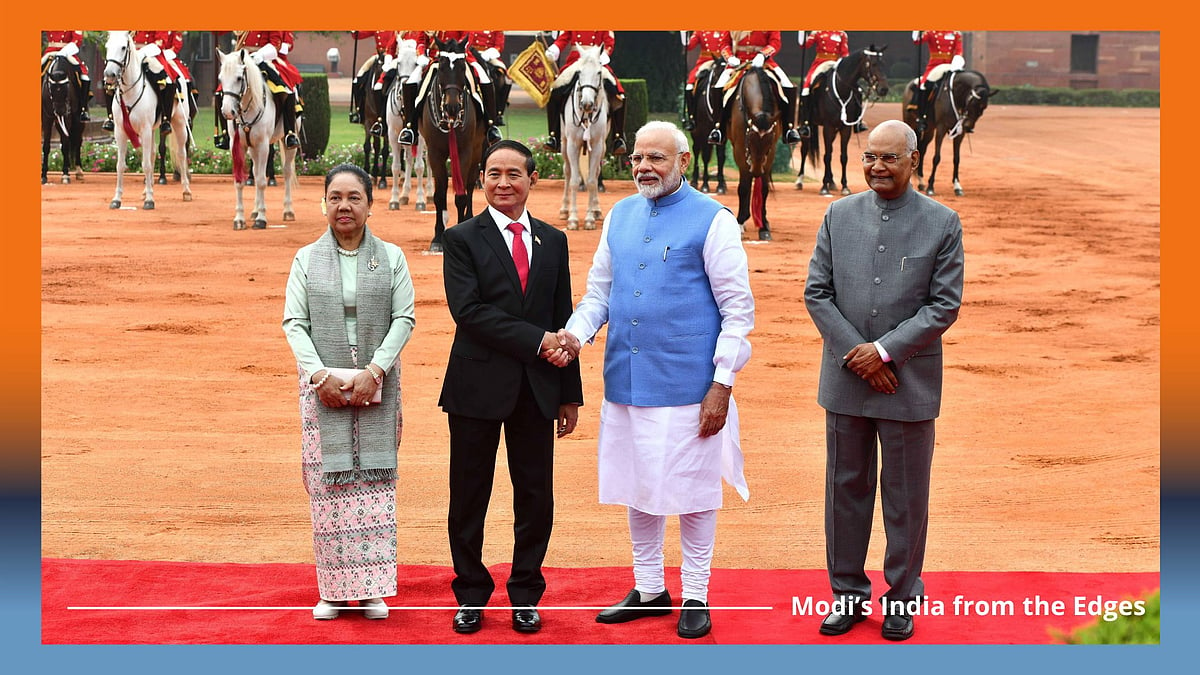
In the latest story from our special series, ‘Modi’s India from the Edges’, Angshuman Choudhury writes that Modi’s reactive policy on Myanmar keeps India from being a constructive force for democracy. India has been slow to realise that the military junta cannot protect its interests.
For episode #4 of the Southasia Review of Books podcast, host Shwetha Srikanthan interviews Siliguri-based poet, writer and essayist Sumana Roy about her latest book “Provincials: Postcards from the Peripheries”. The conversation covered the need to reclaim the dignity of provincial life, accents as a class marker, how letters can reshape narratives of power, and more.
Diwash Gahatraj and Ali Jabbir Malik write about how rising floods and heatwaves are causing habitat loss for snakes, resulting in a surge of snakebites across the region.
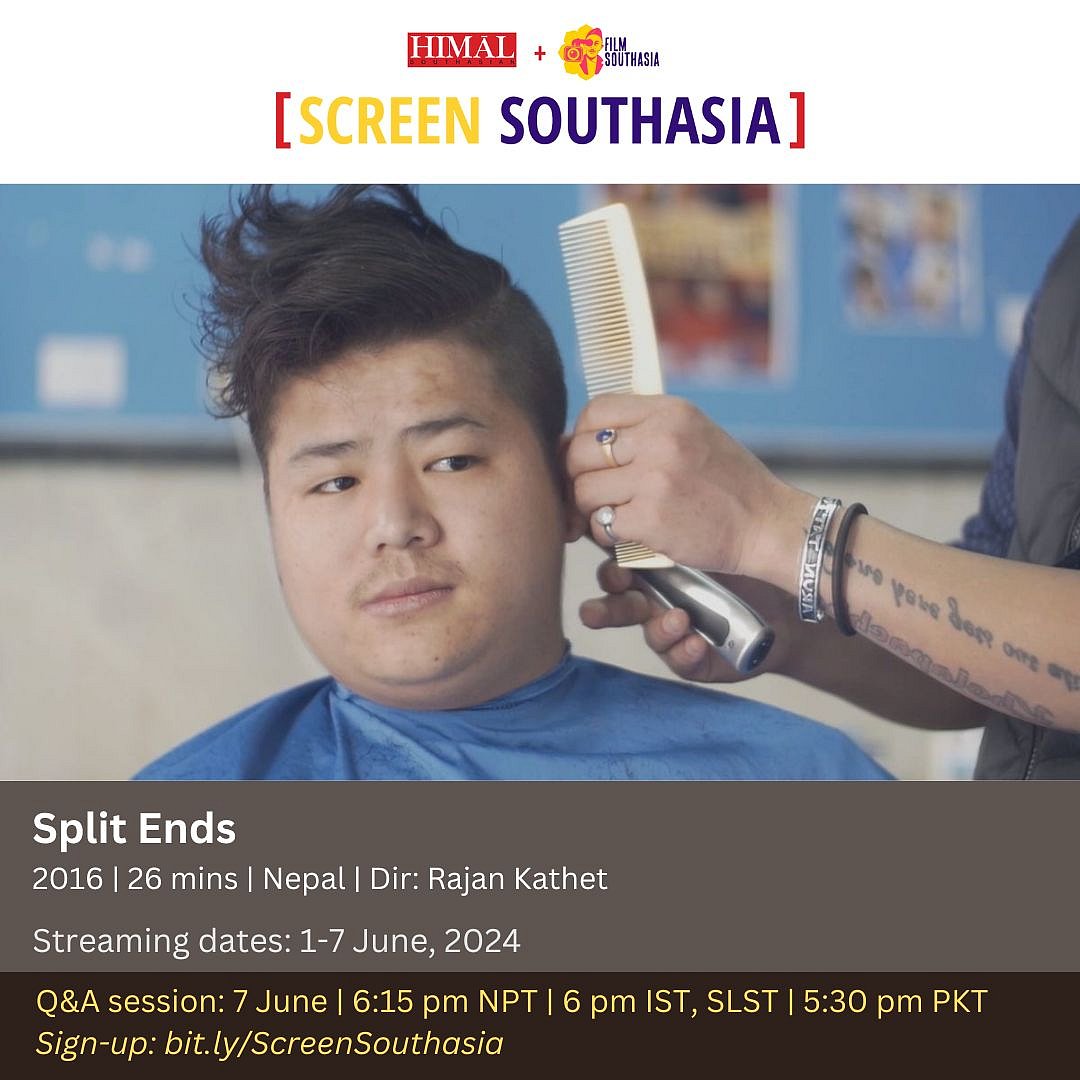
From June 1 to 7, we'll also be screening Split Ends, directed by Rajan Kathet, as part of Screen Southasia, with the Q and A at 6:15 pm Nepal time (6 pm IST). Click here to sign up.
Independent newsrooms like Himal’s need your support to bring out underrepresented perspectives and underreported stories.
Himal does not depend on advertising, corporate support or a restrictive paywall. We need your support as a reader to keep bringing out underrepresented perspectives and underreported stories, and to keep our in-depth, independent journalism open-access and free to read for all. Please contribute to Himal’s fund for the ‘Modi’s India from the Edges’ series – we cannot do this without you!
Also read: Southasia Review of Books Podcast #04: Sumana Roy on literature from the Southasian provinces
Also read: Modi government’s reactive Myanmar policy keeps it from being a constructive force for democracy
Also read: Snakebites surge across Southasia amid rising heat, floods and habitat loss
This week in Southasia
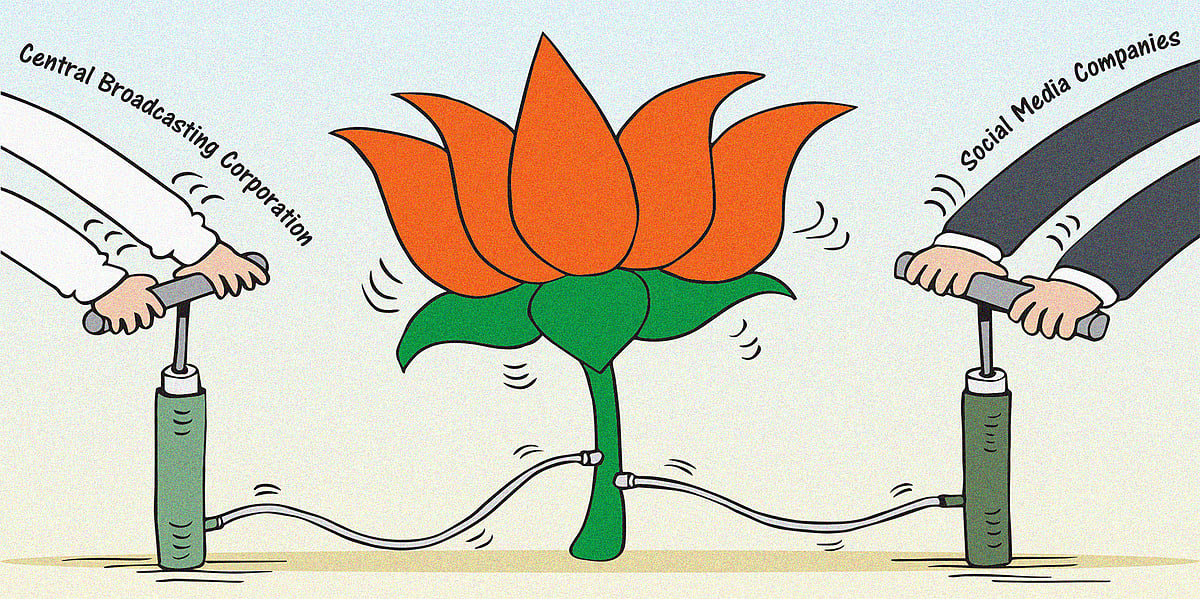
Partisan advertising and India's election
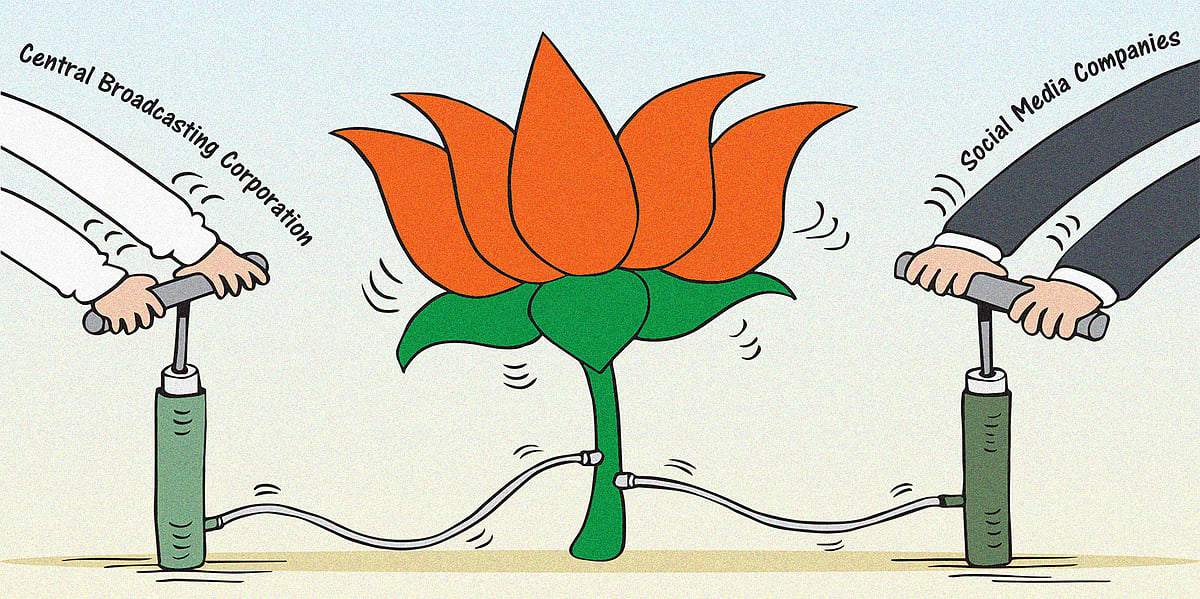
The past week has seen major news stories on the impact of political and partisan advertising on India’s Lok Sabha elections. On 21 May, it was reported that the Indian government agency, the Central Bureau of Communication, spent nearly INR 387 million (USD 4.65 million) on Google advertisements that echoed Bharatiya Janata Party campaign slogans, with the supposedly neutral government agency using public funds for the governing party’s campaign. This also made the CBC the highest spender on Google ads between November and March, outspending both the BJP which spent INR 314 million (USD 3.7 million) and all of India National Congress' ad spend on Google over 6 years.
Simultaneously, Meta approved a series of AI-manipulated political advertisements that spread disinformation about Indian opposition leaders and incited violence against Muslims. The advertisements were submitted to Meta’s ad library by civil society and corporate accountability watchdogs to test Meta’s mechanisms for detecting and blocking hate speech and disinformation during the election period. This election also saw multiple uses of AI-generated content during campaigning, including deepfake (digitally manipulated) videos showing Indian actors seemingly criticising or campaigning for political parties, despite the Elections Commission warning political parties against using AI-generated content. These reports raise questions about the role that advertising can play in elections, including through disseminating partisan, divisive and misleading political content.

Elsewhere in Southasia 📡
- UN raises alarm over rights violations in Buthidaung near Bangladesh amidst reports of arson attacks, mass displacement of Rohingya as Arakan Army makes gains in the region
- Wife of Kashmir-based poet and journalist Ahmad Farhad says he was abducted after reporting on protests in Pakistan-administered Kashmir. Farhad received threats from Inter Services Intelligence before his disappearance
- New data emerges solidifying claims that Adani group fraudulently sold low grade coal claiming it as high quality fuel in 2014
- More than 300 Pakistani students evacuated from Kyrgyzstan after a mob attacked students in international hostels, leaving more than 30 injured.
- Indian football icon and captain of the national team, Sunil Chhetri announces his decision to retire from international football after India’s World Cup qualification match against Kuwait
- Pakistan’s Punjab Assembly passes defamation bill to penalise those disseminating ‘fake news’ amidst protests from opposition, journalists
- US imposes sanctions on former chief of Bangladesh Army Aziz Ahmed and family members due to involvement in corruption
- Kantipur Media Group chairman Kailash Sirohiya arrested after group publishes reports about Deputy Prime Minister Rabi Lamichchane’s alleged involvement in cooperative scams. Opposition plans street protests
- Maldives reimposes ban on recruitment of Bangladesh-based labourers that was lifted after 4 years in 2023, amidst claims of illegal recruitment
- Daesh/ISIS claims responsibility for attack killing three Spanish tourists and Afghan guide in Bamiyan province, Afghanistan
- Nepal’s prime minister Pushpa Kamal Dahal wins confidence vote despite opposition protest calling for probe on Deputy Prime Minister Rabi Lamichchane
- Sri Lanka’s state intelligence launches probe into four ISIS suspects apprehended in Ahmedabad airport
- At least 66 people die in fresh flooding in Afghanistan’s Faryab province, total death toll in flooding reaches 400
- Sri Lanka’s chief prelates, Hindu Federation write to President seeking presidential pardon for controversial Buddhist monk known for hate speech targeting Muslims
Only in Southasia
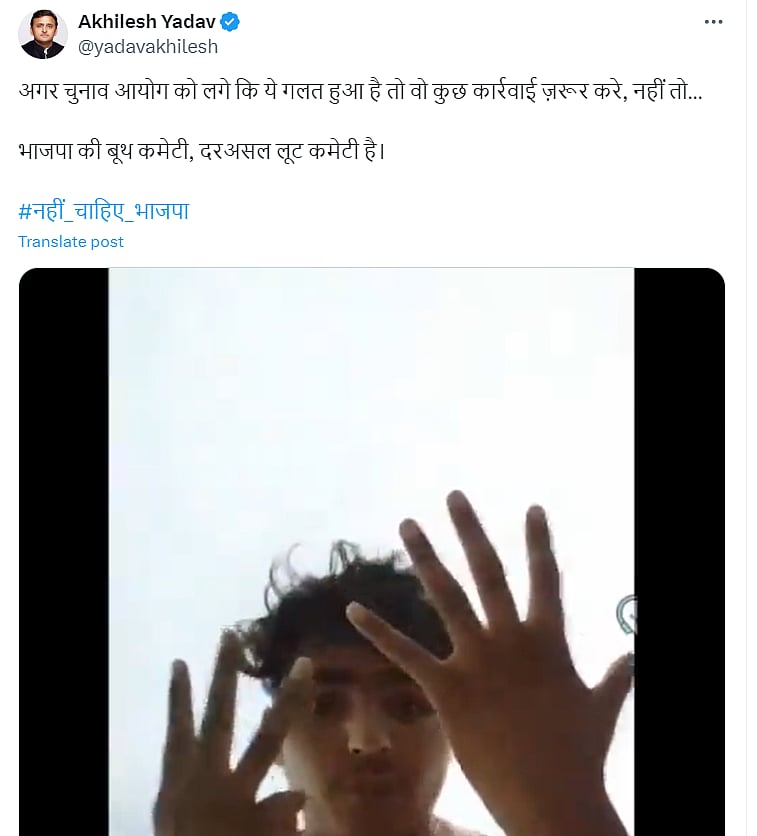
On 19 May, Uttar Pradesh was abuzz when a bizarre video surfaced online showing a youngster voting in India's Lok Sabha elections - eight times. The voting enthusiast posted an entire series on his Facebook profile, helpfully holding up fingers to indicate how many times he had voted, and each time seemingly voting for the BJP. It turned out that the boy was 16 years old (making precisely zero of his votes eligible), and the son of a BJP worker. Upon being questioned, the father promptly explained that his son was voting when the machine was being 'tested'. He added that in some instances, he had also been voting on behalf of disabled voters, claiming the video had been edited to misrepresent the situation. It was hard to see how this could be the case, given the incriminating evidence was uploaded by the culprit himself, and with no other would-be voters in sight. Akhilesh Yadav, president of the Samajwadi party quipped, 'BJP's booth committee is actually a loot committee.'
From the archive
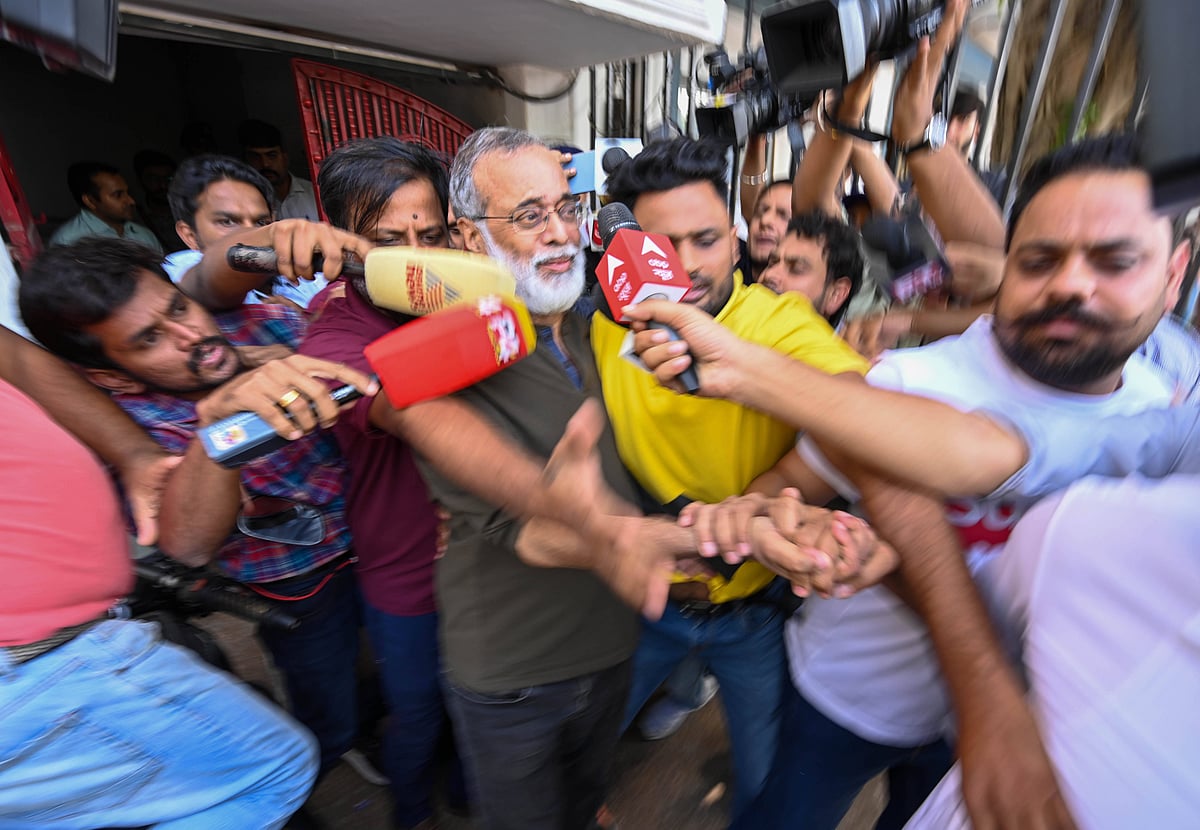
Prabir Purkayastha's fight against two emergencies in India - under Modi and Indira Gandhi (March 2024)
Given news that India's Supreme Court granted him bail last week, Laxmi Murthy's article adds valuable context to the story behind the Newsclick editor's arrest. Murthy reviews two books by Purkayastha that trace his personal and political journey, revealing why both Newsclick and Purkayastha himself became targets, and why his life and mind encompass much more than his multiple arrests.