
IN 2020, at the height of the Covid-19 pandemic, a 17-kilometre bicycle lane was laid along Bengaluru’s Outer Ring Road to serve commuters in the city’s IT corridor. Within two years, the plastic bollards demarcating the track were removed, and by 2023 much of the lane had been dug up to make way for a new metro line. Only a fading “Cycles Only” signboard marked its brief existence. Meanwhile, the Bengaluru Metro, the expansion of which consumed the cycling track, has become India’s most expensive mass transit system, pricing out low-income communities even as it claims to ease congestion. Two decades of unfinished construction have left rubble, felled trees, fractured public spaces and recurring protests in their wake.
Cycling tracks and metro lines are not just transport solutions but sites of urban politics, offering vantage points from which to examine how cities are produced, contested and lived. Four recent works on Mumbai, Delhi, Lahore and neo-urban India illustrate this through different modes of mobility and spatial experience. Taken together, they ask what mobility as practice, infrastructure and embodied experience reveals about the making of Southasian cities today. How does walking in gated enclaves, cycling through busy heterogeneous streets, or riding the Delhi or Lahore Metro expose who belongs, who is excluded, and how gender and class shape the ways people inhabit the city amid shifting infrastructures of movement?
These works use mobility as a lens for urban critique, focusing less on transport policy than on how infrastructures and movement reshape material and social life in post-liberalisation cities. They show that mobility infrastructures reflect and reproduce gender and class inequalities while also opening spaces of negotiation, aspiration and belonging. Across these accounts, infrastructure projects appear not so much as solutions to existing needs but as aspirational symbols of “world-class” modernity, highlighting how everyday life, desire and inequality intersect in the Southasian city.
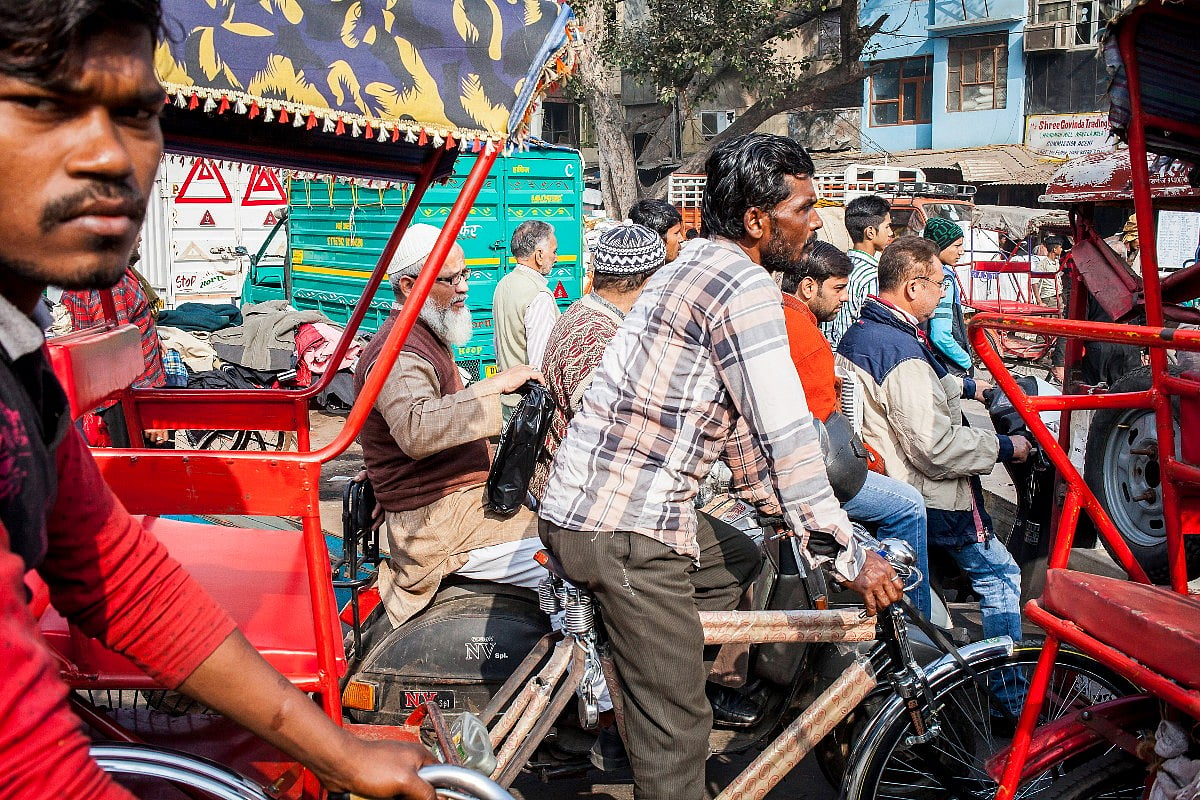
JONATHAN SHAPIRO ANJARIA’S Mumbai on Two Wheels: Cycling, Urban Space, and Sustainable Mobility opens with a simple provocation: if you want safer, more widespread cycling in Indian cities, stop assuming that bicycle lanes are the universal fix. While the disappearance of Bengaluru’s 17-kilometre cycling track spurred campaigns for more segregated lanes, Anjaria shows why that default solution misrecognises how movement actually unfolds on Indian streets. In Mumbai, traffic is heterogeneous, streets are mixed-use and the street edge is a dense zone of overlapping claims. Segregated lanes modelled on Amsterdam or Copenhagen rarely work in this context. What matters more are the “microinfrastructures” and tacit grammar of everyday mobility. This includes the composition of traffic, the unspoken rules through which people negotiate space and speed, and norms governing the use of the curb.