
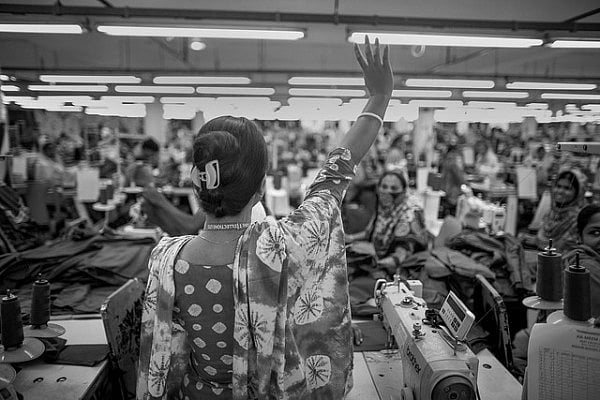
In December 2018 and January 2019, workers from Bangladesh's ready-made garment (RMG) industry went on spontaneous mass protests and strikes around major industrial belts in Dhaka. They were agitating against what they deemed insufficient wage increases, announced by a government-appointed wage board in September 2018, that would go into effect three months later. Garment-factory owners and the Bangladesh government responded with a tried and tested strategy: repression and attack.
As a result, more than 11,000 workers have been terminated from their jobs – many without termination benefits – and thousands more have had criminal cases filed against them. So far, over 50 workers have been arrested and many more live in fear of imminent arrest. At least one worker has been killed, while several others have been assaulted, tear gassed, and shot with water cannons and rubber bullets – sometimes in their own homes.
Unlike past struggles by garment workers, these protests were not organised by the major trade union federations. The government's crackdown on labour activists in 2016, and its handling of the movements for quota reform and road safety ahead of the December 2018 general elections, had sent out a clear message to potential dissidents. Unions got the memo loud and clear. The workers could not, however, be so easily appeased.
With the RMG sector earning over 80 percent of Bangladesh's export revenue in 2017, the government has used rhetoric of external 'infiltration' and 'instigation' to dismiss the legitimate grievances of garment workers. Commerce Minister Tipu Munshi has claimed that, "A certain quarter infiltrated the garment workers' movement and instigated anarchy… to damage the RMG sector." Meanwhile, in the absence of strong trade unions and in the face of brutal repression, workers have had little choice but to take to the streets.