
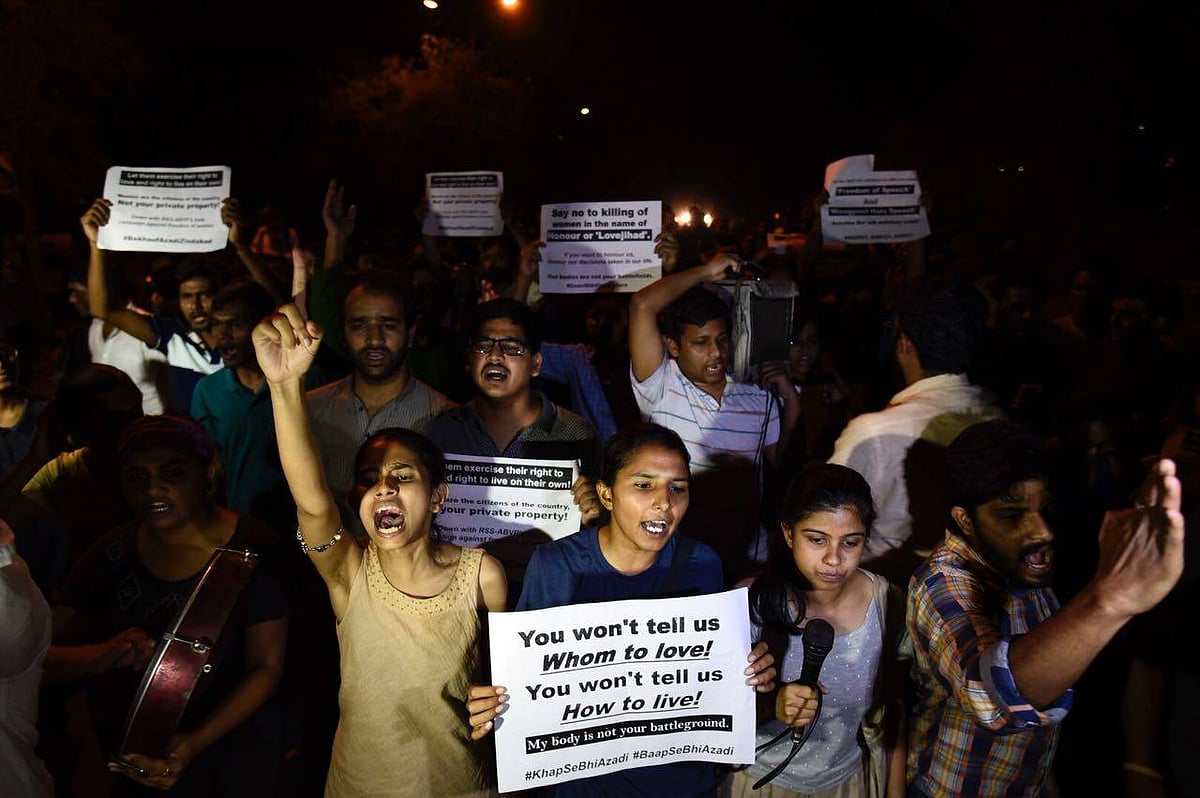
AN ENGINEER IN her mid-twenties, living in Delhi, was contemplating the future of her relationship. They and their partner wanted to settle in their hometown – Dehradun, in Uttarakhand – without getting married. But since Uttarakhand recently passed the Uniform Civil Code (UCC), they worried that this would not be possible. Though their economic and social position allows them to cohabit without much trouble, they worried about registering their relationship with a registrar. “It is, in some strange way, akin to a marriage, where we bring the state in, and not to mention that we need to await the approval of the registrar who may even ‘decline’ us the chance to live together, without any solid reason,” the engineer explained.
On 7 February 2024, Uttarakhand became the first state in India to pass the Uniform Civil Code – a common legislation for all religions on divorce, marriage, inheritance and live-in relationships. Under the UCC, couples wishing to cohabit are expected to submit statements confirming their relationship to a local registrar, who decides whether to “register” the relationship after conducting a summary inquiry. This has caused consternation in many circles. According to Areeba Rahman, a 20-year-old aspiring psychologist, the UCC will be used to “be nosy and interfere in our personal matters.”
The UCC bans polygamy and sets the minimum age for marriage across all faiths: 21 for men and 18 for women. Earlier, specific family and personal laws applied to specific communities, in line with their own practices and beliefs. Uttarakhand’s chief minister has claimed that the UCC will eradicate discrimination against women by establishing common rules for all communities, barring the Scheduled Tribes, when it comes to divorce, marriage and inheritance. But even before the bill was passed, there was furious debate over whether the UCC would replace the personal laws of different religious communities, with members of religious minorities, including Muslims, fearing that the new law could be used to discriminate against them.
Some have questioned the chief minister’s claims that the UCC will help women, not least because the UCC fails to address the continually high rates of domestic violence in heteropatriarchal marriages across India. According to the country’s National Family Health Survey 2019–2021, almost a third of married women between the ages of 18 and 49 have experienced spousal violence, defined as physical or sexual violence – and this even when such cases are typically underreported due to stigma and the normalisation of violence. The engineer from Dehradun echoed these concerns. “Though intimate partner violence is an unfortunate reality,” they said, “the UCC expecting live-in couples to register their status with the state may not do much, given that it is not uncommon to hear cases of murders related to dowry, which happens in couples [that are] part of the conventional marital setup across communities and how most people still refuse to talk about marital rape, where marriage is seen as the man having the consent of the women to engage in sexual relationships for all eternity.”