
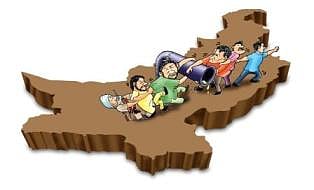
The relationship between Balochistan and the 'federation' has always been troubled. Pockets of resentment have existed vis-à-vis the Islamabad state throughout the country's short history, and no government has been able to address Baloch grievances permanently. In fact, most governments have focused on stopgap arrangements, addressing only temporary political compulsions.
Nonetheless, there is no dearth of understanding of the root causes of Baloch grievances. The province is by far the most underdeveloped in the country, with dismal literacy rates and virtually no productive infrastructure. Moreover, Balochistan continues to be entrenched in a tribal set-up, with a number of powerful sardars catering to their own interests and readily challenging the state whenever it seems prudent. For its part, the state has exacerbated the alienation of the people by attempting political subjugation in order to check nationalist tendencies – the latest manifestation of which is the ongoing military operation against 'dissidents'. The majority of observers believes that the eventual solution lies in granting political autonomy to the province. Yet, despite emphases on historical grievances and calls for either independence or provincial autonomy, there is a virtual consensus among experts within Pakistan that Balochistan's real problems are socio-economic in nature.
Let us first consider the issue of development, wherein the primary concern is over who would gain from the Islamabad-proposed mega-development projects in Balochistan. A genuine apprehension of the sardars and locals alike is that development in the province will end up excluding the indigenous population from the bulk of the benefits. While the government continues to maintain otherwise, such an outcome is inevitable given that the majority of Baloch labour is unskilled, and will therefore not be able to fill positions available only to a skilled workforce. As such, outsiders (from Punjab, Sindh and NWFP) are likely to gain most from these opportunities. Already, it is common to find non-Baloch workers employed across the hierarchy of jobs in both the public and private sectors in Quetta and elsewhere. Given the feelings of anti-Punjabi resentment in the province, a development agenda that is perceived to be no more than another avenue to enhance Punjabi domination in Balochistan could trigger a counterproductive reaction and alienate the Baloch populace even further. In an extreme scenario, this could even lead to a strengthening of anti-state sardari elements, which are sure to stress the disproportional development benefits to non-Balochis in a quest to rally the masses.
One is hard-pressed to find a way out of this dilemma. It is impossible for development to take place, at least in the short run, without the exacerbation of some traditional grievances. Perhaps the only option for the state would be to formulate a mutually agreeable arrangement, by assuring benefits for locals, with an eye towards co-opting those Baloch anxious about losing out in the grand development scheme.