
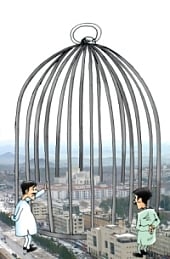
Since late January, the sleepy, custom-built capital of Pakistan has seen a spate of suicide bombings. What was once the safest haven in a conflict-prone political and social zone is now besieged with security forces patrolling the streets, forcing residents of this gilded cage to own up to the reality that suddenly exists within its own borders.
On 26 January, a suicide bomber walked into a staff entrance of the Marriott Hotel in Islamabad, was intercepted by a security guard, and blew up them both. I was inside the hotel when the blast occurred, cocooned within its opulent surroundings. Had the blast occurred minutes later, I would have been crossing the street in the midst of the carnage. This fortuitous timing did not stop me from witnessing bits of charred flesh lying scattered on the road, however, as I ran out to join the crowd that had gathered. This was the first suicide bombing to have taken place in Islamabad.
Before there was time to absorb the intensity of the event, a second incident occurred on 6 February at the high-security Islamabad International Airport. Once again, the suicide bomber forced himself into the premises and, during an ensuing gun battle with airport security, detonated his explosive. And again, I was nearly at the scene, having arrived to board a Karachi flight barely an hour earlier.
These events were followed by at least four other bombings in or near Pakistan – including a suicide bombing at a district court in Quetta, and explosions on the Samjhauta Express train, which had been traveling from Delhi to Lahore. The infamous 'they' say that this is all just the beginning.