
"A couple of years after the Partition of the country, it occurred to the respective governments of India and Pakistan that inmates of lunatic asylums, like prisoners, should also be exchanged." So begins Saadat Hasan Manto's 'Toba Tek Singh', the story of one harmless madman in a Subcontinent gone violently insane.
Bishan Singh has been an inmate of a Lahore asylum for decades. His only surviving memory from his life before confinement is the name of his native village, Toba Tek Singh. Packed into a bus with other non-Muslim inmates and driven to the new border, Singh refuses to budge from the no-man's-land between Pakistan and India. Because he is old and sick, officials let him be. As dawn breaks, he collapses, dead. "There, behind barbed wire, on one side lay India and behind more barbed wire, lay Pakistan. Between them, on a piece of earth that had no name, lay Toba Tek Singh."
Independent India and Pakistan were birthed in an apocalypse: more than one million people murdered; three-quarters of a million women and girls abducted and raped, a third of them aged below 12. The carnage was done in the cause of "pure" lands, freed from the polluting presence of the "other". It was a peoples' uprising – against other people. In Nehru's India: A History in Seven Myths, the historian Taylor C Sherman writes that "Congress leaders began to understand the violence as a period of 'insanity' from which the nation had to recover." The Indian National Congress was no monolith, yet amid the party's many real differences there was general agreement that sanity lay not in creating a Hindustan for Hindus but rather a pluralist India – especially in a geographic space home to hundreds of different ethnic and tribal groups, some 35 million Muslims, and over 7 million Hindu and Sikh refugees.
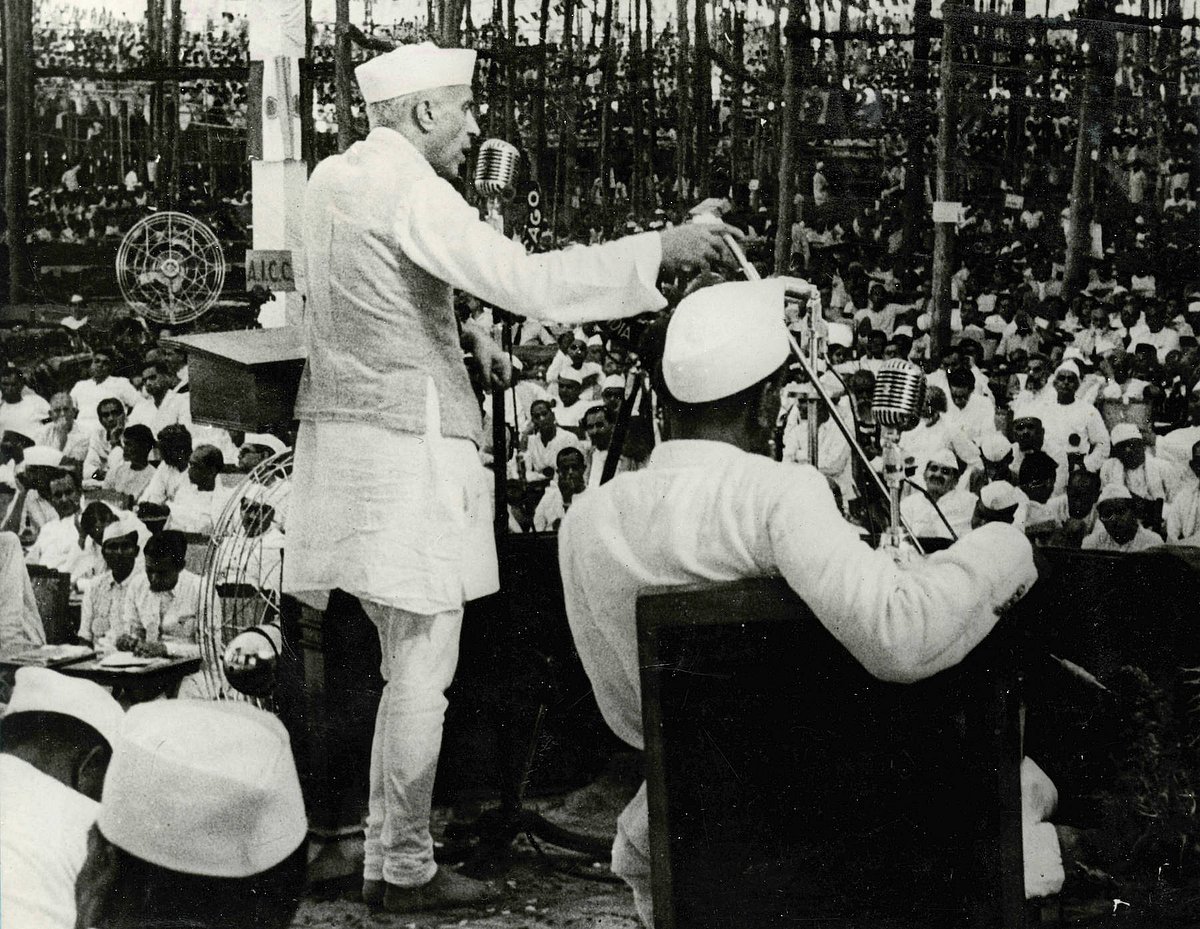
In 1958, the French writer André Malraux asked Jawaharlal Nehru, the Indian prime minister, about the greatest difficulty he had faced since Independence. Nehru's reply was instantaneous and unequivocal, "Creating a just state by just means … Perhaps too, creating a secular state in a religious country." As Nehru saw it, "Our challenge is to devise some arrangement which enables us to coexist if not in amity then at least in forbearance."