
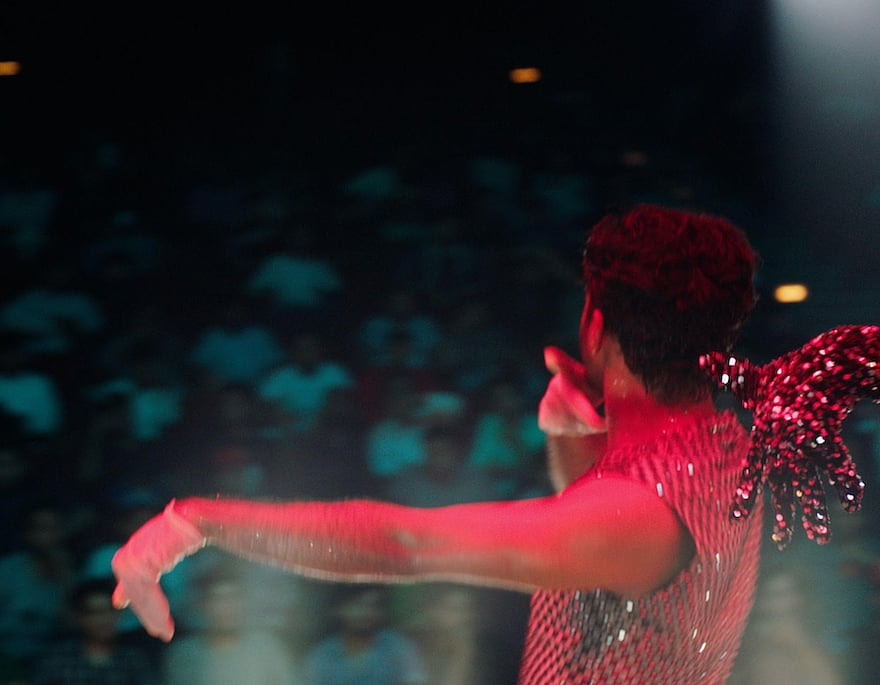
On the evening of 8 June, the Pakistani director Saim Sadiq's film Joyland was screened at Liberty Cinema in Mumbai as part of the 14th Kashish Mumbai International Queer Film Festival. After winning the Queer Palm and the Jury Prize in the Un Certain Regard section at the 2022 Cannes Film Festival, in December Joyland became the first ever Pakistani film to make the shortlist in the Best International Feature category for the Oscars. Before this, however, it was banned in Pakistan, with authorities citing complaints to the censor board about "highly objectionable material". Social-media outrage and fervent appeals from the cast and crew pushed the government to review the decision, and after cuts stipulated by the censor board it was finally released in Pakistan in mid November. In India, where the buzz from Cannes had already piqued interest, Joyland had its debut on 5 November at the 2022 Dharamshala International Film Festival in McLeod Ganj. With the controversy over the ban only driving interest further, this was followed by a handful of private and festival screenings before the film was shown at the Kashish festival.
Joyland unravels the intersecting lives of various people in Lahore held hostage by patriarchy. The central characters are Biba (Alina Khan), a trans woman who makes her living as a dancer and choreographer; Haider (Ali Junejo), her cis-male lover, who works as a back-up dancer though he has neither the skill nor the flexibility required for the job; and Mumtaz (Rasti Farooq), a cis woman who works at a beauty parlour and is married to Haider.
My strongest memory from the evening at Liberty Cinema is a scene where Biba gets to showcase the powerhouse that she is. She walks in on Haider being teased and bullied by fellow cis-male background dancers who are curious about Biba's genitals. Her voice cuts through the tension in the locker room like a knife. She calls out Haider for not standing up for her, and proceeds to reprimand the other men for their toxic masculinity. A cis man who wants to know what is between her legs gets an earful, and she spits on him.
The cinema hall filled with thunderous applause. I had gooseflesh, and tears streamed down my face. Though I feel embarrassed every time I express anger, Biba's response felt like a personal victory. She did what so many LGBTQIA+ folks like me have wanted to do in the face of oppression but have not been able to because of perceived consequences. The lights were off, so I had no clue who was sitting beside me, ahead of me and behind me, but I was overcome by a deep sense of community. It was okay to cry and also feel healed.