
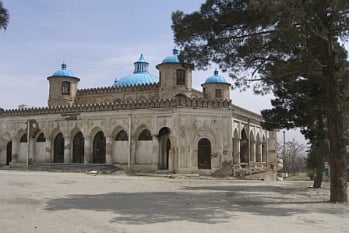
Autumn of 1977. A 22-year-old studying law in Delhi University took the Wagah-Attari route – then a series of super-fast dilapidated buses – through Lahore, Peshawar, Khyber and Jalalabad, to arrive in breathtaking Kabul. Coming from license-raj India, Kabul was as close to the 'West' as was possible in those days. The markets were stocked with Western goods, Russian and German cars ran on Chicken Street, and socialist architecture was just hitting its stride.
Back then, Kabul shocked the young man from Kathmandu, with all its schoolgirls in skirts showing a lot of leg. Out in Hazara country, the Big Buddha in Bamiyan was still standing, and it was possible to climb up the tunnels to look down on his humongous, 1500-year-old torso. All of that, of course, was subsequently blasted out of existence in an unparalleled act of desecration.
In 1977, the king had been deposed, and Sardar Mohammed Daoud Khan was in power. This was Kabul before the Russian invasion, the rise of the Taliban, the hanging of Najibullah, and the devastation wrought by the warlords after the Talibs were routed post-11 September 2001. Bullets and howitzer shells would soon find their mark in every single downtown building; even Babar's modest resting place would take a hit.