
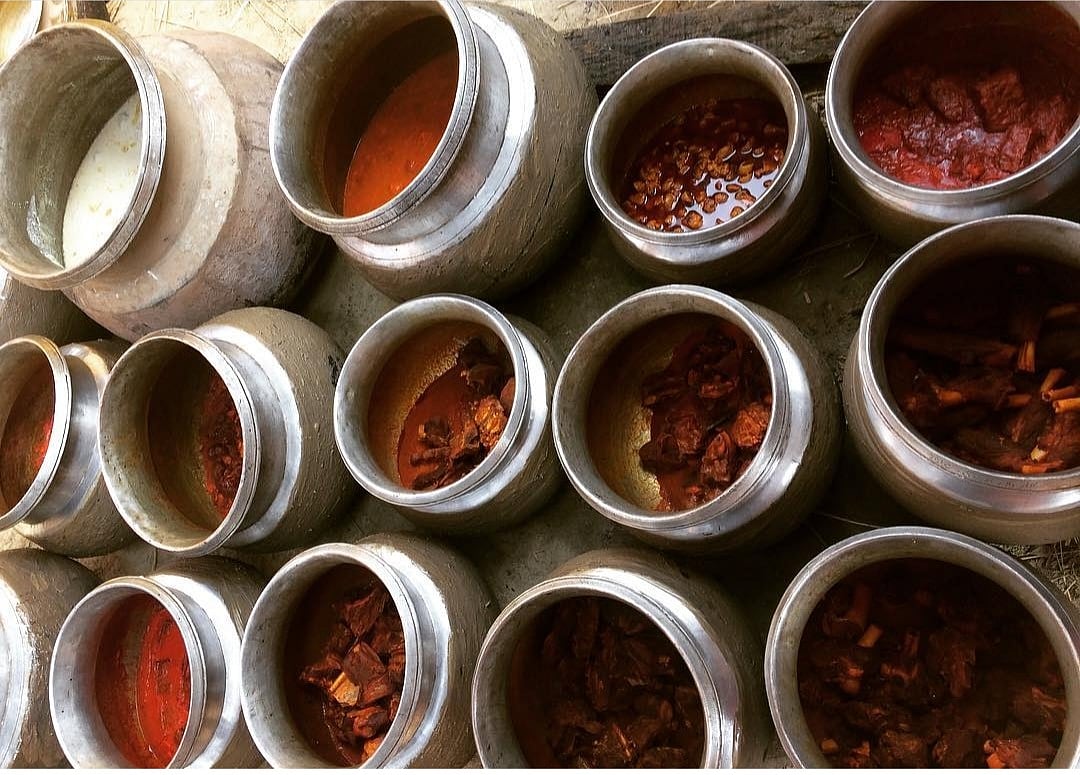
I was around ten years old when I was brutally made aware that my food preferences defined who I could sit and eat with. It was at a wedding in my ancestral village where bad maaz (buffalo meat or beef) was served during the feast and I was huddled with other beef-eaters, separated from those who were supposed to be served kat maaz (mutton). This segregation, observed during the wazwan, a multi-course meal served in Kashmiri cuisine, made me realise that my consumption of beef made me different from others. It was much later when I learnt that even within the seemingly homogenous Kashmiri Muslim community, households that ate beef were looked down upon as "uncouth" and even "uncivilised" in comparison to those that ate mutton.
My memories of growing up in Kashmir are riddled with instances and anecdotes of people being stigmatised because they consumed beef. A close friend of mine was reprimanded by other friends and relatives for having brought dishonour to the fragile prestige of his community just by his attendance at a wedding where beef was being served. A 16-year-old was mocked for something that might be incredibly trivial to an outsider. As a Kashmiri who has grown up amid a sad abundance of such supposed transgressions, followed by shaming from the community, I know that such chiding was far from trivial.
In much of India, food preferences are a marker of both class and caste. By extension, social and spatial segregation based on food consumption is a way of making social hierarchies starkly visible. The practice of "purity" is notoriously expressed in the form of separation between meat-eaters and vegetarians – or rather, "pure vegetarians". But it is limiting to view food consumption only through the lens of vegetarian or non-vegetarian preferences. There are many vegetarian food items that are taboo in dominant-caste households, just as there are different meats consumed by dominant-caste groups. This explains the class divide between people who eat kat maaz, considered elite and more sophisticated, and those who eat bad maaz, considered lower-class.
Stark divides of caste and caste-based food habits are most often associated with Hindu society. But, as I learnt already as a child, using caste and caste-based practices as a frame of reference is not limited to Hindus alone. Of course caste has always had a role in Kashmiri Hindu society, but it has remained a fault line within Kashmiri Muslim society too, even though not much has been written about it. This is evident through practices that encourage endogamy, the isolation of lower-caste communities in segregated areas, and the use of caste-based derogatory language.