
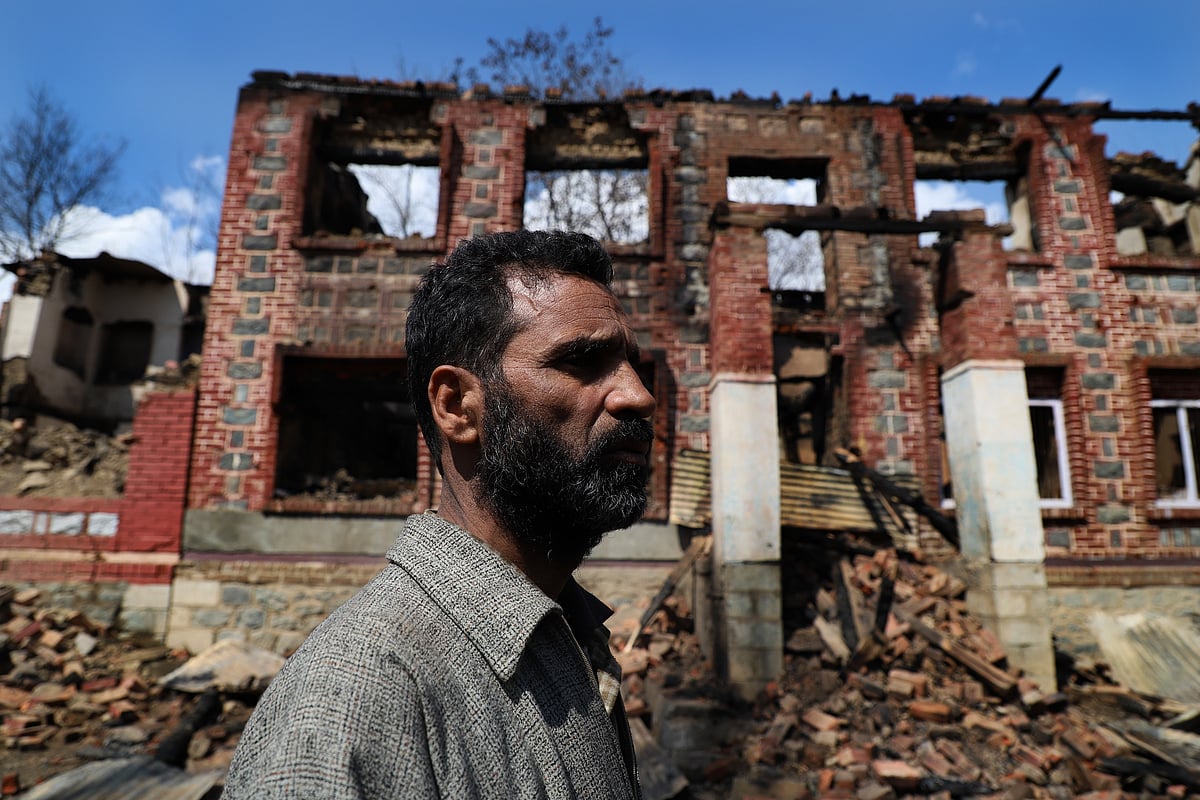
"Kis nay dekha apna ghar jalta huwa; who has watched their house on fire," laments Kashmiri poet Ghulam Mohammad Bhat, squatting over the rubble that was once his home. The serene landscape on the hillock is scarred by plumes of smoke emerging from the rubble. "Dunya walo nay toh dekhi roshni; the world only saw the light."
On 15 March 2018, Bhat, better known as Madhosh Balhami, was sitting on his front porch when three militants rushed into his home in the village of Balhama, ten kilometres south of Srinagar. They were on the run from Indian security forces, having just fired at the security officer of a Bharatiya Janatha Party leader in the vicinity.
The militants, recalls Bhat, directed him to leave his house, as the chasing security forces had laid a cordon and a gunfight was about to ensue. Barely 15 minutes after he stepped out, the gunfight began, and went on till two in the morning. Bhat's house was reduced to rubble, 30 years of literary work burnt to ashes. Three other houses in the village, besides Bhat's, were destroyed. All three militants were eventually killed in the clash.
On one of the pillars of his home that still stood after the gunfight, Bhat writes an Urdu couplet with a piece of charcoal from the rubble: