
IN DECEMBER last year, the government of Jammu and Kashmir announced the formation of a panel to review the Indian union territory’s policy for reservation in government jobs and public educational institutions. The move came in response to growing unrest over the policy, implemented in March 2024, while the region was still administered directly by India’s central government in New Delhi. The Jammu and Kashmir chief minister, Omar Abdullah of the National Conference party, who had assumed office only two months earlier, promised a time-bound review that would be completed in six months. But as the deadline passed, there was little more than silence from his government.
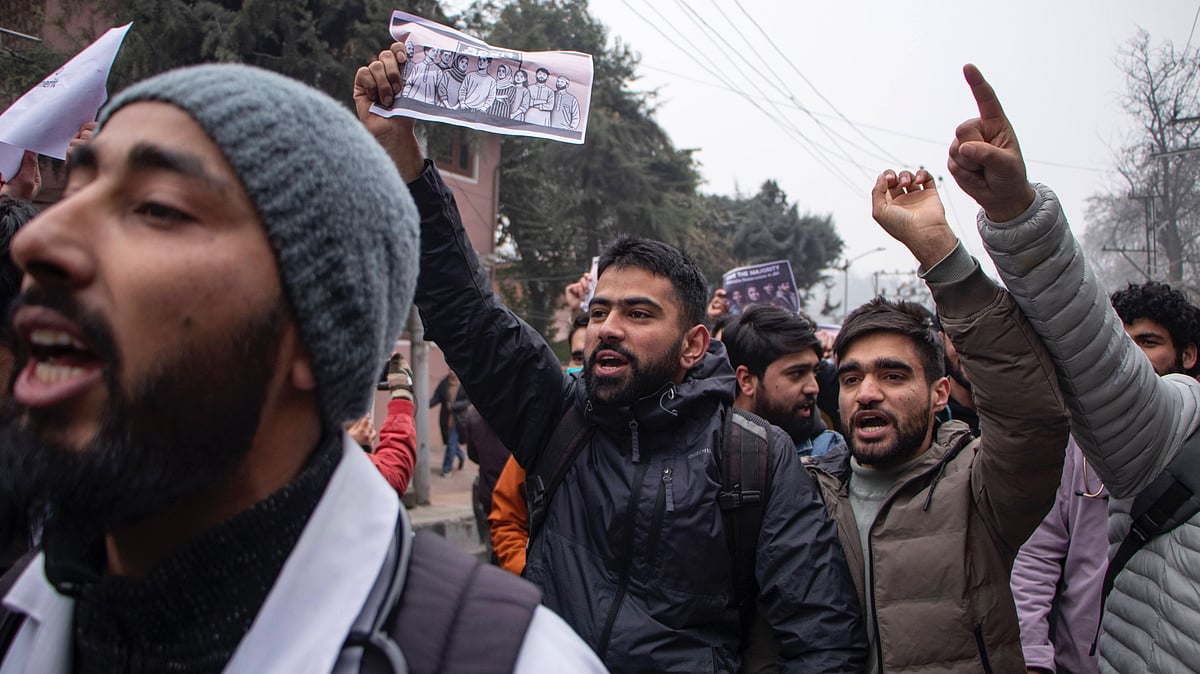
From the time it was introduced, the new reservation policy has faced significant opposition, particularly in Kashmir. Earlier in December, students had taken to the streets in Srinagar, the capital of Jammu and Kashmir, urging the newly elected government to rationalise the reservation quotas for particular groups. The National Conference-led administration has been walking a tightrope on this issue ever since.
During the budget session of Jammu and Kashmir’s legislative assembly in March, Sajad Lone, the president of the People’s Conference, raised a series of questions about reservations, reigniting the long-standing debate. Data presented by the government in the assembly revealed a stark regional disparity among the beneficiaries of the policy since April 2023. For instance, in the Scheduled Caste category, all 67,112 beneficiaries are from the Jammu region, with none from Kashmir. Similarly, in the Scheduled Tribe category, 459,493 individuals from Jammu have benefitted, compared to just 79,813 from Kashmir: a ratio of almost 6 to 1. The data attested to what Kashmiris had feared from the policy – further political and economic disempowerment of the Kashmiri population.
Jammu and Kashmir has already suffered a series of blows since 2018, when its previous elected state government collapsed. The state was put under Governor’s rule, then President’s rule, before the union government under the Hindu nationalist Bharatiya Janata Party (BJP) abrogated Article 370 of the constitution, stripping it of autonomy and splitting it into two union territories. This left Kashmiris disempowered and disenfranchised – something greeted with glee by the BJP and the Hindu Right, which have long painted Kashmiri Muslims as a threat.