
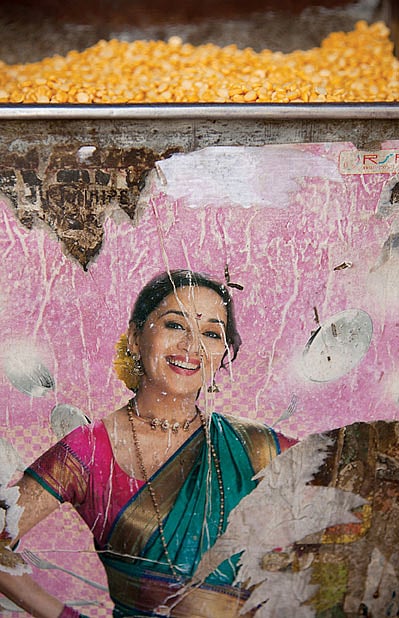
In the early 1960s, Kathmandu was a valley just awakening to the 20th century. Matters already commonplace in the metropolises of (colonised) Southasia were discovered with a thrill. The smell of pencil shavings in the classroom was such a novelty that half a century later the experience is still etched in my memory. Loaf bread had just arrived, baked at the Krishna Pauroti Bhandar. There were no refrigerators, and no ice other than the thin layer on cups of water left out at night in deep winter. I had to wait for a trip to Lucknow for my first taste of ice cream, Kwality's vanilla cup outside Mayfair Cinema in downtown Hazratganj. There were few toys available, even for the middle class, so we made our own dolls and aeroplanes. The noise of the internal combustion engine from the few score motorised vehicles in the Valley, including my father's motorcycle, could be heard as they crossed the Bagmati Bridge two kilometres down the slope from our house. From the other side, deep within Patan town, the omnipresent sound of my childhood came from the heavy-duty loudspeaker atop the Ashok Hall cinema, belting out Hindustani film music long before anyone knew to say 'Bollywood'.
While there were others who fell for Talat Mehmood and Mukesh, Ashok Hall's owner was evidently a deep admirer of Mohammad Rafi. And so the rooftops, gallis and outlying areas of Patan town were regaled – over decades – with endless repeat performances of the playback sultan's oeuvre. To me, Mohammad Rafi's Hindustani songs bring up memories not of Bombay but of Patan, though I hardly understood the lines: "Chahoonga main tujhe saanjh savere… awaj mei na dunga…" (Dosti, 1964).
There was a Rana-era assembly hall on New Road called Janasewa that had evolved as a cinema in the 1950s, but it got burnt down. Four halls then came up to compete for the Valley's cinema audience, all in the Art Deco style of the day: Ashok Hall in Patan, Biswajyoti, Jai Nepal and Ranjana in Kathmandu. They connected the Valley to the rest of Southasia through Hindustani/Hindi films, productions that tended to arrive long after they were released in Bombay.
Hindi films have thus accompanied the Kathmandu Valley's population since it entered the modern era six decades ago, directly and indirectly helping shape worldviews, define fashion and teach the link language of North India. This journey started in the 1960s, early enough that the opening credits were still in Hindi and Urdu, but late enough that the early stars did not make it to the silver screen in Kathmandu. Prem Nath, Guru Dutt, Madhubala, and Nargis were unknown other than to those lucky enough to travel to the Ganga Plain. Even for the films not seen, however, there was always the Binaca Geetmala countdown programme on Radio Ceylon with its compere Ameen Sayani, striking the initial blow for Southasian cultural interconnectedness from far, faraway Colombo.