
In October 1939, Khwaja Ahmad Abbas penned an open letter to Mohandas Karamchand Gandhi, who had commented some years previously on cinema being a "sinful technology". Abbas' letter argued with Gandhi to reconsider the potential of the medium. "My dear Bapu," he wrote, "Today I bring for your scrutiny and approval a new toy my generation has learnt to play with – the CINEMA!…All that I wish to say is that cinema is an art, a medium of expression and therefore it is unfair to condemn it. You are a great soul Bapu… Give this little toy of ours, the Cinema, which is not as useless as it looks, a little of your attention and bless it with a smile of toleration."
The Cinema, as Abbas called it, was just one part of the vast and varied repertoire of his work. Yet it served the same purpose Abbas sought to serve through all his life – of creating social reform, debate and change. In a full life, Abbas wrote over 70 books, directed around 20 films and wrote some of the most iconic screenplays of his era. This prolific communicator and committed man of the masses is a towering presence in the history of Mumbai cinema, with a legacy that is only now being fully recognised. In 2015, a year after his centenary, a volume titled Bread, Beauty, Revolution: Khwaja Ahmad Abbas 1914-1987 was published, which brings together a collection of his writings, interviews and translated work. The glossy volume, edited by Iffat Fatima and Syeda Saiyidain Hameed, draws from a diverse range of sources, and is a useful introduction to his many talents, for a generation that too often knows him as "the man who launched Amitabh Bachchan". The title of the book draws from Abbas' experience at the Andhra Progressive Writers Conference in 1982, held in Madras. As poem after poem was read out in unfamiliar languages, Abbas was struck by the universality of the slogan that followed each session: "Inquilab Zindabad". It was a slogan, he noted, he had heard across the length and breadth of India. He interrogated his companions for a few more words common to different Indian languages and came up with the three used here: bread (ann), beauty (sundar) and revolution (inquilab).
In my earlier column on the magazine Filmindia, I had referred to Abbas' unlikely friendship with the earthy Baburao Patel. Patel had given space to the opinionated and intellectual young critic, and the volume reproduces one of his reviews on the RKO production Gunga Din. Abbas rips into the movie with a fine rage, calling out its racist and patronising overtones. In these times of easy sloganeering, it is a relief to be immersed in Abbas' brand of patriotism that could lead him to take on representations of his country, but also encourage dissent and questioning. In an interview to Indian Literary Review, he said: "I describe myself not as a journalist but as a communicator. I want to communicate my ideas, my impulses, my ideologies, to other people." Writing was his first love, and he was not only prolific but also often wrote stories in one sitting. For instance, a short story was written on a train ride between Aurangabad and Bombay, as the Bread, Beauty, Revolution volume notes.
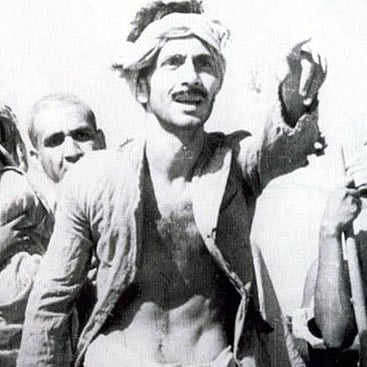
As a director, Abbas created path-breaking work that failed commercially. One of my favourite texts in the book records the production of Dhartike Lal, Abbas' directorial debut. The film was based on the tragedy of the Bengal famine, and was produced in collaboration with the Indian People's Theatre Association (IPTA). Actors included stalwarts like Balraj Sahni and Murad. Abbas recorded the difficulties in raising finances and shooting on a shoestring budget, all the while being aware of the significance of what was being done. "We were producing a totally different kind of film in India, and so we had to set traditions and precedents," he noted. At the first screening for an audience of about 300 people, when "…the legend 'Peoples Theatre Stars the People' was flashed on the screen, there was spontaneous cheering."