
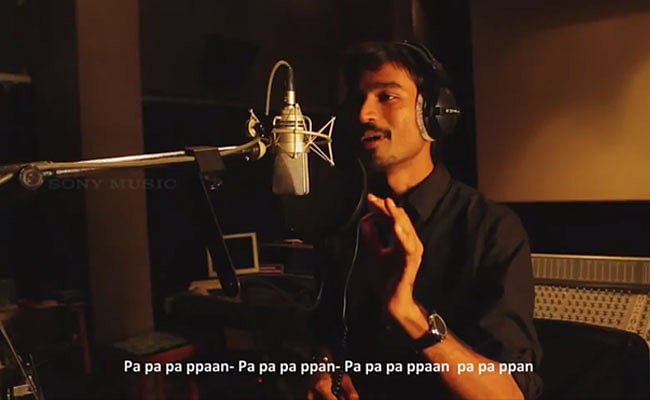
Barely five weeks after its mid-November release on Facebook and other social-networking sites, 'Why this kolaveri di' was named song of the year by CNN. 'Kolaveri di' is a song of heartbreak: a boy asks why his girlfriend is mad at him (kolaveri is Tamil for rage). The song arrived suddenly and quietly, taking critics off guard. Most people only later came to know that a multinational – Sony Music, via Facebook – had promoted the song. Although most of the lyrics were in English, they were sung with a heavy Tamil accent that marked the song as regional, even provincial. On the internet, 'Kolaveri di' was an edgy yet safe and accessible expression of Southasia's cultural diversity.
The song immediately crossed the 'border' to North India and the technological border from new to old media, Internet to print and TV. But modern communication is not a one-way street. As this South Indian product moved north, there was a third border-crossing: North India crossed an ideological line and came to the South, where lower-caste assertion predates Independence, and where upper-caste agitations against caste-based reservations never took place on the scale they did elsewhere in India.
Yet the song itself seems anything but serious. The tune is undramatic but catchy, with short musical passages repeated again and again, only slightly varying pitch, tone and phrasing. Its improvisational air reinforces the sense of lightness and triviality. The video looks as if it were recorded on a lark by youngsters with a camera. It took no more than ten minutes to write the song, we are told. While the orchestration is clearly professional, much of the YouTube video advertises amateurishness. The synthesiser goes off-key. Many of the words are nearly nonsense: 'Oh my lovvu, you showed me bouv-u, cow-u cow-u holi cow-u, I want you here now-u.' In the midst of the recording, the singer laughs, puts down his earphones and chats with the composer. Comment and instructions are folded into the video – 'soup song … flop song', 'rhythm correct', 'maintain please', 'only English' and so on. What looks like a rough studio take became the official release, maintaining the feel of a careless exchange between friends.
Perhaps as a result, responses to 'Kolaveri di' have seldom discussed the song itself, beyond noting its addictive quality and its viral spread. Rather, they have dwelt on the thrill of being part of the in crowd, 'with' the phenomenon. 'Kolaveri di' has not inspired the kinds of conversations that music aficionados usually have, where they explore nuances and interpretations. Instead, the song has remained almost exclusively in the realm of youthful fan culture, where the entry fee is immediacy and enthusiasm, and fans are more eager to be counted in than heard. (Except, of course, for the multitude who produced remixes of the song. Within days there was an Arabic version, a version from the female perspective, a Punjabi bhangra variation and even one in proper Tamil.)