
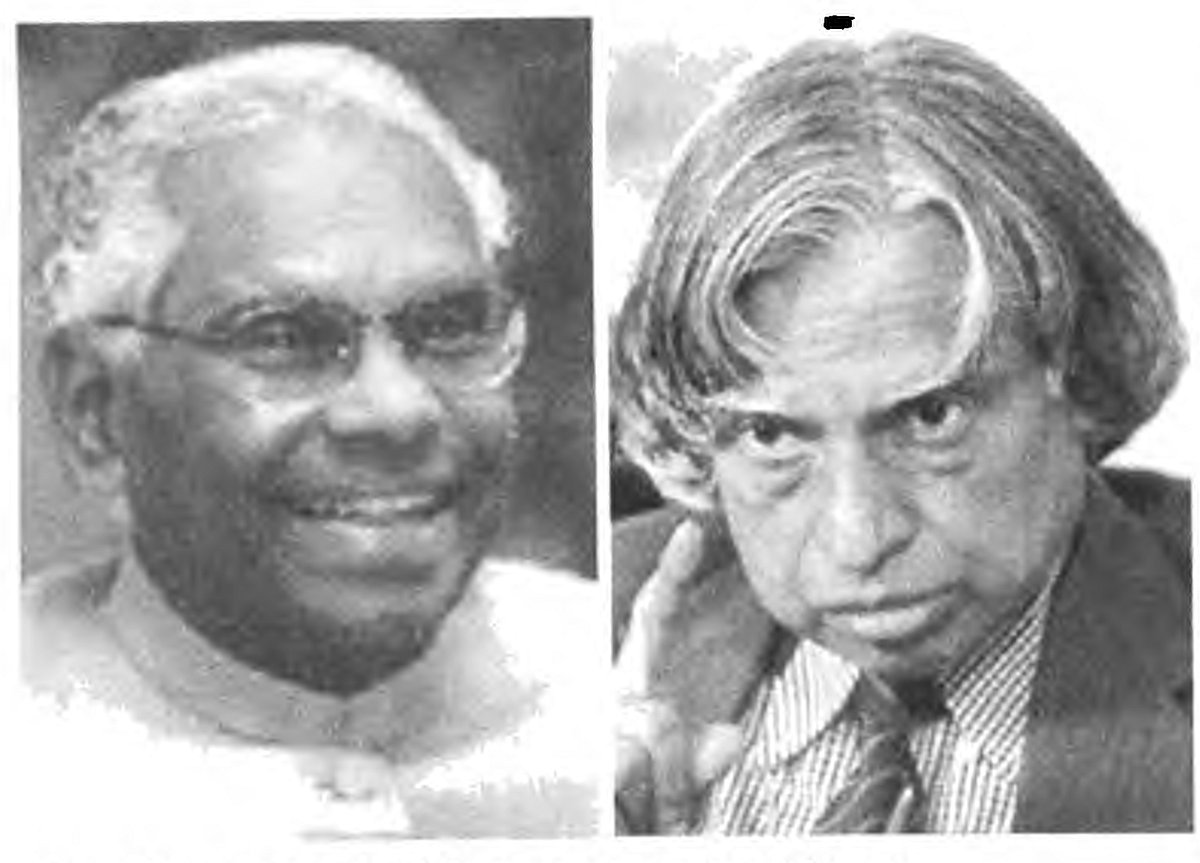
"Can you tell me why, in 3000 years of our history, people from all over the world have come and invaded us, captured our land, conquered our minds? From Alexander onwards. The Greeks, the Portuguese, the British, the French, the Dutch, all of them came and looted us, took over what was ours. Yet we have not done this to any other nation. We have not invaded anyone. We have not conquered anyone. We have not grabbed their land, their culture, their history and tried to enforce our way of life on them".
APJ Abdul Kalam in an interview to Pritish Nandy, October 1998.
Soon after Abdul Kalam's nomination, a brahmin reporter of a leading Tamil magazine based in Madras read Kalam's autobiography, Wings of Fire, and decided to chat with a colleague. "Tell me, are you an extremist Muslim?" she asked. Shocked and cornered, he replied, "I don't offer namaz even on a Friday". Emboldened by the response, she went on to suggest, "Why don't you all be like Kalam".
When Panchajanya, the Hindu-fundamentalist Rashtriya Swayamsevak Sangh's mouthpiece, of which today's prime minister is a former editor, predictably claimed APJ Abdul Kalam as their man for the Indian presidency, Saeed Naqvi, a senior Indian journalist, sought to locate Kalam in a different tradition: of Sufis and poets who had claimed the mythic god, Ram, as their own. According to Naqvi, "Kalam, for all his devotion to Rama, still has to catch up with Abdul Rahim Khan-e-Khana's verses in Sanskrit to Dasarath's son".