
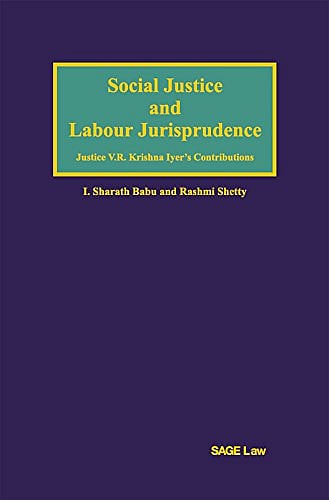
In a society where hagiography is the norm, one approaches with trepidation a book proclaiming to be an account of the contributions of a single individual to the sphere of labour jurisprudence. Though it is difficult to judge the achievements of one person in any particular field, Justice Krishna Iyer stands out as an indubitably interesting figure. A minister in the world's first elected communist government, in Kerala in 1957, Iyer took an uncommon route to becoming a judge in the Indian Supreme Court, when a collective quest for equality that pervaded the post-Independence years led to his being appointed to the position.
Along with judges D A Desai and Chinappa Reddy, Iyer strove to create a dynamism in the field of labour jurisprudence. This triumvirate set the precedent of interpreting legislations in line with the Indian Constitution's Directive Principles, which enjoin the state to secure social, economic and political justice; to minimise inequalities; to secure adequate means of livelihood for all; and to provide for just and humane working conditions. Iyer has remained active in the field of law since his retirement in 1980, remaining at the forefront of the movement to abolish capital punishment and to create legislation for unorganised workers. Through the course of the 15 chapters of Social Justice and Labour Jurisprudence: Justice V R Krishna Iyer's contributions, I Sharath Babu and Rashmi Shetty, both law scholars in Bangalore, describe the significant impact that Iyer's courtroom judgements have had on a broad spectrum of issues.
The foreword, written by Justice Iyer himself, addresses the issue of class in the context of the biases of judges reflected in cases of management-worker disputes. In the present era of liberalisation, in which the market is more important than anything else, these prejudices come into blatant relief, and Iyer pulls no punches. "Judges have their biases because they belong to the bourgeoisie," he writes. For those who remember how veteran communist leader E M S Namboodiripad was convicted in 1970 of contempt of court for stating that judges are guided by "class interests, class hatred and class prejudices", this foreword will be a delight to read.
Anyone who has waded through the complexities of Iyer's judgments, each entwining little-known terms and archaic phrases, will already know that his writing is less than concise. But this is a small weakness for a great jurist. Iyer's treatment of the issue of class in Indian jurisprudence is truly powerful, and makes more noticeable the lack of a similar approach to gender and caste. While there have been some feminist writings on jurisprudence in India, caste remains largely ignored.