
This week at Himal
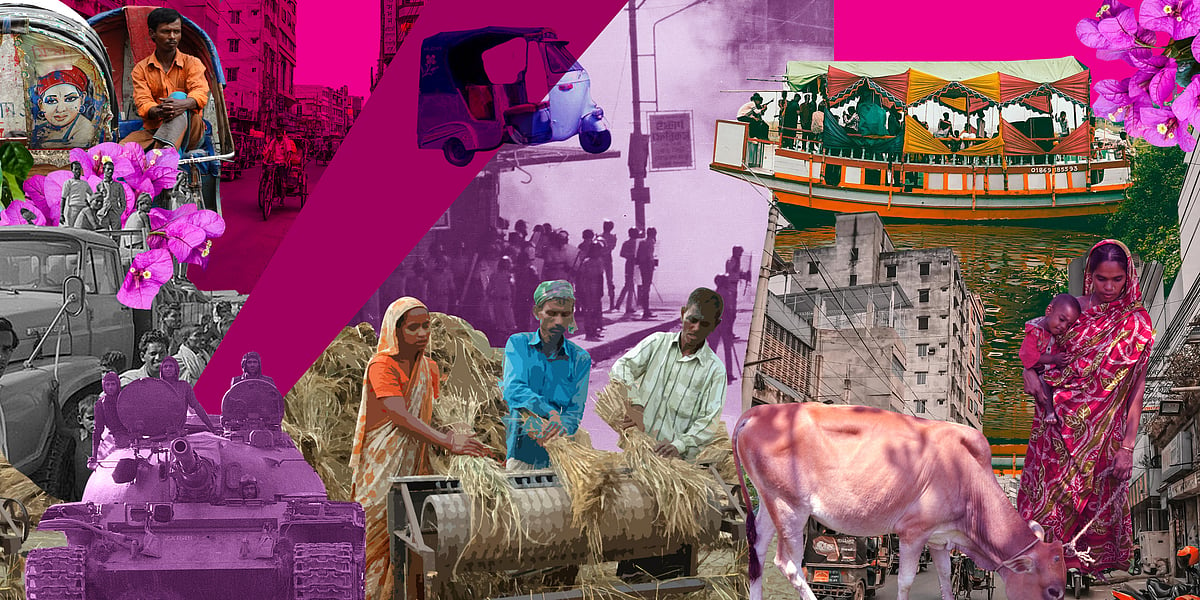
This week, we kicked off Himal's second annual Fiction Fest, with this edition celebrating Southasian fiction in translation.
The first story in the festival, translated by Mahmud Rahman and Shabnam Nadiya, is an excerpt from Mahmudul Haque’s Jibon Amar Bon, a highly original Bangla novel written shortly after Bangladesh's 1971 Liberation War with a strikingly unsentimental approach to the country's liberation movement.
The second piece, translated by Haider Shahbaz, is a section from Fauzia Rafeeque’s Punjabi novella Keeru, a key work featuring a queer and Dalit Pakistani protagonist that challenges the patriarchal, casteist and religio-nationalist narratives deeply entrenched in Punjabi and Pakistani literature.
And the third piece in the Fiction Fest, translated by Kalyan Raman, is Mayilan G Chinnappan's Tamil short story 'Unknown', which narrates the encounter of a young doctor and destitute patient at a dysfunctional government hospital, and along the way displays the author's characteristic intertwining of artistic storytelling and precise medical knowledge.
We also published an article by Zaid Bin Shabir and Auqib Javeed looking in depth at how growing resentment against New Delhi has overridden bitter old acrimony between Buddhists and Muslims in Ladakh – a vital aspect of the ongoing protest movement in the Himalayan region that has been almost completely overlooked elsewhere in the media.
Your support is essential to sustaining Himal's unique work on Southasia, combining in-depth reporting, great story-telling and a commitment to nurturing cross-border cultural connections. Where else will you find such insightful reporting on Ladakh alongside sterling translations of fiction from all across the region?
We keep Himal's stories paywall-free and open-access to everyone in Southasia and beyond because we count on committed readers and allies to give us their financial support. Become a Himal Patron today to support Himal!
Keep an eye out here for three more pieces of great translated fiction next week. You'll also find a recording of the Fiction Fest launch event, which included a panel discussion on the future of Southasian fiction in translation with the prize-winning translators Daisy Rockwell, Musharraf Ali Farooqi and Jayasree Kalathil, as well as the leading literary agent Kanishka Gupta.
Also read: 'Insects': a translated excerpt from Punjabi novella 'Keeru'
Also read: Ladakh’s resentment of New Delhi has overridden old Buddhist–Muslim acrimony
Also read: 'My Sister, Life': a translated excerpt from Bangla novel 'Jibon Amar Bon'
Also read: 'Unknown': a translated Tamil short story
This week in Southasia
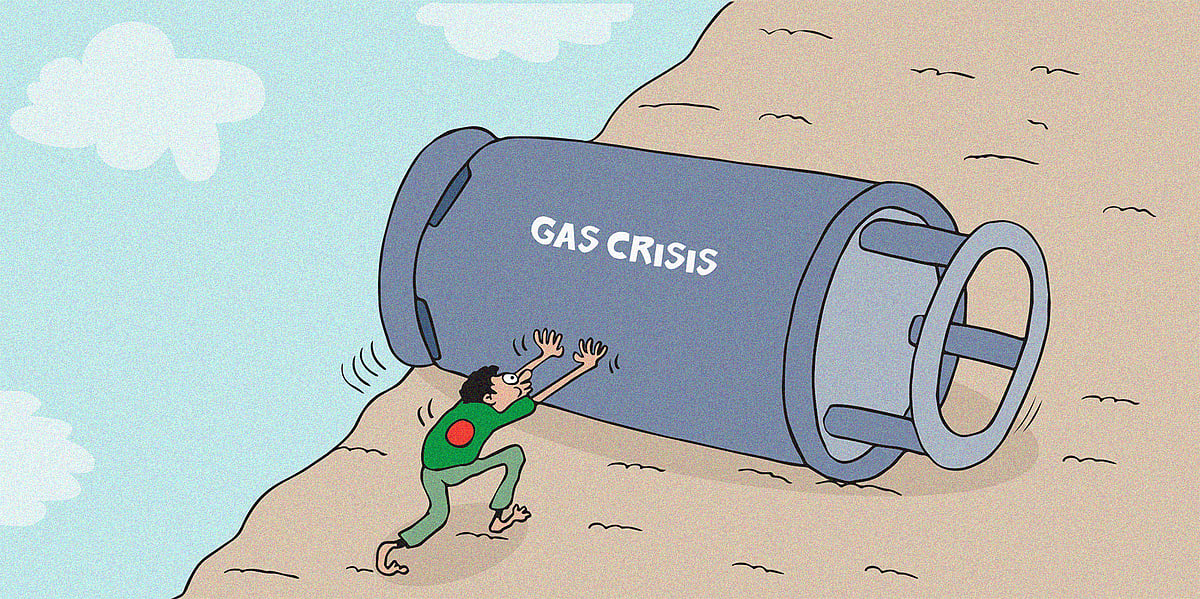
Bangladesh's burgeoning gas crisis
For the past two weeks, Bangladesh has been grappling with a shortage of Liquefied Natural Gas (LNG) due to a shutdown of a regasification terminal in Cox’s Bazar that was damaged by Cyclone Remal on 29 May. Factories have closed, families struggle to cook at home and power supply to rural areas has also been impacted, since many plants in Bangladesh use LNG to generate electricity. On 8 June, residents in Narayaganj’s Siddhirganj blocked the highway to demand a solution to the gas crisis. But the terminal in Cox’s Bazar will take around 3 weeks to repair, meaning shortages will continue for some time.
Media has pointed to Bangladesh's overreliance on imported LNG as the core issue. Dwindling foreign exchange reserves have only exacerbated the crisis. LNG has also been widely touted as a transition fuel to allow for the shift to clean energy, resulting in large investments in LNG, including in Bangladesh, despite reports that its use will ensure that fossil fuel use will continue beyond 2030. To mitigate the gas crisis, the Bangladesh government must take immediate action to invest in sustainable energy alternatives, analysts point out. Until then, consumers and industry relying on LNG will have to bear the brunt.

Elsewhere in Southasia 📡
- Indian prime minister Narendra Modi sworn in for third term with no change in top four ministries, seven women MPs and no Muslim representation. BJP faces fresh challenges in coalition-building due to loss of majority
- New research finds UK, Schengen states earn millions of pounds or euros from rejected visas; Pakistan and Bangladesh among Southasian countries with highest rejection rates
- Myanmar junta leader Min Aung Hlaing gifts vehicles to senior Buddhist monks, drawing criticism as junta escalates attacks on civilians in Rakhine state
- India's central government proposes re-testing 1563 candidates in key test for eligibility for medical school, with an unusually high number of students making perfect scores and allegations of a leaked question paper
- Pakistan presents federal budget setting ambitious tax collection targets, austerity measures in bid to meet IMF targets
- Forty Indians die after fire breaks out in labour housing in Kuwait, 24 of them from Kerala
- No more Sri Lankans to be recruited by Russia to fight war in Ukraine, Russian Foreign Minister tells Sri Lankan counterpart after reports of 16 Sri Lankans killed and 37 wounded after being ‘duped’ by agencies
- Mohammed Zubair, Indian fact-checker and journalist says Delhi Police has flagged his account on X (formerly Twitter) for removal, indicating that crackdowns on freedom of expression will continue into Modi's third term
- Three women labourers die after falling into trench dug for sewage construction in Gandaki province, Nepal, sparking protests and discussions about worker safety
- 1000 days pass since Afghan girls banned from secondary school education, UN says, releases report on entrenched system of discrimination, segregation of women and girls in Afghanistan
- Sudden flooding and landslides wipe out roads, damage homes in majority Tibetan populated region of Sichuan province
- Maldives government to submit bill to decrease the number of MPs in a bid to cut expenditure, one of 213 bills submitted to parliament after election
Only in Southasia
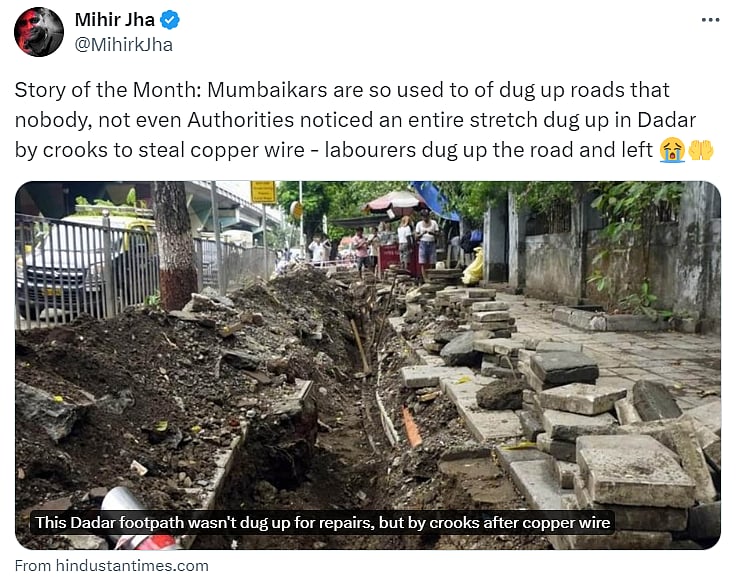
Mumbai residents investigating uprooted paving blocks on Dr Babasaheb Ambedkar road were in for a nasty surprise. Rather than run-of-the-mill construction work on the part of the Brihanmumbai Municipal Corporation, the blocks had been removed in order to steal copper wire from utility cables laid under the footpath. The heist was discovered after residents complained that the footpath had been repeatedly dug up, leading to the Municipal Corporation uncovering the heist. The Matunga police later arrested five men who had managed to steal between six and lakhs worth of copper wire, leading to 400 telephone wires tripping in the area. A little research uncovered that this is far from the first such instance of… footpath robbery. During the G20 summit in Delhi, water nozzles worth over 14 lakh rupees were stolen from two venues. But Bihar might have gone one further this January, with people stealing a pond (by filling it in), and a couple years before, dismantling and stealing a 60 foot steel bridge.

From the archive
Our endangered species (January 2002)
As reports circulated this week about linguist and social critic Noam Chomsky's ill-health, resulting in an outpouring of tributes, Aqil Shah's piece from January 2002 is worth revisiting. Shah recounts a conversation with Noam Chomsky in November 2001 on the resilience of civilian institutions in Pakistan, given the pathologically powerful military establishment. Shah reflects on the superimposition of Pakistan's military on vital aspects of civil and political life, and calls on the 'attentive public' of Pakistan to partake in its politics. From 2001, this excerpt of Noam Chomsky's review of 'Confronting Empire' by Eqbal Ahmed, first published in Dawn, is also worth revisiting.