
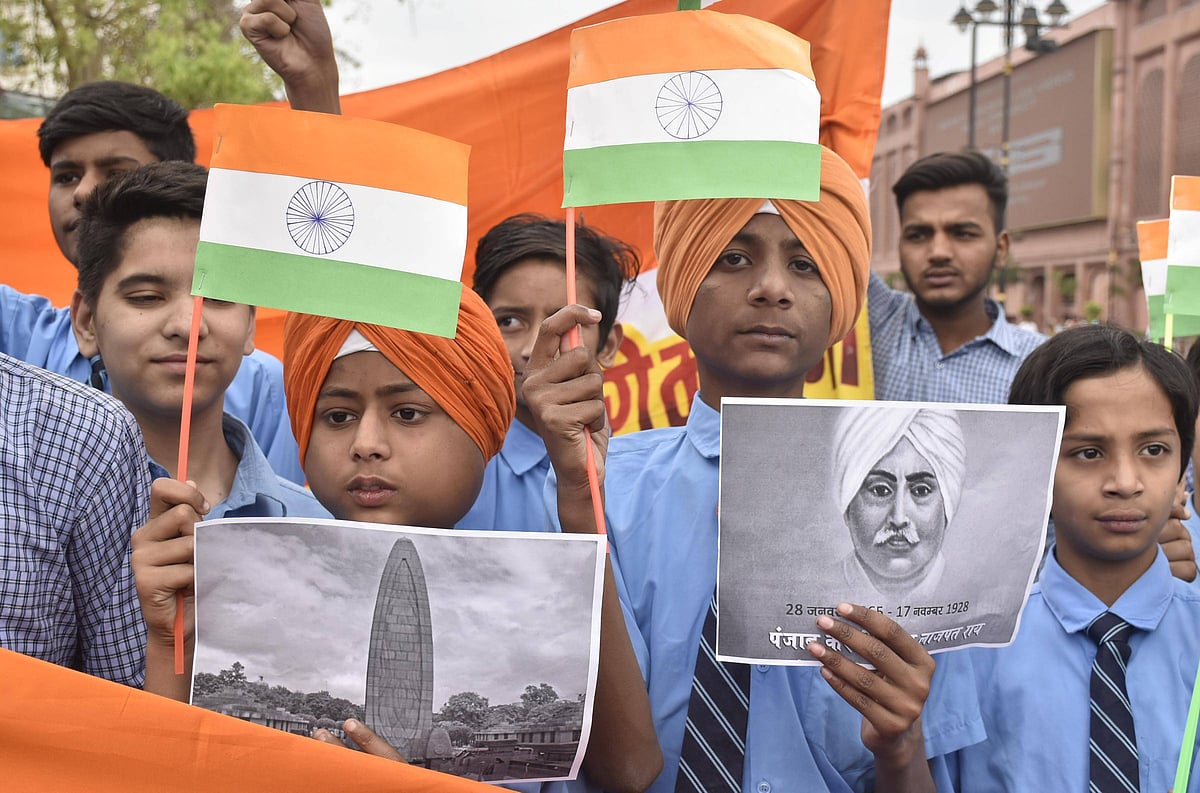
MOHANDAS KARAMCHAND GANDHI was a Modh Bania from Gujarat and Lajpat Rai was an Agarwal from Punjab – both from Vaishya, or mercantile, castes. Though each of these Indian freedom fighters engaged deeply with caste, the trajectories of their understanding could not have been more different. One telling example of their often divergent positions involved the first ever attempt to legalise inter-caste marriage.
It was in 1918 that Vithalbhai Patel – the elder brother of the more famous Vallabhbhai Patel, Rai and Gandhi’s colleague in the Indian National Congress – introduced a bill in the Imperial Legislative Council taking on endogamy, a principle sacrosanct to the age-old caste system. The Hindu Marriages Validity Bill polarised Hindus on whether inter-caste marriage was desirable and whether the time was ripe for such a reform. The two most prominent Congress leaders in the council, Madan Mohan Malaviya and Surendranath Banerjea, spoke out against the bill despite the strong case made by Patel.
Outside the council, Gandhi and Rai were at odds with each other on Vithalbhai Patel’s bill. Writing from New York in the course of his international campaign for India’s political emancipation, Rai said, “It will be a great blow to our prestige and good name abroad if this extremely small measure of reform based on actual legal necessity is defeated on foolish sentimental grounds.”
Gandhi’s reaction was unsympathetic to the legal necessity established by Patel for getting rid of restrictions on inter-caste marriage. He threw a loaded question at Patel: “Considering all this commotion among the Hindus, do you still think that your Bill will be useful to the country?”