
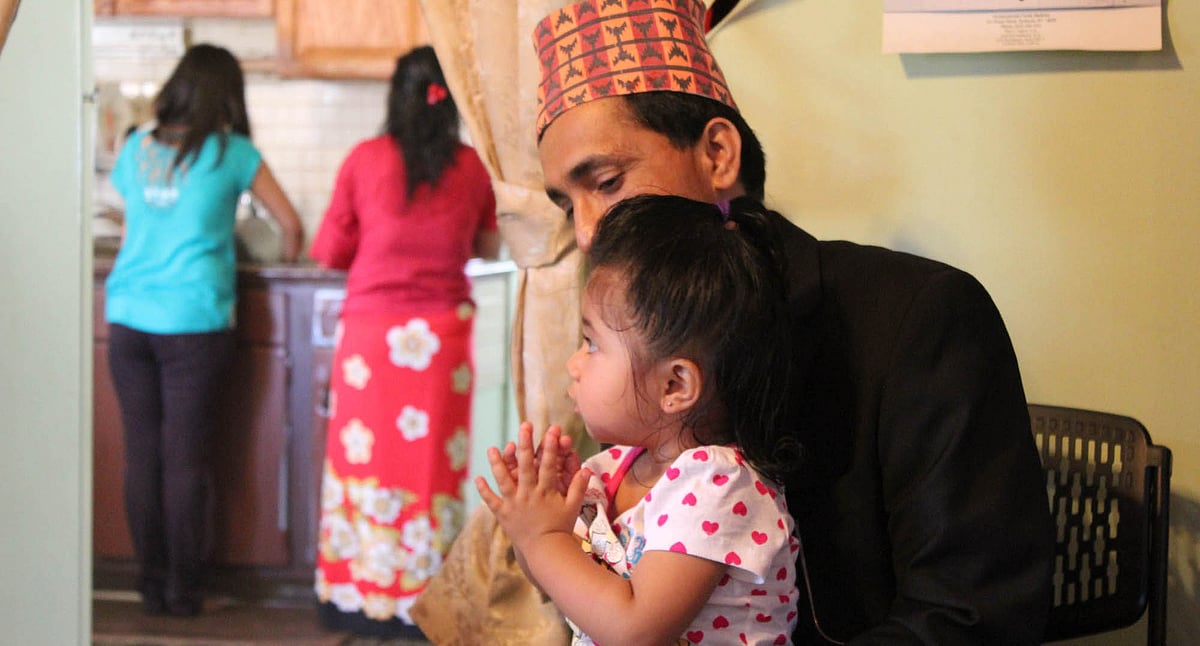
His hand over his mouth, the stunned funeral director shook his head. In front of Prem Regmi's open casket, where chairs were normally lined up for a Christian service, mourners huddled around a makeshift shrine on the floor, the centrepiece a lit pile of oiled wicks. The older and more grief-stricken sat in chairs along the outer perimeter of the carpeted room, the men on one side wearing topis, the women on the other wearing blank stares.
As the priest and Prem's father prayed, they lit more wicks to add to the burning pile. A wick fell out of the tray and its tiny flame danced on the floor. "Pick it up, quickly!" men shouted in Nepali. The funeral director had tried to stop this part of the rites, but had been convinced to allow it. As he stood in the corner, an old man in a yellow winter hat and a suit jacket too large for his shrunken frame approached him. He cupped his hands in front of his face in prayer and bowed his head, then mimed a few words and nodded affirmatively. "It's okay," the director told him.
Despite visions of broken fire codes, the director may have extended the extra cross-cultural compassion knowing this was a particularly difficult funeral. Suicide is one of those most wrenching of family tragedies, unfairly leaving loved ones wondering what they should have or could have done differently.
It was under these circumstances that Hem Regmi said his final goodbye to his son at a cemetery in Syracuse, New York on 7 June 2013. At the crematorium, bodies pressed close to one another to watch, the whir of machines replacing the sensations more familiar to those used to attending cremations in Nepal or Bhutan. After the prayers ended, wailing women and girls emerged first, supporting one another. Then came Hem. Stoic till now, his eyes brimmed with tears, his chin crumpled. He held his hands out limply like a child, and two men walked him away.