
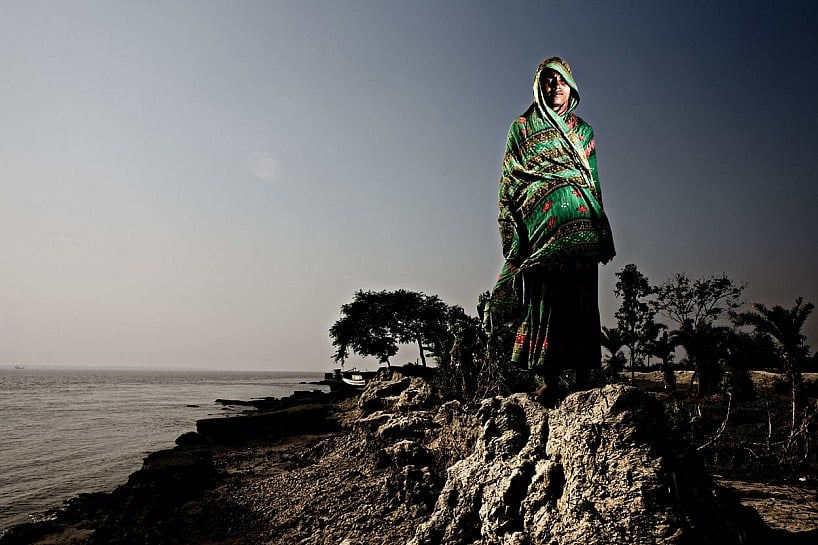
As the consequences of climate change become more evident, it is increasingly clear that the poorest citizens of the Least Developed Countries (LDCs) are most vulnerable to its impact. With the slow progress being made at international climate-change negotiations in curbing greenhouse-gas emissions, the need for these countries to adapt to climate change is becoming increasingly urgent. Aware of this reality, many of these nation states are taking steps to make their populations more resilient to the effects of climate change.
One country that is currently ahead in the game of adaptation is Bangladesh, which is greatly vulnerable to the consequences of climate change. It is estimated that some 20 million Bangladeshis in low-lying areas will lose their homes by 2050. Indeed, it is possible that a significant part of the Bangladeshi landmass will become submerged by the end of the century, leading to tens of millions more climate refugees. With the situation so grave, however, the issue was quickly taken on by the government and the wider civil society. Internationally, Dhaka has been engaged in international climate change negotiations under the United Nations Framework Convention on Climate Change since the document's inception in 1992, when Dhaka signed it. To date, Bangladesh has participated in all the UNFCCC negotiations, often playing a significant role at meetings. From 2004 through 2006, for example, Bangladesh was elected by the LDC countries to chair the group. During this period, it was able to bring the disparate group of nearly 50 LDCs from Africa and Asia together under a common agenda and negotiating strategy, which in turn enabled the group to negotiate a special LDC Fund to support adaptation planning in these countries.
Work has been even more focused within the country. Bangladesh's political leaders, experts both within and outside the government, together with a very active NGO movement have facilitated Bangladesh's early and continuing effective engagement in the international climate-change dialogue. At the country level, this led to the integration of climate-change adaptation into major ongoing work on disaster preparedness, by both the government and NGOs. A number of community-based adaptation projects have also been initiated, mainly by NGOs. A National Climate Change Committee, with members from relevant government and non-government organisations, was constituted in 1994 to draft policy as well as oversee the implementation of obligations under the UNFCCC process. This committee has helped in coordinating efforts on climate change across different ministries, avoiding the problem of approaching it exclusively as an environmental issue. As a result, climate change has been dealt with as a cross-cutting issue, with all relevant ministries playing a part in implementing the relevant strategy.
In relation to adaptation specifically, in 2003 Bangladesh established a Comprehensive Disaster Management Programme (CDMP), with a goal of establishing an integrated approach to climate change and disaster management. This included the creation of a climate-change office within the Department of Environment, tasked with building government capacity for coordination and leadership on related issues. The office coordinates awareness-and-advocacy efforts, as well as mechanisms to promote climate-change adaptation and risk reduction in development activities. Some specific activities they have undertaken include the preparation of manuals on adaptation and disaster preparedness in local languages for vulnerable communities in the flood-prone and cyclone-prone zones of the country.