
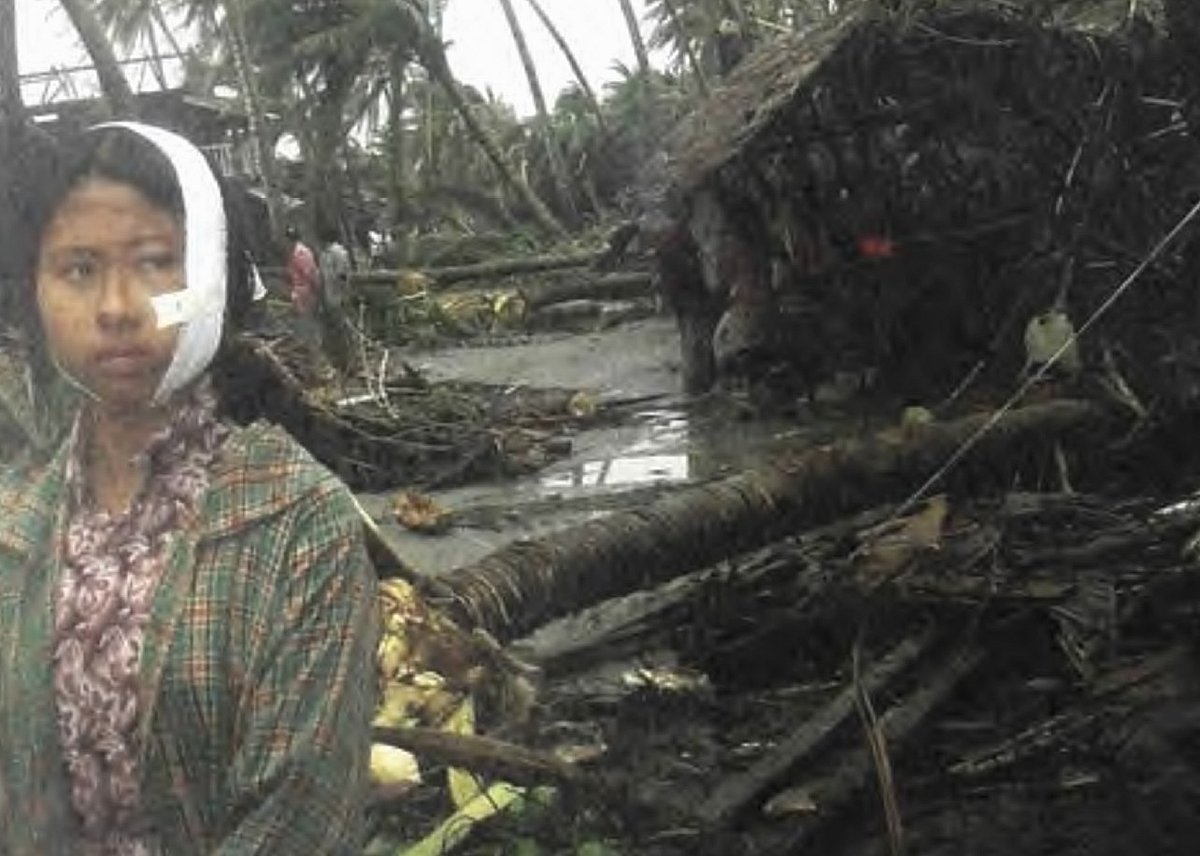
It has now been a bit over a year since Burma's worst natural disaster on record, Cyclone Nargis, struck the Irrawaddy delta. Yet since that day, 2 May, the repercussions of the cyclone have gone far beyond the meteorological and disaster-related. Indeed, the subsequent year has seen the emergence of debates that go to the core of the lives of all Burmese – and to the heart of governance and society in the country.
Nargis is said to have taken the lives of at least 148,000 people. As of early May 2009, the area is still short of 500,000 homes, 200,000 people are without safe drinking water, and half of the Irrawaddy fishing fleet is said to remain sunk. Aung, a 25-year-old thatcher from Lubutta township in Ayerwaddy division, lost some 30 relatives during the cyclone, along with his home and livelihood. Yet the only aid he and his wife have received over the past year has been two cups of rice, around ten days after the storm hit.
Aung's is only one story among thousands of similar ones. The first month after Nargis hit was a controversial time, as the junta outrageously blocked foreign-aid workers (and foreign militaries) from offering assistance. According to many, the generals feared a Western sea-borne invasion. "They are scared of something like Iraq. Or Rambo!" suggests Mahn Mahn, chairman of an exile Burmese NGO, the Emergency Assistance Team (EAT), based in Mae Sot, Thailand. The regime finally did relent, however, and, after reassurance from neighbouring countries, a number of agencies were allowed in to work. The junta, however, remained thoroughly in the driver's seat, deciding where and when assistance would be delivered.
Aung left his home in the delta in August 2008, and now tries to survive in Mae Sot. He and his wife went through at least eight checkpoints before they reached the frontier. At each their documents were checked and, when it emerged that they were from the cyclone-affected area, they were detained. Their only way to progress was to pay hefty bribes to the soldiers, who were apparently under specific orders not to allow people from the region to leave – evidently to prevent news from the cyclone-ravaged delta from filtering out.