
Southasia, the MacArthur Fellow and historian Sunil Amrith writes, "stands at the frontline" of an existential crisis. As climate change ushers in rising sea levels, violent and unpredictable weather patterns, and widespread species extinctions, the relationship of humans to water will be both newly imperilled and also vitally important. How did we get here? Amrith's book, Unruly Waters: How Mountain Rivers and Monsoons Have Shaped South Asia's History, charts a history of Southasia's – predominantly India's – relationship to water. It is a timely and distressing read, which stresses the urgent need to formulate a new, more wholesome relationship with nature – without, necessarily, providing us with a blueprint to do so.
Unruly Waters is a dazzling feat of historical synthesis. It begins in the 19th century when the British East India Company stepped up the pace and scale of its maritime conquests and proceeds through two centuries of colonial rule followed by another of post-independence nation-building. But unlike traditional histories of Asia – which foreground conquest, liberation, partition and growth – Amrith chooses an unlikely protagonist: water, in the form of the rivers, oceans, atmosphere and groundwater reserves that shape history.
The first half of the book discusses the devastating Indian famines of the 19th century, which were occasioned – in part – by the failure of the monsoon rains. The vast attendant human costs of these droughts prompted some of the first attempts to regulate water by systematic study of the monsoon: why did the rains fall when they did and was there any way to predict them? The newly formed Indian Meteorological Department (set up in 1875) became "the cockpit of monsoon science." These endeavours (always the result of hybrid interactions between local and European actors) formed the base from which 19th century scientists later connected the Southasian monsoon to the global climate system impacted by El Niño. We are linked, for better or worse, by climate.
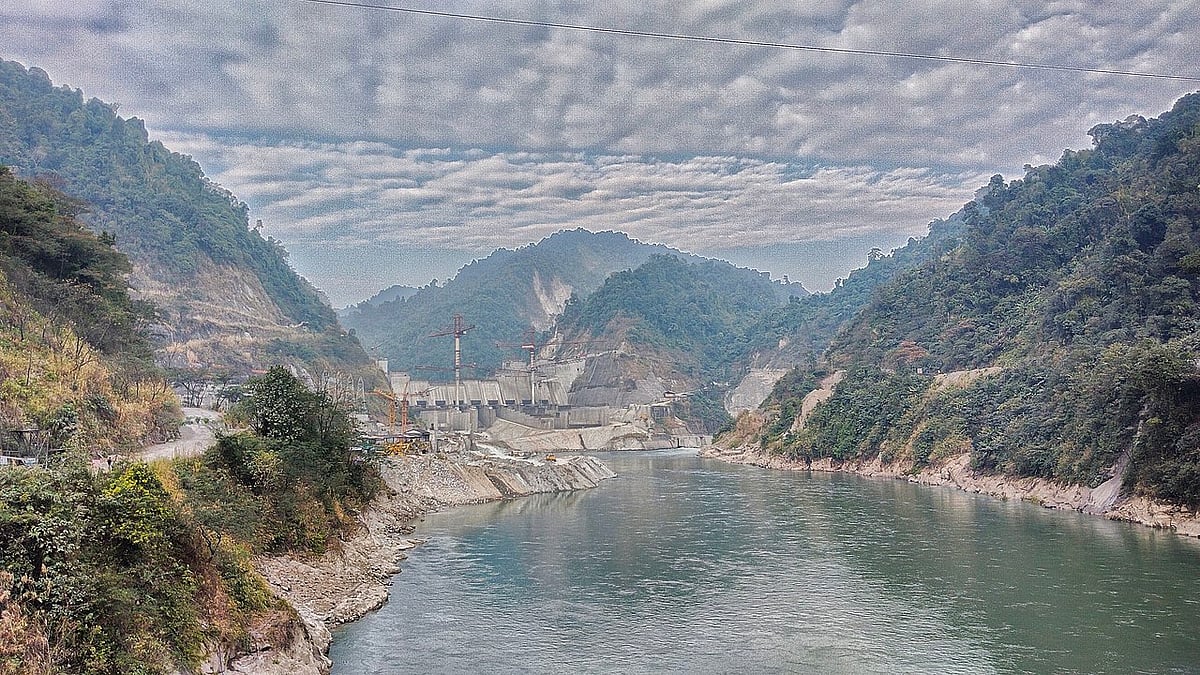
The second half of the book is devoted to India and China's spectacular 20th century growth – feats which would not have been possible without dramatic interventions around water. For instance, without large-scale irrigation and dams, feeding growing populations in both nations would have been near impossible, denying population and economic expansion.