
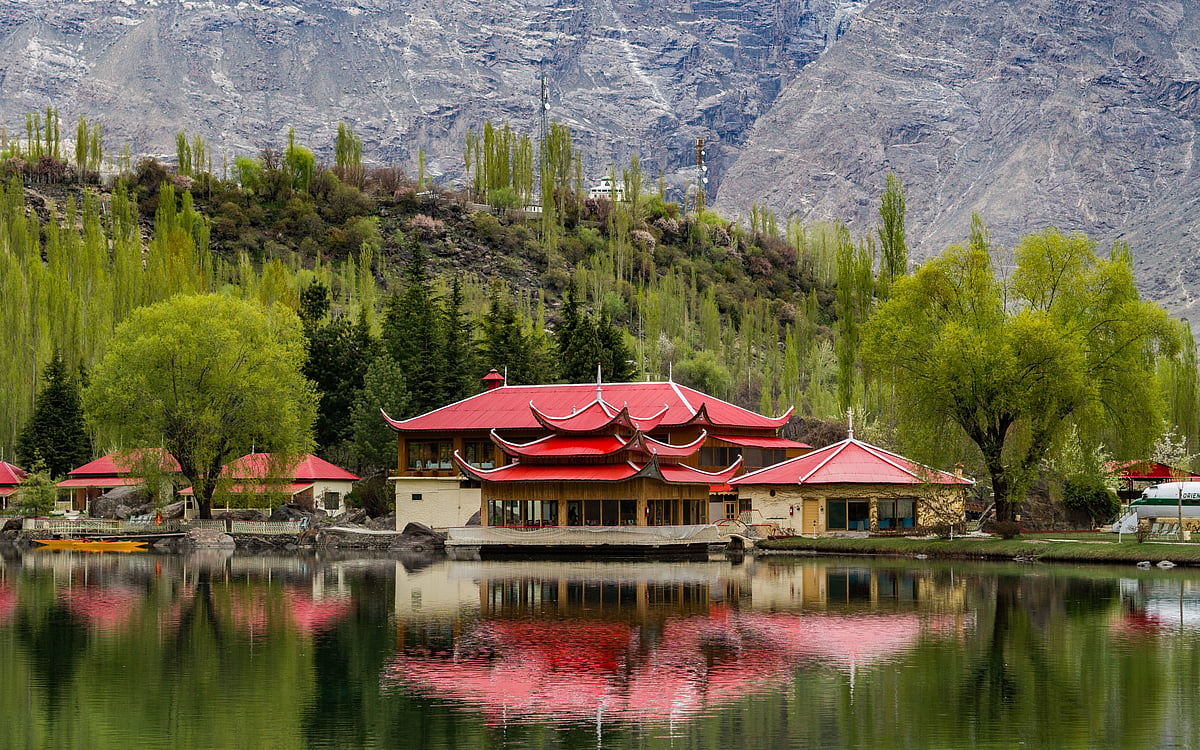
The cold winter nights in the Karakorum are warmed by Radio Pakistan's Skardu broadcast of the life story of Ali Sher Khan Anchan. At a time of growing sectarian and political divisions, the 17th-century Balti king is one figure everyone shares a love for. Other heroes include Hazrat Ali (the son-in-law of Prophet Muhammad) and the legendary Tibetan folk icon, Gesar of Ling, the latter although Baltistan's traditional links with the Tibetan plateau have been severed for the past 50 years.
But despite being on the margins of the Pakistani nation state, the pace of cultural change in what the Mughals once called Tibet-i-Khurd (Little Tibet) is quickening. In recent decades, Balti identity has been re-shaped by ties with the Iranian Revolution and Pakistan's Punjabi-dominated culture. But as the new generation enters the information age, in Baltistan's de facto capital, Skardu, more and more Baltis are dreaming of the day when the ceasefire lines will no longer separate them from their Himalayan kin in Ladakh and Tibet.
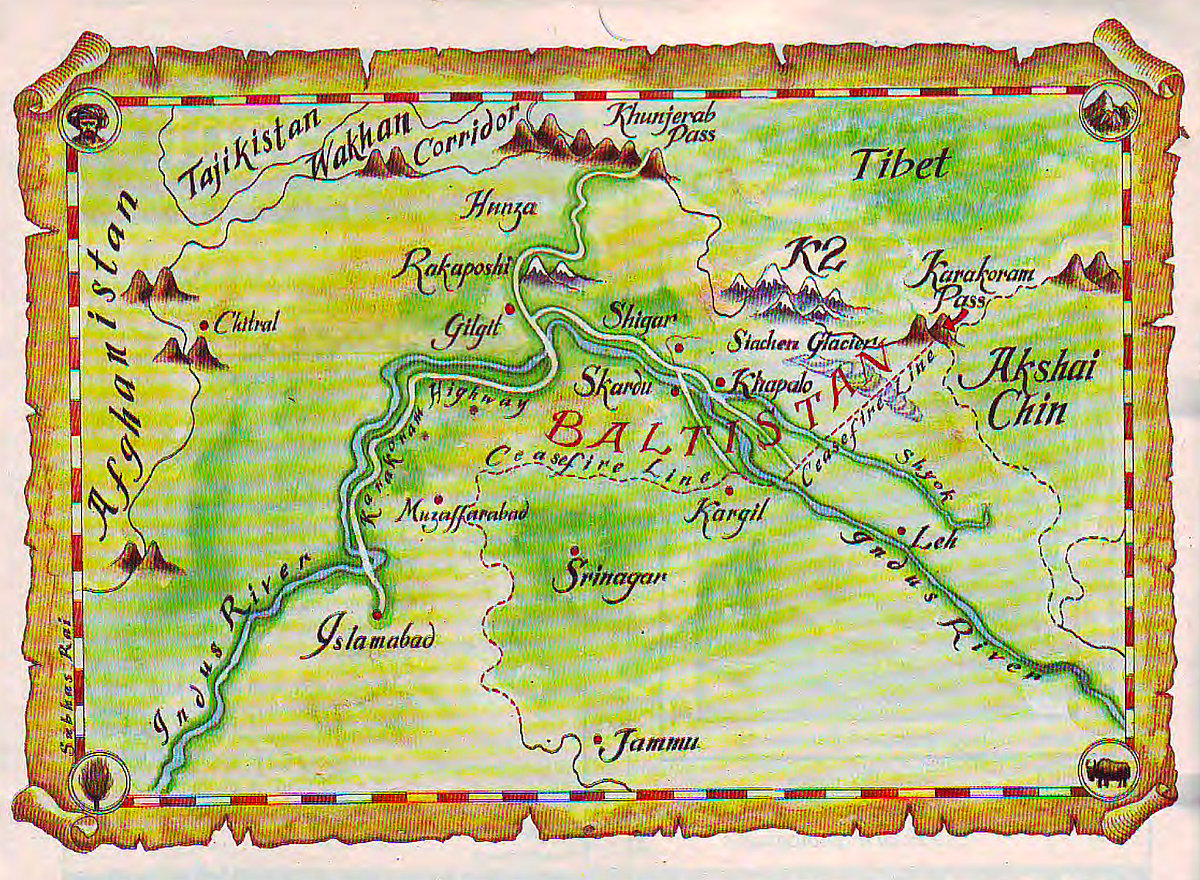
The agrarian communities that inhabit the valleys of the Indus, the Shyok, and their tributaries, have cultural affinities that stretch from Lhasa to Tehran. Linguists say that Balti may be one of the most archaic forms of spoken Tibetan. Its closest relatives are Purig (spoken across the ceasefire line in Kargil), Ladakhi and the Amdo dialect of Eastern Tibet. Over the centuries, Balti has become mixed with Persian, Urdu and Arabic, for here in the arid valleys of the Karakorum lie the historic junction of the Buddhist and Islamic worlds. Since 1948, the region has been under Pakistani control, and is now part of its federally administered Northern Areas, a region yearning for recognition and political rights