
In September 2018, LGBT communities across India celebrated a historic court judgement. The Indian Supreme Court ruled that Section 377 of the 1860 Indian Penal Code (IPC) – which criminalised sex "against the order of nature", and was used against the LGBT community – could no longer apply to consensual adult sex. While the judgement was seen as a major victory for LGBT people, efforts to control, regulate and criminalise sexuality and gender expression continue in many forms, including the Transgender Persons (Protection of Rights) Bill (TPPR), which the recently re-elected Bharatiya Janata Party (BJP) government has announced it will reintroduce in Parliament. The bill, which activists have argued would legitimise violence and discrimination against transgender, intersex and gender non-conforming people, is an example of how colonial laws continue to be replicated in new legislation.
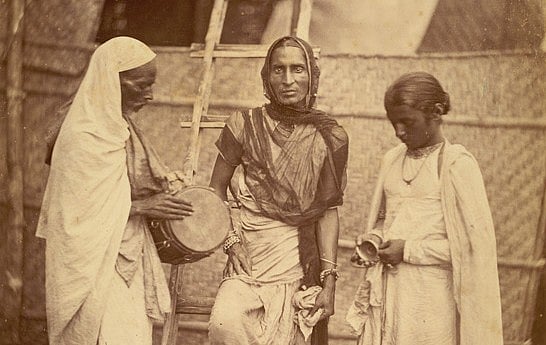
The 2018 TPPR bill criminalises gender diverse people in ways that resemble sections of the 1871 Criminal Tribes Act (CTA) that targeted 'eunuchs', a stigmatising colonial term for Hijras (or Kinnars). The 1871 law provides an important example for examining continuities in the policing of gender and sexuality, because even as the anti-Hijra provisions were repealed in 1911, their language and spirit has been echoed in postcolonial legal and policing practices.
An ungovernable population
The first part of the CTA targeted so-called "criminal tribes" – diverse, socially marginalised groups that the British labelled criminals by hereditary caste occupation – which are today known as Denotified Tribes or Vimukta Jati. Some communities were labelled 'criminal tribes' because of their nomadic lifeways, and others because of their apparently unproductive use of land and forests. Another aim was to dismantle indigenous policing systems. The CTA – which was repealed by the government of independent India in 1949, and replaced with the Habitual Offenders Act of 1952 – continues to be studied for its implications in treating entire communities as 'habitual offenders'.