
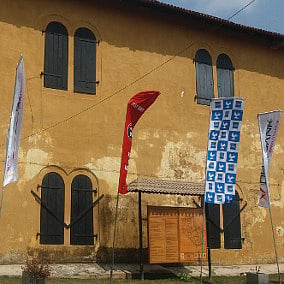
The recent edition of the Galle Literary Festival made Chhetria Patrakar mull over a number of things, including such grave matters as the state of decolonisation in Southasia – something one tends to avoid amidst the glamour of most litfests. If the form and content of cultural events are any markers of that state, what could one say about the Galle litfest, its organisers, and its audience?
The ninth Galle litfest appeared designed for a globally mobile Anglophone audience. Nothing inherently wrong in that, of course, except that such a demographic tends to be more invested in what's happening in the other side of the world, as opposed to in the other side of the town, country, or region. But catering to such globalised interest doesn't naturally produce a global discourse. Often what is of interest to London or Washington DC or even Delhi can be as parochial, if not more so, than that of Jaffna or Janakpur.
Held in the precincts of the Galle Fort, the litfest draws at least part of its character from its surroundings, an area built as a colonial outpost now given over primarily to tourism. At the festival this time, both the Fort (or at least its keepers) and the Fest encountered a sibling in the Castle of Good Hope in Cape Town, South Africa, distant both geographically (7850 kms away), but also conceptually. If Galle Fort has centred its identity on being a well-regulated UNESCO heritage site, with preservation and tourism as the key elements, the Castle of Good Hope appears to be challenging the colonial narrative and purpose through both confrontation and repurposing of the site.
Although both Forts were built by slave labour, the Galle Fort seems largely sanitised of the seamier side of its past history, perhaps in deference to its role as a high-end tourist hub that requires a feel-good ambience. The Castle of Good Hope, on the other hand, draws directly on the history of land dispossession and cultural genocide, and has lent its space to vibrant civil society activism. Its CEO, as Calvyn Gilfellan is called, sees the role of the Castle as a link between the past, the present and the future, albeit often shocking his board as with a recent hosting of a carnival of the LGBT community titled 'Dungeons and Dragons', a move he himself termed the crossing of the last rubicon. Could Galle Fort enlarge its role of engagement with a new Sri Lanka similarly? Currently, the ghosts of CEOs past (of the VOC and the East India Company) seem to rule the roost.