
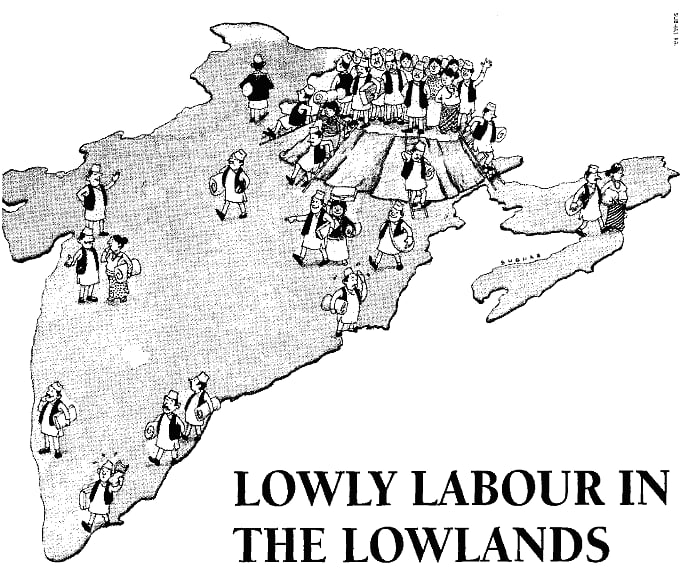
Nepalis migrate to the plains of India for the same reason that migrants have abandoned their homes and hearths the world over through history. It is the economics of desperation. Because their unproductive little farms are unable to provide sustenance, high-landers by the hundreds of thousands descend to India in search of livelihood. In extreme cases, they leave solely for the purpose of removing an extra mouth to feed at home.
At a time when, after decades of neglect, the issue of the export of Nepali women to brothels in metropolitan India is finally getting a degree of notice, the much larger export of menial labour continues to receive scant attention of planners and scholars. Cumulatively, the remittance by migrant labour make a singular contribution to the national economy, but they find no mention in national economic calculations, and certainly not in the figures and forecasts of the National Planning Commission.
The volume of misery that is represented by what is thought to be more than a million individuals from a national population of 21 million leaving home to work as an underclass in the plains is indeed large, and it is lamentable that it should go unremarked. Such is the official and scholarly apathy on the subject of Nepali labour in India—akin to the indifference towards human-back portering in the hills (see Himal Nov/Dec 1995)— that one can reach no other conclusion than that the phenomenon is regarded as a national embarrassment.
Pretending that migration for basic employment does not exist or does not matter will not make it go away, however, and the Nepali state is dutybound to recognise the issue and address the extreme economic imbalance and lack of progress which makes peasants continue to seek paltry pickings in a neighbouring country.