
THE WAR IN GAZA continues to escalate, with over 40,000 killed, at least 100,000 injured, public infrastructure and homes decimated, and almost the whole of the territory’s 2.1 million people displaced. Those of us across the world who are horrified by Gaza’s plight continue to deliberate on how best we can organise and build solidarities to bolster the movement for a free Palestine. At the heart of this is the question of how we should mobilise across the political spectrum at this moment of crisis.
For Sri Lankan Tamils – both in Sri Lanka and in the diaspora – it is natural to draw comparisons between the devastation in Gaza and the brutal end of the civil war in Sri Lanka in 2009. Back then, the Sri Lankan government rained down bombs – some of them procured from Israel – on Tamil-dominated areas that continued to hold out. A savage military assault killed over 40,000 Tamils in the space of some months, while the international community continued to provide arms to the Sri Lankan government and simultaneously issued vacuous statements urging restraint.
The parallels with Israel’s conduct and the present situation in Gaza are striking. Yet we must be careful in comparing the oppression of Palestine and Palestinian resistance to the state’s repression of Tamils and the rise of Tamil militancy in Sri Lanka. Hasty analogies made without critical examination can be dangerously misleading.
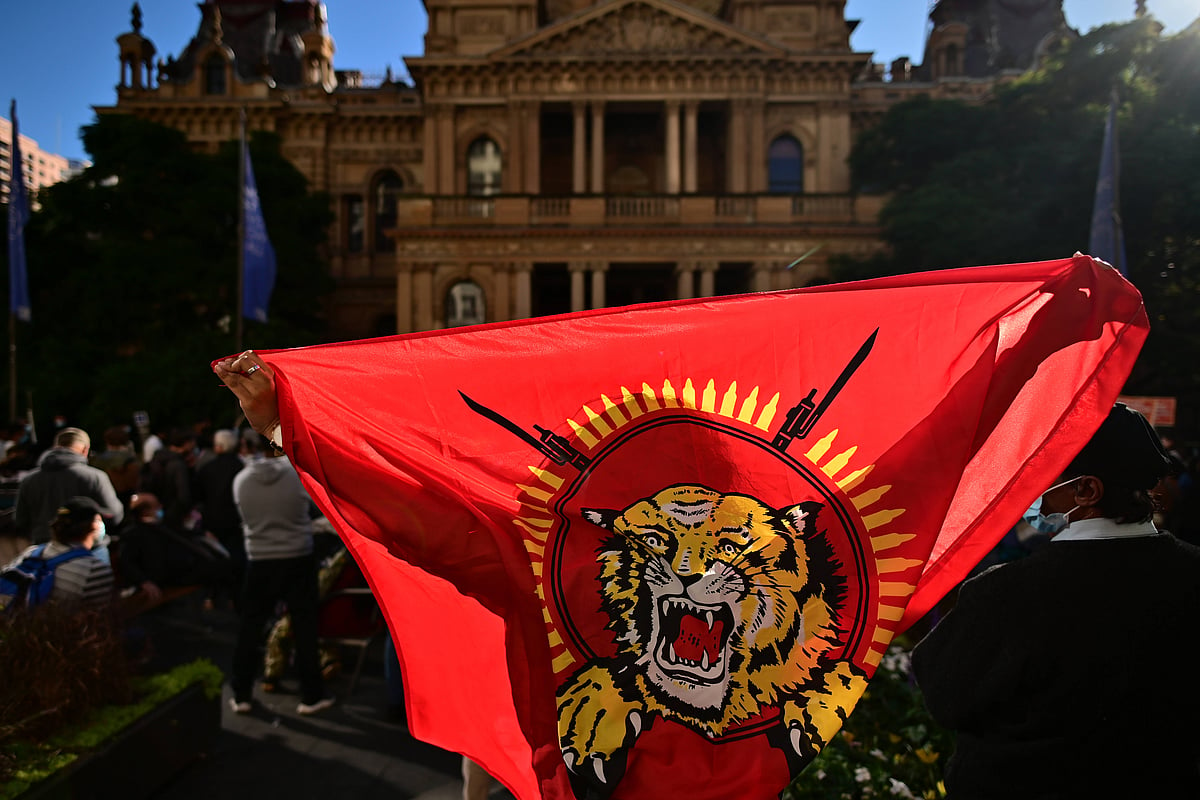
Certain elements of the Sri Lankan Tamil diaspora in particular see that there is a vibrant international movement in solidarity with Palestine garnering serious power across the globe. They have tried to piggyback on this for their own cause of creating an international solidarity movement for a separate Tamil state, even in the absence of a Tamil nationalist resistance movement in Sri Lanka at present. A section of the Tamil nationalist lobby is promoting all manner of ill-conceived comparisons between the Palestinian struggle and the Sri Lankan Tamil struggle, spearheaded until 2009 by the separatist Liberation Tigers of Tamil Eelam (LTTE). Historically inaccurate statements by some elements of the diaspora have portrayed the LTTE as an anti-imperialist, progressive force that supported and stood in solidarity with the Palestinian struggle. These elements also claim that the LTTE received training in arms from the Palestine Liberation Organisation (PLO), avoiding the well-known fact that the group was actually trained by the Indian Army in the 1980s.