
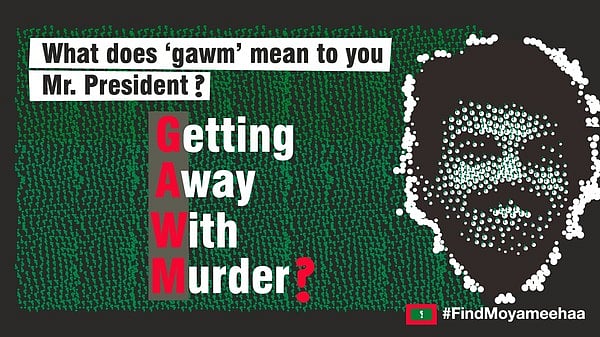
The droning rumble of traffic through the heart of the Maldives' capital city, Male, was interrupted on 8 August 2018 by a procession of question marks. A protesting parade of doubt coursing past fuschia campaign flags which confidently boast of five years of national development: of roads, airports, land reclamations, giant mosques and the country's first ever inter-island bridge – all accompanied by pledges to protect the Maldives' Islamic faith and the country itself, under the Dhivehi language slogan 'dheen & gawm'.
"Where is the knife?", "who owned the car?", "what about the DNA?" queried the hundreds who had joined the protest march. "4 years 4 that?" questioned one placard; "4 years of failure", read another. "Same old questions, no new answers," determined another. At the head of the queue marched Aminath Easa, the 72 – year old mother of Ahmed Rilwan who 'disappeared' four years ago. "Four years since Rilwan was disappeared. The investigation isn't complete! Conduct a fair trial!" demanded the largest banner, brandished by Easa and her daughters. The fourth annual Suvaalu (Question) march marked exactly 1461 days since he was last heard from, just after midnight on 8 August 2014.
The big question
While the big question currently marching towards all Maldivians is how they will vote in the presidential elections on 23 September, the questions posed by demonstrators striding through the cramped island capital are, in fact, crucial as citizens prepare to judge the country's real progress under the governance of President Abdulla Yameen Abdul Gayoom. For the future of the ailing democracy, the answers could not be more important. For the family of one gifted young writer, only one really matters: where is Ahmed Rilwan Abdulla?