
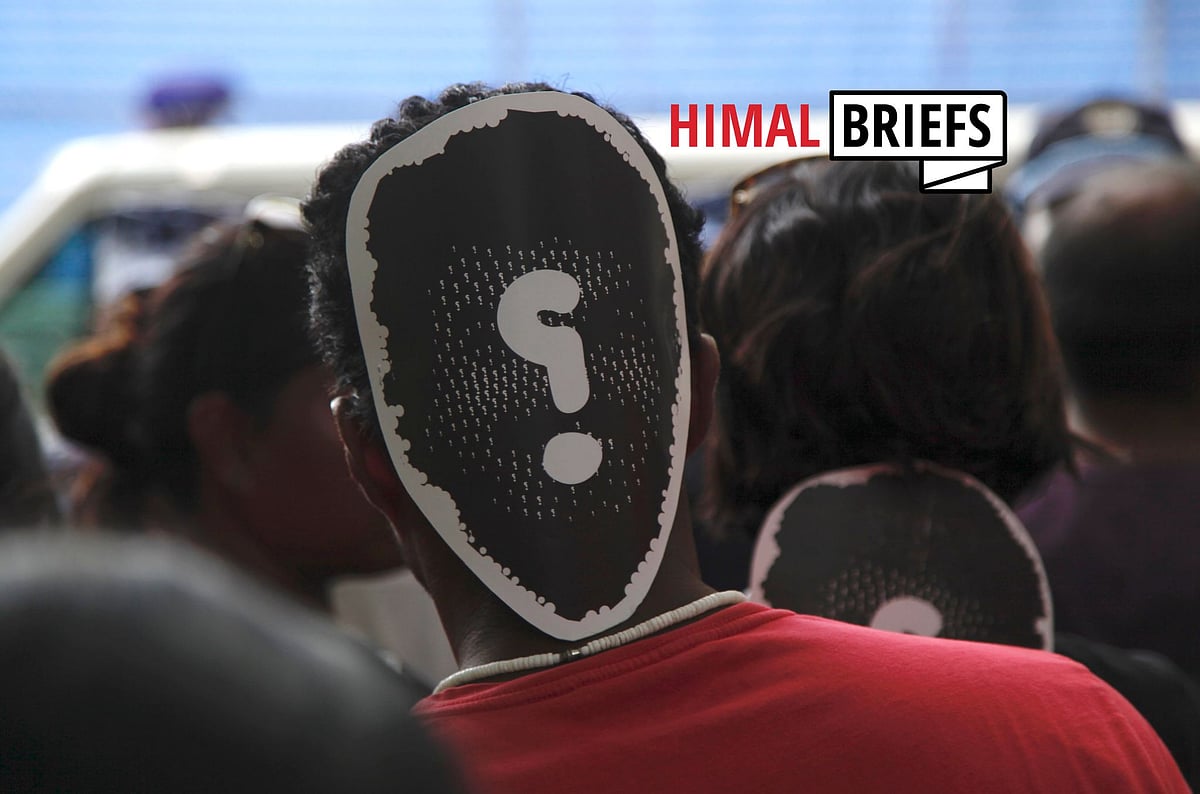
"I still see him in my dreams," a family member of Ahmed Rilwan told me, speaking in Dhivehi. "There, he's happy and himself. Always with his wry smile and humour. I believe he died as a martyr, maybe that's why I never have nightmares about him."
For eight years, the unresolved disappearance of the Maldivian investigative journalist and human rights defender Ahmed Rilwan has left his family unable to proceed with the administrative and legal processes that follow bereavement. His final days were consumed by a whirlpool of terror that culminated in his forced disappearance and alleged killing in August 2014. Last December, the harrowing facts leading up to Rilwan's disappearance were yet again confirmed by the Maldives' Commission on Deaths and Disappearances (DDCom) in a press conference. DDCom is a transitional justice mechanism established in 2018 under President Ibrahim Mohamed Solih's administration on his first day in office to investigate unresolved cases of murders, enforced disappearances, and abductions that occurred during the former government's rule, led by President Abdulla Yameen, and provide justice to the victims and their families. Since pledging to recover assets stolen under the previous government, Solih initiated investigations into the allegations against Yameen and his associates. Ex-president Abdulla Yameen, received an 11-year jail term on allegations of bribery and money laundering.
Rilwan was cornered by violent Islamist extremist groups operating in the Maldivian capital Malé. They followed his movements to track him down in the suburb of Hulhumale, where he lived. He was forced into a red car outside his apartment building and taken onto a fishing boat. There he was decapitated, and his body was then disposed of at sea, the DDCom proclaimed. To boot, he directly received endless death threats from salafi-jihadist groups overseas, including Maldivian foreign fighters in Syria and Iraq. Even in this time of acute desperation, Rilwan kept reporting from the frontlines, covering the Maldives in a way that made powerful criminals and politicians febrile.
The US-based watchdog group Human Rights Watch states, in its World Report 2023, that Solih has "failed to bring essential reforms to the justice system" despite promises made during his campaign in 2018. The report says the government remains malleable to pressure from Islamist extremists and political leaders, and has rolled back fundamental rights and liberties such as freedoms of speech, expression, assembly and association. In cases such as Rilwan's, where Islamists have targeted people opposing religious extremism, the government's failure to provide accountability "has meant that gangs, powerful religious groups, and their political patrons increasingly exercise a chilling effect on free speech in the country."