
AT 7.23 AM on Friday, 18 April, a young woman was discovered face down and unmoving on the tin roof of a warehouse in Malé. She had evidently fallen from a nine-storey apartment building next door. Gravely injured, she was taken to the government-run Indira Gandhi Memorial Hospital in the city, then transferred a few days later to a hospital in Malaysia. How the fall had happened remained unexplained.
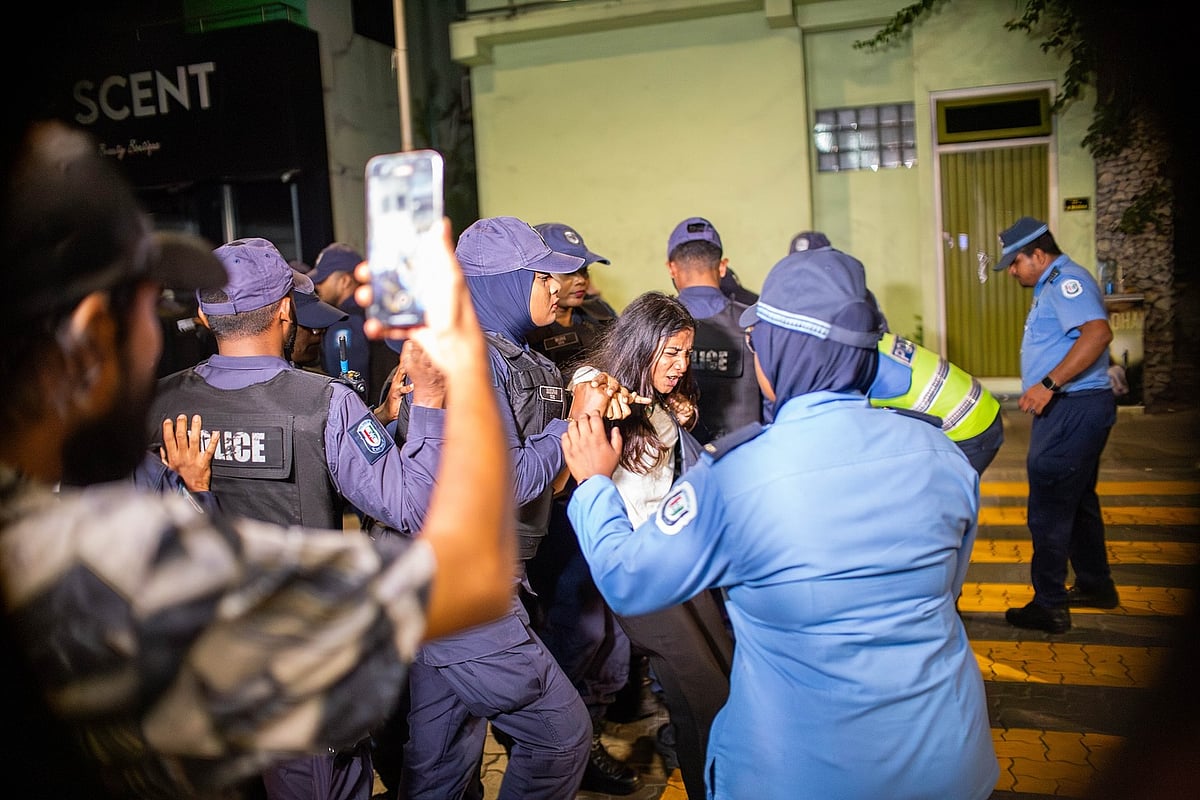
In the aftermath, hundreds of young people brought the Maldivian capital to a standstill every evening for over a week, determined to know the truth and seek justice for the injured woman. Occupying the central avenue of Majeedhee Magu, outside the police’s Criminal Investigations Building, the demonstrators – most of them aged under 30 – have so far forced the removal of two police chiefs in a single night as well as the appointment of a presidential commission to look into the woman’s fall, and have alleged police misconduct in the investigation around it.
Unusually for the Maldives, given its history of turbulent party politics and street demonstrations, the protests have been entirely multi-partisan and youth-led. Early efforts by opposition parties to co-opt the movement were rebuffed, and even veteran activists of an earlier generation were shuffled off to the sidelines. Just as unusual was the tolerance and restraint shown through a week of protests by the Maldivian police, historically heavy-handed and quick to disperse “unregistered” gatherings. That changed with a crackdown against peaceful protesters on the night of 1 May, with the police pepper-spraying the crowd, confiscating sound equipment and arresting two people identified as organisers.
The emotions of the young protesters have ranged from fury at police incompetence and a culture of victim-blaming to disbelief over the alleged decision to “leave her to die” by the man at the centre of the investigation. But the overwhelming sentiment has been anger over the impunity allowed to those with connections to power; protesters have thrust money at police monitoring the demonstrations, jeering, “Money, money, yes sir!”