
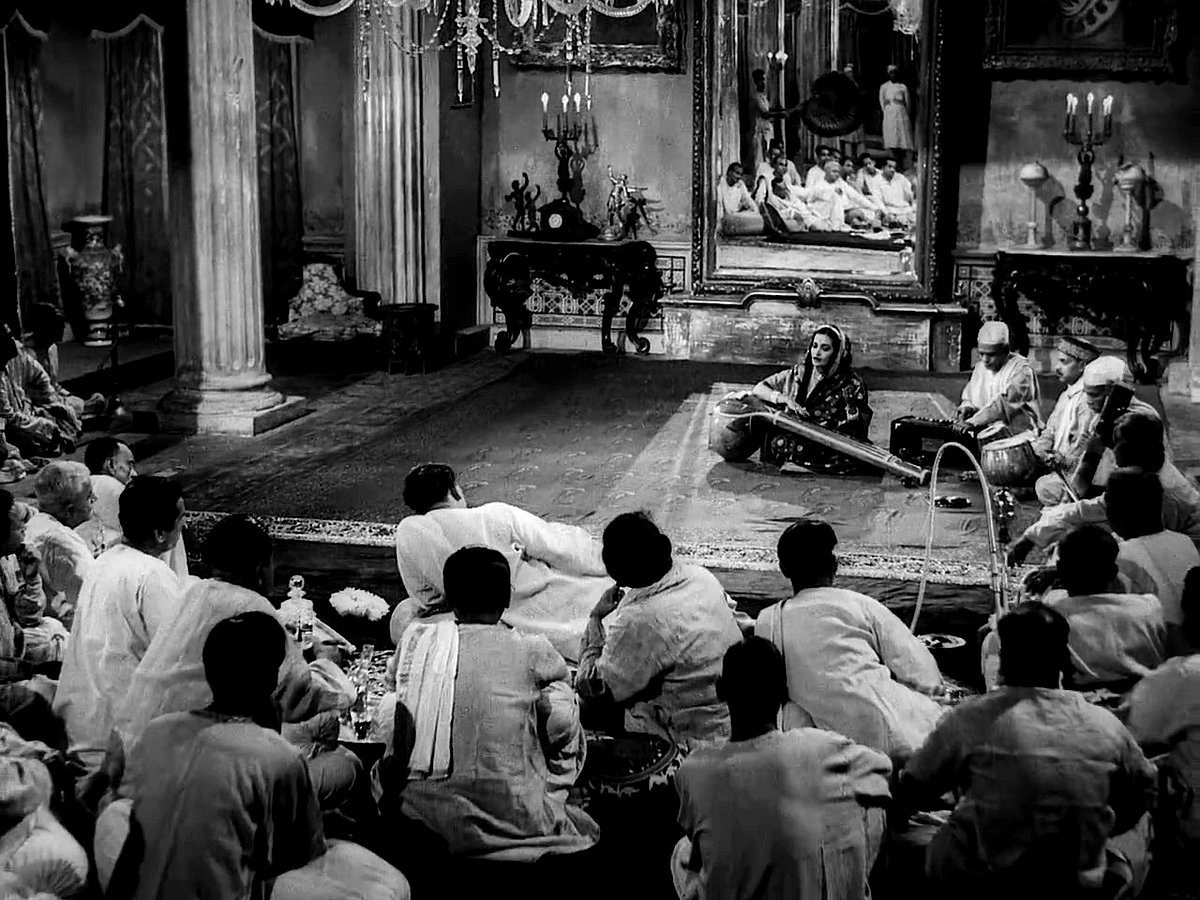
The queens of yesteryear were crowned long before the current pop-cultural references to 'qweens'. These were vibrant and prominent personalities who were honoured with the title of 'queen' (or mallika) for reaching the pinnacle as a performing artist, and included personalities such as Begum Akhtar from India (known as Mallika-e-Ghazal; Queen of Ghazal) and Noor Jehan from Pakistan (known as Mallika-e-Tarannum; Queen of Melody). While these two are still more widely known, there has been little effort in documenting the social lives and histories of many other female performers, including those that belonged to traditional performance communities in music and dance.
Although there have been some attempts to archive the legacy of courtesan performers in India, these efforts have been almost negligible in Pakistan. This is partly a result of limited state patronage for the performing arts and has to do with negative social perceptions associated with female performers from this tradition, a remnant of the country's colonial past. Moreover, the creation of an Islamic Republic demanded very specific ideas of 'honour' and 'Muslim womanhood', whereby many of these stories may have either been deliberately erased or forgotten, perhaps even by the women performers themselves. This could especially be the case for those that got married, perhaps in an effort to reintegrate back into a patriarchal society as 'honourable' women. However, no version of Pakistani music history can be complete without remembering the contributions of these remarkable women, many of whom were custodians of the musical heritage of the country.
Courtesans of Mughal India
Female performers have existed throughout the history of the Subcontinent, tracing back to the dancing girl of Mohenjo-Daro, thousands of years before the creation of Pakistan itself. These include the courtesans of Mughal India, which broadly refer to singers, dancers, and musicians associated with the court. The term tawaif rose to prominence during the 18th and 19th centuries of the Mughal rule and became synonymous with all courtesans. However, it is important to note that the current understanding of the term tawaif does not encompass the different categories and roles of female performers that existed in earlier times. For instance, alongside the categories of tawaifs included bais, lolee, patur, gunikers, kancanis etc. Further, there were the domnis and dhadhinis, which was in fact a distinct category of female singers. According to Mekhala Sengupta's paper, 'Courtesan culture in India: The transition from the Devdasi to the Tawaif or Boijee', courtesans were "front-runners of the first professional female entertainers" proficient in singing, dancing, poetry and social etiquette under the patronage of the royal courts and kings that ruled over the Subcontinent.