
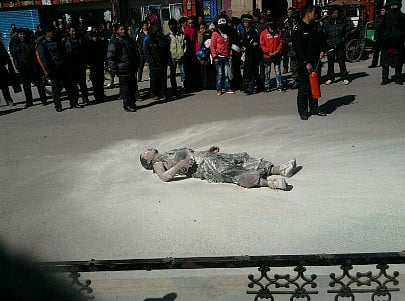
On 27 February 2009, Tapey, a Tibetan monk in his 20s, walked from the Kirti Monastery, in Amdo (in today's Sichuan province), to the nearby crossroads in the town market. His garment was drenched in oil. Upon reaching the crossroads, he set himself on fire, unfurled a homemade Tibetan flag bearing a photo of the Dalai Lama and shouted slogans. Before people could hear what he was saying, members of the People's Armed Police intervened and shot at Tapey. When he fell, they took him away.
That incident turned out to be the first of many such self-immolations in Tibetan areas. It also seems to have set a precedent for a new direction in Tibetan activism. In March 2011, another Tibetan, Phuntsok, committed self-immolation; by the end of January 2012, at least 15 others have done so. Twelve of these are known to have died. Even as this article is being written, during the first week of February, there are reports of three more Tibetans having self-immolated. A common demand of these individuals has been the Dalai Lama's return to Tibet and freedom for the Tibetan people.
Most of the self-immolators were from Kirti Monastery. Its head lama, Kirti Rinpoche, who resides in Dharamsala, has said that the self-immolations are the result of wounds suffered by three generations of Tibetans. During the 1930s, the first generation suffered when Chinese communists raided the Kirti area while on their Long March; during the 1960s, the second generation suffered prior to and during the Cultural Revolution; and since the late 1990s, the third generation of Tibetans has suffered on account of so-called Patriotic Education and related campaigns put in place by the Chinese government.
For its part, the Chinese government's initial reaction to the recent spate of self-immolations was one of denial. As the number of these incidents continued to increase, Chinese officials sought to deflect blame by humiliating the Tibetans, declaring the self-immolators to be criminals and saying their actions were instigated by 'the Dalai clique'. They also attempted to minimise the political significance of these actions by portraying them in the light of economic protest, suggesting that they are effects of globalisation – though how exactly they make that connection has never been explained. To counter any allegation that they have neglected Tibet, Chinese authorities have highlighted the monetary assistance that is being rendered to the Tibetans.