
In mid-July, the Coordination Committee for Manipur Integrity (COCOMI), a Meitei-led civil-society organisation based in Imphal, wrote to the European Parliament. COCOMI declared that a resolution the European Parliament had adopted on Manipur, where ethnic violence had been raging since May, wrongly framed the Indian state's conflict as one between two communities. Instead, it said, the violence was between "immigrant Chin-Kuki narco-terrorists." In saying this, the COCOMI was sticking to its line of projecting the hill tribes of Manipur, now foes to the Imphal Valley-dwelling Meiteis, as both criminals and outsiders in the state.
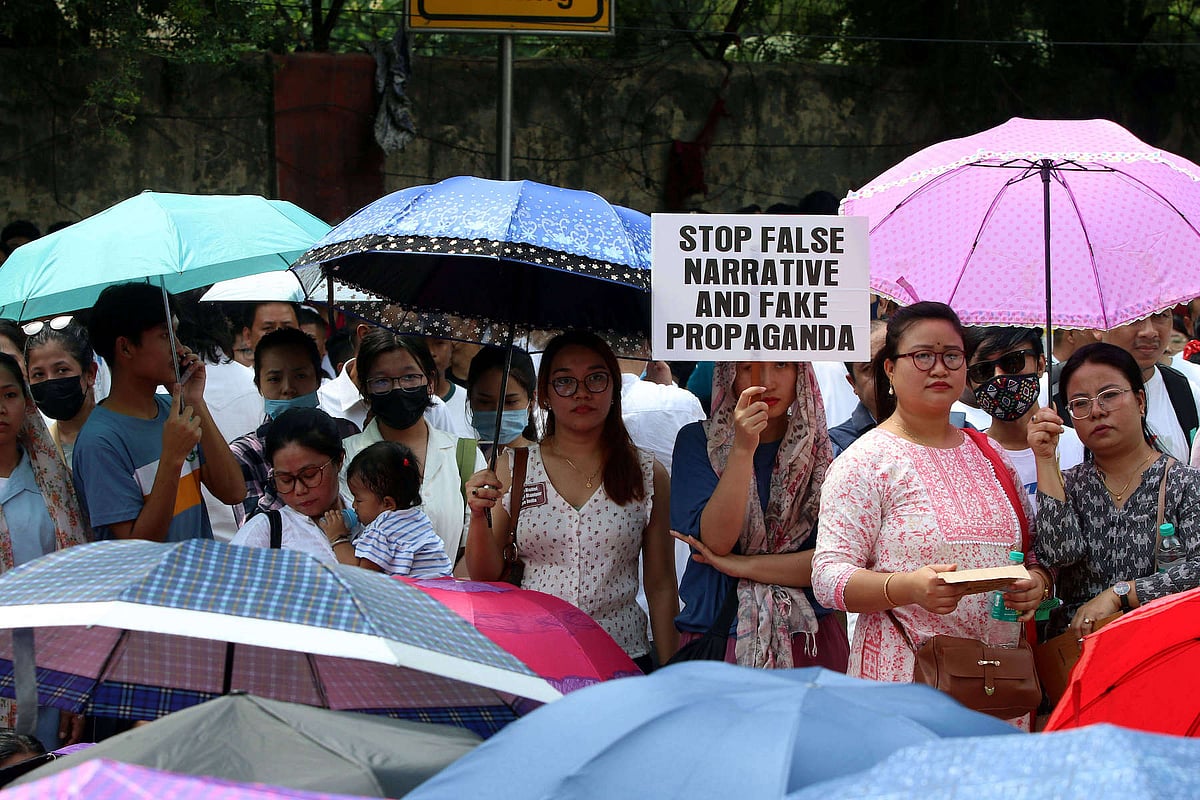
In the four months of violence so far, Manipur's state government and India's central government have failed to reestablish law and order, and both the local and the national media have become increasingly unreliable, often saturated with misinformation. But perhaps the most tragic factor in the Manipur crisis has been the erosion of civil society in the state, evident in the vicious other-ing of fellow citizens and neighbours. The disintegration and myopia of Manipur's civil society is one of the root causes of the unrelenting violence.
Multiple factions throughout India's Northeast that place ethnic considerations above common societal goals are in danger of making the same awful mistakes. As a Naga neighbour, watching Manipur disintegrate from Nagaland to the north, I see that the purported ethnic ideals of Nagas, Kukis and Meiteis have pitted all three communities against each other. For the Nagas there is Nagalim, implying a unity of all traditionally Naga areas achieved through armed struggle, risking violence in the region. For Kukis it is Zalengam, with the integration of all Kuki geographies, which traverse national and state boundaries and overlap with the home areas of other ethnic groups, making a perfect concoction for political and ethnic conflict. For Meiteis, there are notions of the thousand-year-old Meitei civilisation, laced with a sense of cultural and ethnic superiority over their Naga and Kuki neighbours. As a result of all of this, when ethnic conflict erupts, we end up treating each other barbarically, including as perpetrators of sexual violence.
In the past, civil society in Manipur has been exemplary in fighting for the rights of the common people. The state is no stranger to political violence and state repression, and several groups have been at the forefront of civil-rights protests there. This includes the All Manipur Students' Union, the All Manipur United Clubs' Organisation and the Naga People's Movement for Human Rights, which have campaigned on issues such as territorial integrity, land and indigenous rights, as well as extrajudicial detentions, killings and military occupation. Women have led protests against the repressive Armed Forces (Special Powers) Act, which grants sweeping impunity to Indian armed personnel in "disturbed areas". The iconic photo of 12 women stripping naked outside Imphal's Kangla Fort in 2004 to protest against sexual violence and other violations by the Assam Rifles has been a symbol of human-rights protest in the Northeast for almost twenty years. So it has been doubly devastating in the present crisis to see women's bodies become sites of violence and retribution, as in the now notorious mob attack on Kuki women in the village of B Phainom, recorded in a video that was widely circulated online.