
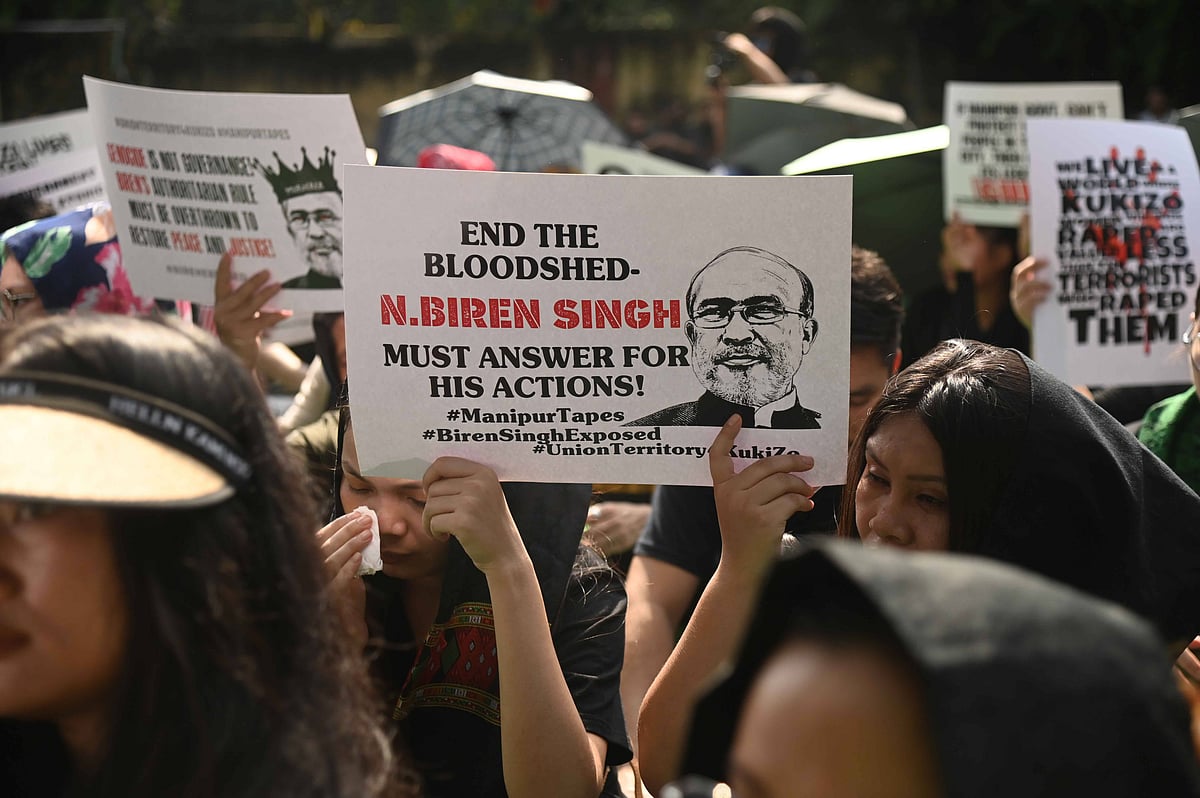
On 27 November 2018, police in Manipur arrested the journalist Kishorechandra Wangkhem for a video he had posted on social media criticising the state’s chief minister N Biren Singh, his Bharatiya Janata Party and India’s prime minister Narendra Modi. In the video, Wangkhem objected to the ruling dispensation’s push for a local celebration of the Rani of Jhansi, a 19th-century Maratha queen lionised by Hindu nationalists but with little or no connection to Manipur’s history. The courts, finding no cause for judicial action against Wangkhem, released him. But he was arrested again a few days later for the same social media post, this time under the stringent National Security Act.
Wangkhem has been in and out of prison since, repeatedly charged and arrested for his online criticisms of the BJP and its ideological parent, the Rashtriya Swayamsevak Sangh. His detentions, which the state has repeatedly justified as being for the maintenance of order, have been a public performance of state power over anyone who might challenge the Manipur government’s preferred narratives. Wangkhem is from the Meitei community, and his persecution reveals how the state has not hesitated to extend its repression to dissident members of Manipur’s ethnic majority, which Biren Singh claims as his own people.
While this logic of power extends across ethnic and community lines, its effects are unevenly distributed. The Biren Singh government’s apparatus of control has been more stark and repressive in the case of minority communities, and the state apparatus has exercised violence most freely against the minority Kuki-Zomi-Hmars.
Hanglalmuan Vaiphei, a 21-year-old Kuki-Zomi student, was arrested on 30 April 2023. This was days before ethnic violence broke out between Meiteis and the tribal Kuki-Zomi-Hmar minority – violence that has continued with little respite for the last 20 months and counting. Vaiphei’s offense had been merely sharing a Facebook post critical of the Manipur government. His detention was shrouded in procedural violations, including his mother being coerced into signing documents she did not understand. That May, a police vehicle transporting Vaiphei from a court proceeding was intercepted by a mob and he was beaten to death.