
At the Taverna du Liban, the popular Kabul restaurant that was attacked last week, the liquor was served discreetly in teapots. That is what I read in reports and tributes on the Internet, but in my own memories I recall clearly the mint lemon juice, served in tall glasses. I remember big slabs of chocolate cake appearing unbidden, and my protest that we hadn't ordered cake receiving a response with a smile that it was complimentary, a courtesy to guests. I remember there already being more food than we had ordered at our table, and eventually more dessert than we could eat. And I remember most clearly my reason for picking the Taverna on one particular occasion. After much deliberation I had invited my party of guests there – young Afghans working their first jobs, most of them young women – because it was one of the few places I was sure they would be treated courteously, where they could feel secure.
The Taliban picked their target well. The Taverna usually hosted Kabul's signature mix of bureaucrats, highly placed consultants and INGO staff. But it was also that unusual space in Kabul's terrain of high walls and implicit hierarchies where everyone was treated as a respected guest. On Friday, 17 January, three men broke through the steel doors of the restaurant and massacred the men and women who sat defenceless at their tables. The Taliban took responsibility for these attacks, which bore evidence of long-term planning, claiming it to be retaliation for a coalition airstrike in which a number of Afghan civilians were killed. Among the dead at Taverna were 13 foreigners and eight Afghans. The latter included a newly married couple celebrating their wedding, and two Afghan drivers who were killed by the blast as they waited outside the restaurant.
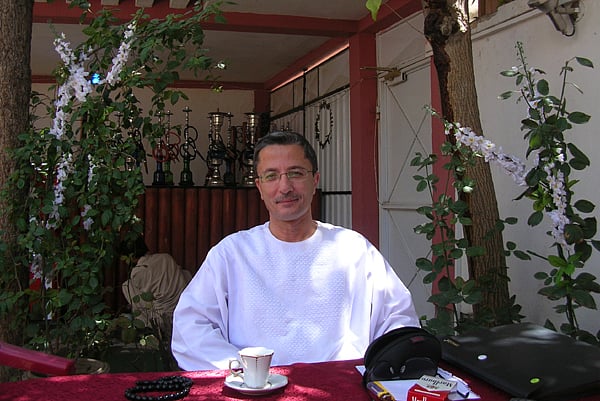
The attack is the latest in the escalating violence that has transformed the city in many ways since I first travelled there in 2006. That spring marked the year when things began to shift in Kabul, though it was too soon to tell which way the city would go. Weekend evenings amongst the large number of young expats I met in the city were spent hurtling through Kabul's dark streets, empty save for a few checkposts and trucks rolling through to other cities. There was always a new restaurant that opened every week, parties that lasted through night curfews and only dispersed at sunrise, revellers returning with the worshippers walking home from the Fajr (pre-dawn) prayers. There was much that was disturbing about this circle of privilege in a ruined city. As the violence got closer and more brutal over the next few years, the charmed world retreated behind higher walls and sandbags, deepening the chasm between the 'Kabubble', as it came to be called derisively, and Kabul, between those who came to rebuild the country and its residents. But inside this difficult mix there were also people who had made Kabul home, who were committed to finding ways to live there meaningfully and respectfully, and have fun doing it. There were people of mixed lineages, different agendas, different styles of functioning, Afghans who had been away and returned, and kharejis or expats of varying experience in Afghanistan. This aspect of Kabul was part of its charm, part of what made it such an addictive place, what compelled so many of us to return again and again. Kamal Hamade, the owner of Taverna, was one such character in Kabul. He was not my friend, but he was a figure I was familiar with. When I visited Taverna, I would see him in a corner, usually sitting with friends and regulars, talking about the war in Lebanon, the war in Afghanistan.
It is not difficult to combine a critique of the 'Kabubble' and the pitfalls of the international intervention with sadness at the attack on a restaurant and the massacre of civilians. And it is difficult not to feel personal grief at the tearing apart of a Kabul institution, even if an elite one, a place that kept its door mostly open to Afghans and expats alike through mounting levels of security requirements and government decrees. Considering the number of restaurants and clubs that routinely practiced a genteel discrimination towards non-American/European guests in the strange circles of post-2001 Kabul, this is more significant than it sounds. On my last visit in early 2013, a friend insisted that we eat at Taverna rather than the other Lebanese restaurant in town. Kamal will look after you if anything goes wrong, he said. He was right. The security system Hamade had talked about so often to his friends failed to keep out the attackers that fatal Friday night. But it could have saved the lives of many of his kitchen staff. Piecing together what happened from news reports, it appears that Hamade was in the kitchen when the militants broke through. He directed his staff to the roof, from where they escaped to a neighbouring home. Then he grabbed his gun and ran towards the sound of the gunshots.