
The partition of India was one of the 20th century's most tragically audacious experiments in social engineering, one that denied millennia of history at the stroke of a pen. Though Partition has been the subject of considerable research, the focus has generally been its study as either a macro-political event, or as a cultural (and personal) disaster. Little work has been done on the individuals, communities and regions that straddle the artificially created borders.
If you take the Northeast of India as a unit, then fully 98 percent of its frontiers are international borders, with the remaining two percent comprising the Chicken's Neck corridor near Siliguri in West Bengal. The international boundaries of the northeastern region all encompass communities that continue across into neighbouring countries, including Bangladesh, Bhutan, Burma and Tibet/China. These divided communities, as elsewhere in the region, share long histories of kindred language, ethnicity, culture and economic interdependence.
The hill state of Meghalaya is bound on one side by Assam and on the other by a 423 km border along what are today the Sylhet plains of Bangladesh. Colonial records are rife with reference to the commerce that took place between the hill and plain. One report noted in 1841 that, "A considerable trade in cotton, iron ore, wax, ivory, betel leaf and cloths, is carried on between the plains and the hills." The 1879 Statistical Account of Assam similarly found: "the external commerce of the Khasi and Jaintia Hills is chiefly conducted on the southern boundary, through the district of Sylhet. The total value is more considerable than might be expected, owing to the fact that these Hills practically possess the monopoly of supplying Bengal with lime, potatoes and oranges."
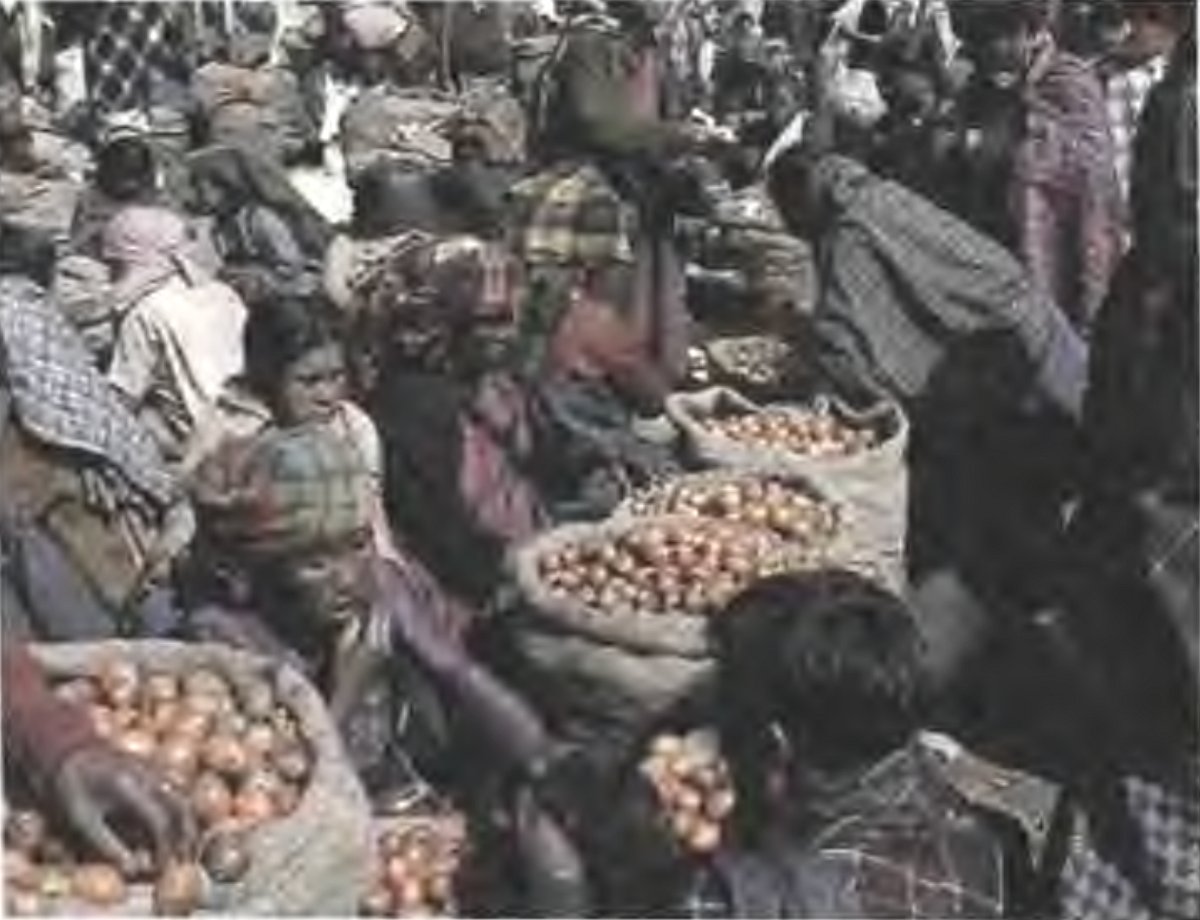
The hill folks met the plains people in the haat markets, where the trade was brisk. During 1876, it was estimated that total imports to the Khasi and Jaintia Hills were worth more than Rs 1.5 million. Rice was the major commodity, followed by fish products and textiles, as well as salt, tobacco, tea and coffee, brassware, liquor and the like. Total exports from the area were around Rs 1.6 million, particularly potatoes, limestone, cotton, betel and oranges.