
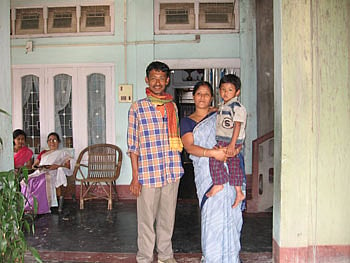
Usually, legends have a larger-than-life aura around them. They are masters of all they survey. While this may be the general trajectory, it does not explain how legends are born (and killed) in small towns in far-off places like Assam. Nilikesh Gogoi was a coal trader, a poet, a farmer, a collectivist, an oral historian and a man who resolved conflicts that arose between hill people and authorities. He was, in short, a local legend.
On 23 January 2007, Nilikesh and his two of his business associates were returning from a trip to the hills that border Gelekey in upper Assam. On the way, they overtook a slow-moving jeep manned by Central Industrial Security Force (CISF) personnel. Just when they were about to clear the vehicle in front on them, they were shot at. Nilikesh Gogoi and his pillion rider, Bholu Gogoi, died instantly, but their companion, Arup Saikia, survived the shooting. The fact that the CISF troops felt empowered enough to take these lives in this manner – and expected to get away with it – is a statement about the tragedies that unfold under the Government of India's current security policy for the Northeast.
Nilikesh Gogoi was the undisputed scamp and pixie-king of the Assam-Naga foothills. His universe stretched from Sibsagar town to the villages of Anakhi Imsen – not a very large tract of land, but stable enough to be a storehouse of history, myths and folklore. He crisscrossed the winding Pioneer Road, whizzed across the Lahdoigarh Line, and stumbled around as though borders made not an ounce of difference. Truth be told, he was not too convinced by modern maps and surveying techniques. Over several shots of rum, he would reel off names of villages and towns that were the domain of the Naga people in the olden days. At times like this, his conversations – like his wonderful imagination – would be free from chronological and political fetters. The past, with its myths and immense possibilities of romance, was what could happen tomorrow. Spouting such sentiments, he was irresistible.
Rum and tales
One day, not so long ago, Nilikesh strapped to his back a rucksack belonging to this writer's partner. He then proceeded to take her up a treacherous mountain track to meet with her fellow Naga people, who lived along the frontiers of a plantation complex. He explained to her that he needed her rucksack because he was carrying with him something very important – a jug of rum, along with stories about how the planters came to the area during the 19th century, cut the forests to make tea chests, and pushed the Nagas further from the valley where they would come to trade. These stories grew bigger and more real as he narrated how the Lahdoigarh Line sequestered the hill people, and how planters brought in troops to secure their precious investments.