
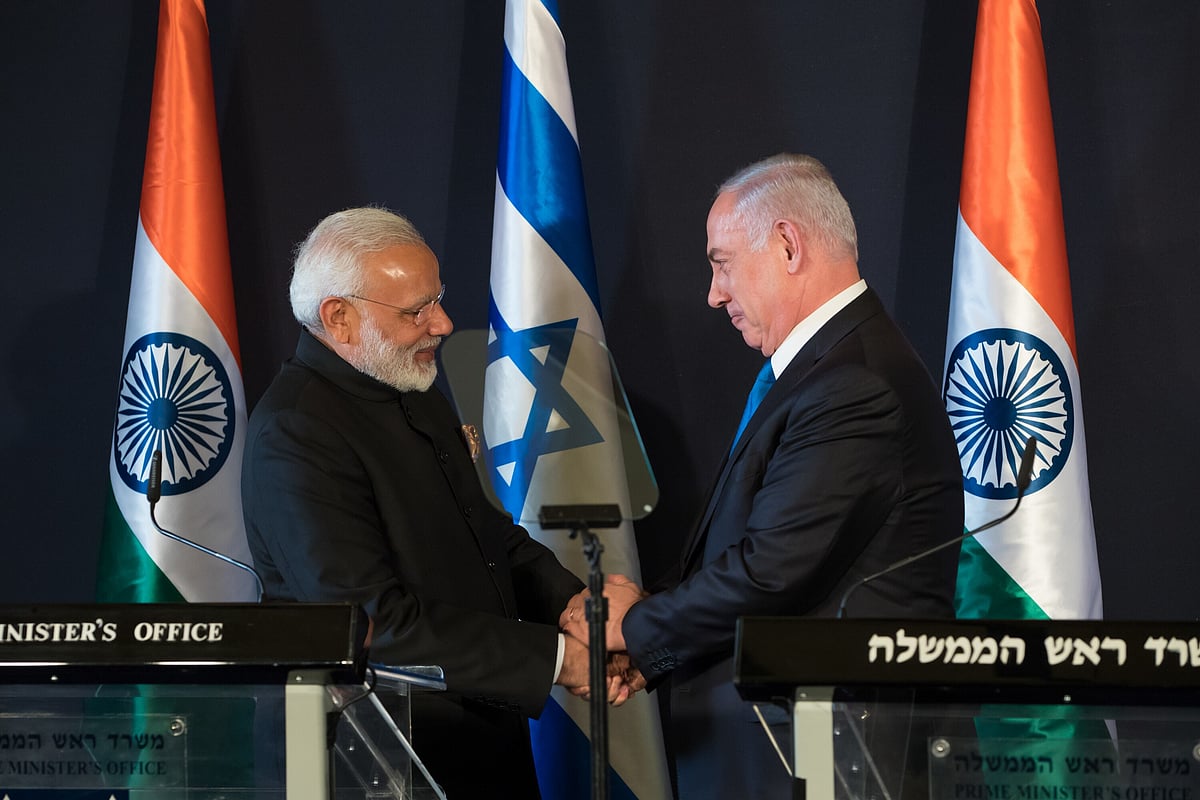
Two post-partition democratic states, both products of British colonialism. Each featuring within their territories sizeable Muslim minority populations, which are frequently depicted by majoritarian forces as "the enemy". Both ruled by right-wing governments that deploy surveillance technology with impunity and brazenly seek to undermine democratic institutions that might otherwise act as a check on their power. And both currently dominated by social and political movements that assert claims of civilisational superiority, predicated on the idea that this sets them apart from "barbaric" neighbours.
As many have observed, the India and Israel of today bear striking similarities – a fact reflected and amplified by the wholehearted recent embrace of Israel by Indian Hindu nationalists. Ever since Israel began bombing Gaza and invaded the territory in response to the brutal Hamas attack on its soil on 7 October, Hindu nationalists have been out in force online – and sometimes in person – advertising their support for and solidarity with Israel.
https://twitter.com/HindutvaWatchIn/status/1715942044969914543
At least some of that online support comes from Islamophobic Indians simply attempting to take advantage of a conflict elsewhere to push their own communal domestic agenda. But much of the support indicates some deeper current of genuine affinity with Israel.