
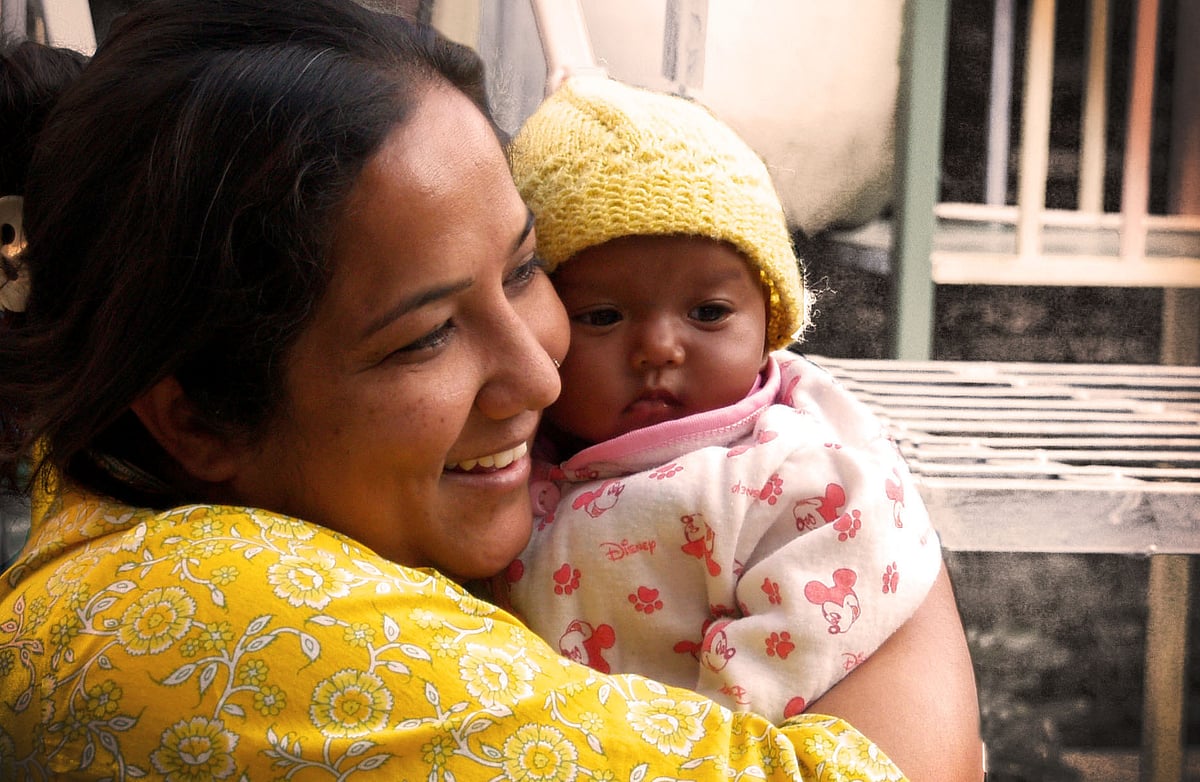
Pushpa Basnet from Nepal was awarded the 2012 CNN Hero of the Year title – an award given for outstanding charitable works. Basnet is the founder and president of the Early Childhood Development Center and the Butterfly Home, two non-profit organisations based in Kathmandu that care for children facing imprisonment when one or both parents are incarcerated. She spoke to Kristen Zipperer just before she left for the awards ceremony in the US.
Please tell us a little about your background.
In college, I went for my Bachelor's in social work, because then I wouldn't have to study maths, and we just had to be in the classroom three days a week, with two days of fieldwork. I had no idea what I would do with it. My parents wanted me to graduate, get my certificate and everything, and they assumed that I would get into their business. My dad and my mom are in the industrial business. I had always thought I would do business because I had seen my parents doing business, and I thought that you don't have to do much of anything, just sit around the office and travel. But things change.
Can you describe the first time that you went into a jail? What was that first day like?
Originally, I knew in the prison there were children. I did my School Leaving Certificate from Kathmandu, but I failed, so I had a one year gap at that time. I did volunteer work in the Bal Mandir orphanage. It was at this time that I began to encounter myself, to consider what is life? It was this experience that conditioned me for the jail. The first time when I went to the jail I knew that it was a different community, and somewhere down deep in my heart I was really scared. What people in our society think is that people who are in jail are not good people. That's how our parents brought us up. They say, 'If you do bad, you go to jail!' But when I went for the first time to the prison, it seemed like a nice community. There were people walking around, combing each other's hair. My friends and I were with the police guard walking around. Then I saw a woman who was washing her clothes, and next to her there was a small baby playing. Here in our culture, if you see anyone's child, you just go and grab it. So I took the baby. One of the security men said, 'Don't hold her,' and I said, 'Why, what is the reason?' And he responded that the woman had killed her husband and she was really crazy. I gave the baby back. But, when I put the baby down, the baby tugged on my shawl, and I thought, she's calling me. I felt that I should do something. And she gave me a big smile.
What happened next?
After that I went back to my family and told them that I wanted to do something for the children in prison, and my parents said no. They said I couldn't do anything because I was 20 years old and I had to focus on taking care of myself. Yet my parents knew that from the time I was small, I was a very stubborn person. So after a week, I went back to the prison to see the baby. The mother had just killed her husband, and she was really depressed. I went to talk to the jailer and I told him that I wanted to do something for the baby. He said, 'Pushpa, if you want to do something, you should come up with something new. You going inside the prison, there's nothing new about it.' He encouraged me to come up with a different idea, like a programme to get children out of the prison. The jailor was trying to [get rid of] me, but actually he was showing me the way. But I didn't know how to start an organisation, so I got a couple of friends together and we collected around NPR 70,000 from family and friends. Within a month, I had finished registering the organisation.