
The scholarship on the dispute regarding Kashmir has of late become, as noted by the Southasian scholar Chitralekha Zutshi, "a veritable industry". For forty years, from the 1950s to 1990s, much of this industry concentrated on Indian and Pakistani claims on Kashmir. Since then, scholars from a range of social science disciplines have joined historians to focus on 'people-centred' narratives – a documentation of daily life in Kashmir. This has resulted in a new strand of literature that seeks to transcend the peculiarities of the region's geopolitics by going beyond the bloodshed and the bitterness generated by the region's unrest over the years. These works employ an array of unorthodox sources in an attempt to break open the dynamics that have underpinned Kashmir for centuries. Taken together with the increasing production of fiction, poetry and cinema, the trend represents a turn away from the concentration on political and territorial aspects of the modern dispute per se, and towards the myths, memories and histories associated with the region.
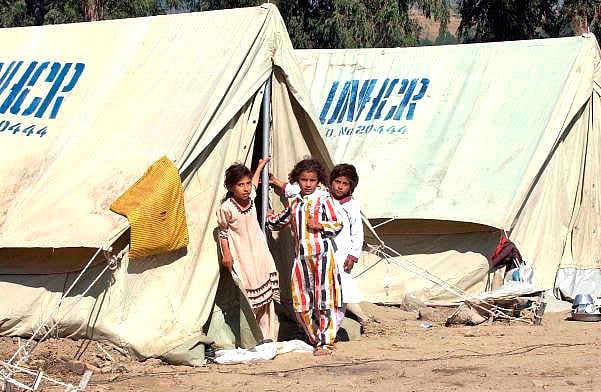
Nevertheless, until recently, there remained a curious gap in this scholarly sweep: a comparative lack of literature on Pakistan-administered Kashmir. In a welcome development, a new book, Body of Victim, Body of Warrior by Cabeiri deBergh Robinson, has attempted to fill this gap. The book is a fascinating work that makes use of these innovative new ways of understanding the Kashmiri narrative. It traverses a wide range of conceptual planes, drawing upon a wealth of recent scholarship on Islamic philosophy, human rights, Partition, refugees, and contemporary jihad to explore the intriguing transformation, starting in the 1990s, of many Kashmiri Muslims from refugees to religious warriors. In examining this journey, Robinson ultimately comes to privilege personal relationships and political context over traditional Islamist networks and religious institutions as the key features in the creation, mediation and sustenance of jihad in Kashmir. Her book is an outcome of many years of extensive participant observation, life-history interviews and archival research conducted in Kashmiri refugee communities in Muzaffarabad, Mirpur, Murree, Rawalpindi, Abbottabad and Mansehra between 1999 and 2008. She utilises government refugee records, jihadist pamphlets, memoirs, lectures and songs as sources to compliment her ethnographic research. In doing this, she skilfully interweaves historic narrative with ethnographic research to create a unique and valuable look into the daily lives and modern condition of those living in what Pakistan calls 'Azad Kashmir'.
As is often the case with works covering contested historical grounds, Robinson is careful to clarify the intended purposes of her book. She is not focussed on the political leadership or the political goals of the militant movements. She does not want to argue that the Muslim refugees in Azad Kashmir are the only victims of violence, or that they have not perpetrated violence upon others. Her main objective, she explains, is to question the role that Islam plays in processes of social and political transformation. As such, she distinguishes herself from existing as well as emerging studies on Azad Kashmir that largely examine the region through the lens of the interests, intentions, influence and involvement of Pakistan.
Interestingly, Robinson says in the introduction to her book that she "did not set out to study militants at all" but "refugees and victims of the Kashmir conflict". She began her research convinced that peacemaking in Kashmir hinged on an understanding of the ways in which violence had been etched into the political culture of Jammu and Kashmir, likely an outcome of her background as a professional humanitarian worker in 1995-96 among men detained and interrogated for anti-Indian insurgency in India-administered Kashmir. However, in doing this, she came to realise that it was impossible to work among refugees without engaging with militants. After all, "The long history of conflict in Kashmir has made many victims and many perpetrators, and many who are both victims and perpetrators." Running through the book, then, is this 'doubleness'. Robinson asks, who is a muhajir (refugee), and who a mujahid (warrior)?