
“ALL OUT STRUGGLE.”
That was the headline Matiur Rahman printed on 25 March 1971. In those days, Mati, who now runs Bangladesh’s most successful daily newspaper, Prothom Alo, edited Ekota, the official organ of the Communist Party of East Pakistan. The Pakistani junta was gearing up for a brutal crackdown after negotiations had broken down with the Bengali leader Mujibur Rahman. By 25 March, it was clear things would end violently. Mati sent the paper to the printers and went home along streets in which people were “arming themselves with lathis [sticks] to fight the Pakistan army,” he recalled. In the end, the edition was never distributed. That night, the Pakistan army attacked Dhaka and Mati left town to join the Bengali rebels. It was the beginning of a nine-month war that resulted in the birth of Bangladesh.
In the decades since, Mati would be harassed by successive military and civilian regimes in independent Bangladesh. His papers’ distribution would be blocked by political party muscle; their journalists would be arrested; their funding would be threatened. In the end, the editor himself was declared an “enemy of the people” by Mujib’s daughter, the long-standing Bangladeshi prime minister Sheikh Hasina, who was deposed in the Monsoon Revolution of 2024.
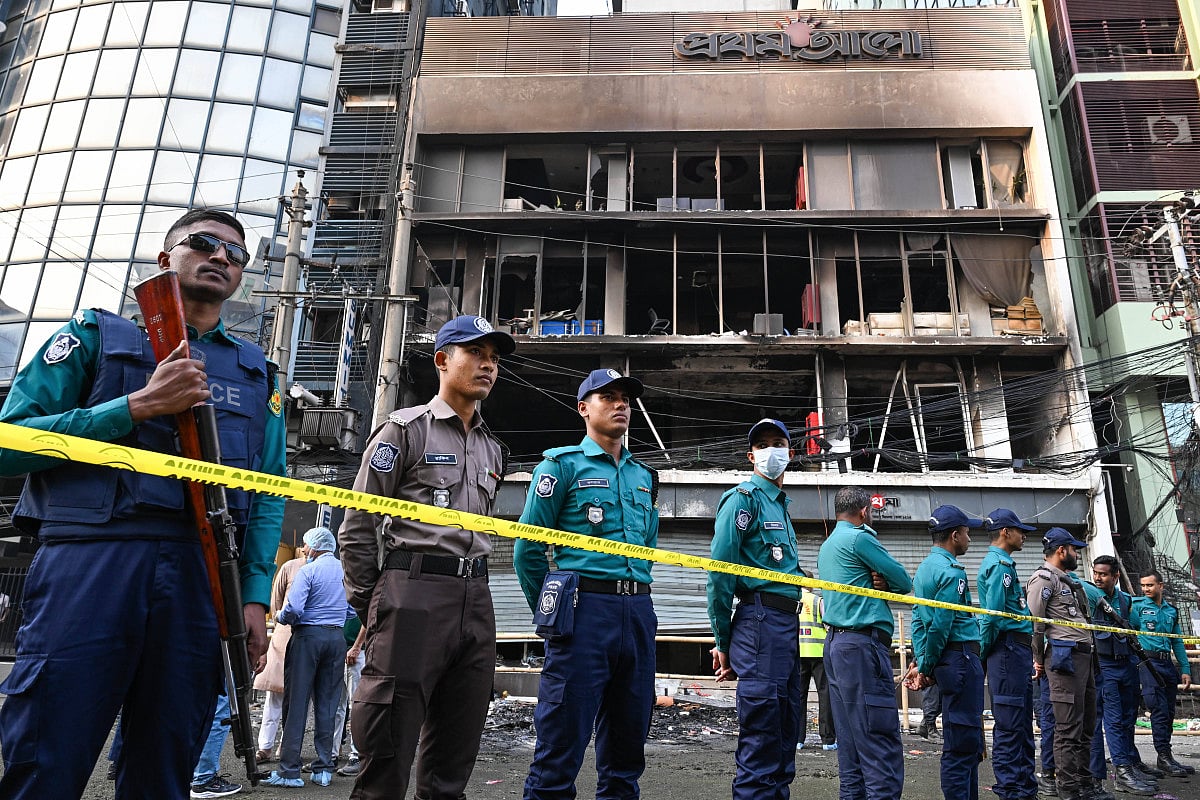
Through it all, these journalists managed to provide a full diet of news to an audience that, by 2024, numbered half a million readers in print and another one and a half million online every day. As an increasingly authoritarian Hasina hollowed out state and society, the Bangla-language Prothom Alo and its sister paper, the English-language Daily Star, tried to show the public what a free press looks like. They didn’t always succeed – Bangladeshis across the political spectrum nurse many and varied grievances against the two newspapers – but one thing is clear: without them and their thousands of employees, Bangladesh would be an even darker and more dangerous place than it is today. We caught a glimpse of that alternative reality this month, when mobs set fire to the two papers’ offices, trapping dozens of journalists inside.