
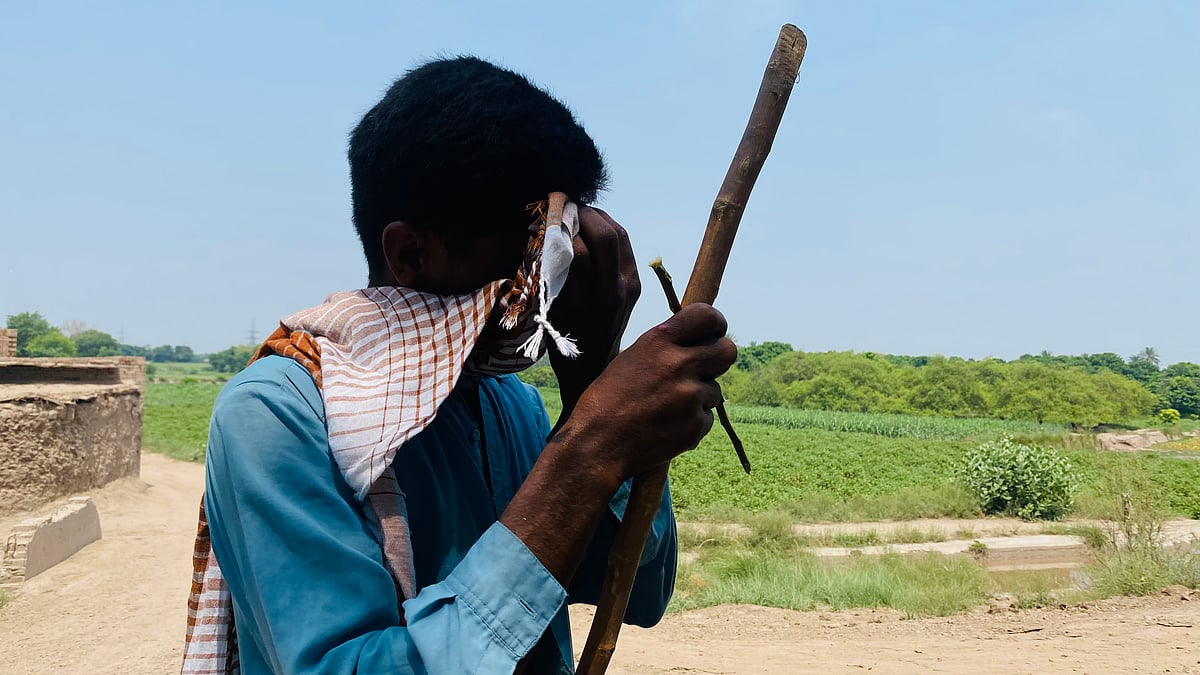
Allah Wasaai, a 52-year-old farmer from Rangpur in Pakistan’s Punjab province, has experienced the perils of climate change personally. In 2022, she and her family were forced to abandon their house, located near the Chenab River in the city of Multan, after catastrophic floods destroyed everything they owned. Now they have relocated to Muzaffargarh, and when I spoke to them in July were dealing with excessive heat, an abrupt contrast to the monsoon rains they would usually expect at this time of the year.
“The weather patterns have changed severely,” Wasaai said. “Either we confront severe rains that drown our homes, or we suffer from a lack of rainfall, impacting our life and work. We never live a normal life.”
Anthropogenic global warming is making heatwaves hotter, more frequent and longer lasting, and causing drastic disruptions in weather patterns as well as natural disasters. Although Pakistan produces less than one percent of global greenhouse gas emissions, it is among the countries most vulnerable to climate change, according to the Global Climate Risk Index of 2021. A report by the Asian Development Bank shows that temperatures in Pakistan are expected to rise by an average of three to five degrees Celsius by the end of the century, potentially even four to six degrees if global carbon emissions keep rising. The country is also expected to face increased variability of river flows due to inconsistent precipitation and accelerated melting of glaciers.
Pakistani Punjab has been severely impacted by climate-related disasters in recent years. The city of Multan in particular – already reputed to be one of the hottest places in the world – has suffered extraordinary heatwaves and irregular rainfall. The summer of 2022 brought extreme heat across Punjab, with temperatures rising above 45 degrees Celsius in numerous districts, endangering the lives of millions. The incidence of heat-related illnesses, respiratory issues and water-borne diseases also rose, while agriculture, livestock and small businesses suffered. Then, unusually heavy monsoon rains caused severe flooding, wreaking havoc on infrastructure and agriculture while devastating millions of lives and livelihoods.