
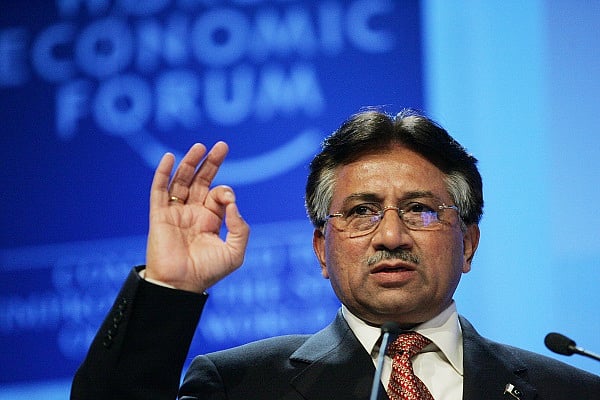
One evening in November 2013, a delegation of ex-associates came to call on Pakistan's former military ruler Pervez Musharraf at his heavily-guarded farmhouse on the outskirts of Islamabad. It was a last-ditch attempt by one sitting and one retired minister to warn the former dictator, who had been under house arrest after returning to the country in March, that it was time to leave.
Musharraf was said to be quiet, and asked only one question repeatedly: "Why should I leave?" There were no answers, just silence. The former commando seemed to sense he would eventually be a free man after months of legal tango. His intuition proved correct – at least temporarily. By the next day he had been granted bail in all of the four high-profile legal cases that had hounded him since his return to Pakistan, including the cases related to his alleged involvement in the assassination of former Prime Minister Benazir Bhutto, and the deaths of Baloch nationalist Akbar Bugti and Islamist cleric Abdur Rasheed Ghazi.
But his freedom was to be short-lived. The Pakistani government would soon accuse him of having subverted the constitution in his 2007 imposition of emergency rule, a charge punishable by death or life imprisonment, and one which Musharraf and his camp have vehemently denied.
Not an ordinary citizen
A photo of the former general, relaxing with an aide and his dogs and celebrating his liberation, was released hours before Interior Minister Chaudhry Nisar Ali Khan would announce a special tribunal to try Musharraf for high treason according to Article Six of the Pakistani Constitution, making him the first ex-dictator to face such a charge. This article stipulates that any person who, by force or any other unconstitutional act, tries to subvert, suspend or conspire against the Constitution can be punished by death or life imprisonment.