
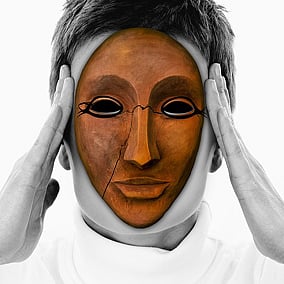
No one can say exactly when my mother's heart became her head.
I do not know which ages faster – the head or the heart. I only knew about legs; responding to gravity made them older than every other part of the body. And my mother's legs had stopped being legs a long time before her heart became her head.
When I was young, not when we were children but when, as my mother likes to say "we were her children", signifying a time before we began to belong to other people, I ignored her pains as something mysterious. Pain was rare in childhood and it seemed like a foreign thing when my mother spoke about it or sometimes held the soles of her feet and wept silent tears. I felt helpless but also distant – this thing called pain is like god; one needs to experience it to believe in it. I watched it as an outsider and it was invisible. This quality it shares with ghosts. I was scared of ghosts; I still am. How could I have protected my mother when I feared them myself?
I also did not like my mother very much when I was a child. She seemed to be a distant figure, her life directed by invisible things like pain and love. She invoked the latter in every single conversation until it began to resemble the "Rupees" plonked before a number to give it material value – we were to do everything she instructed us to do because of the love she had for us. I began to detest the burden of that love. Glue is always difficult to peel away from, and when I wanted to move away from the stickiness of that love, it left its serrated half-glued edges on me. I didn't realise it then that when my mother wanted to move away from pain, it had the same effect on her.