
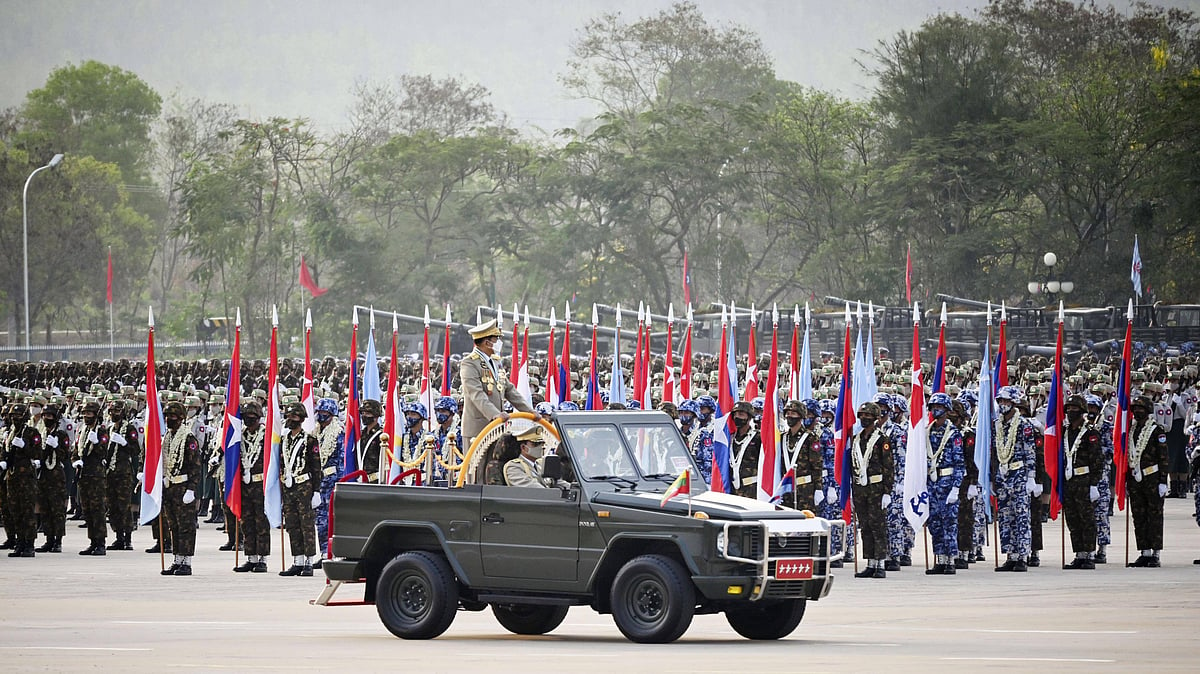
On 15 December, at a press conference in Yangon, Myanmar’s deputy minister for information, Major General Zaw Min Tun, said that the country’s upcoming election was intended for the country’s citizens and not a global audience. The junta was unconcerned about international recognition, he said.
Zaw Min Tun’s statement came soon after New Zealand parliamentarians described Myanmar’s impending election as “not a general election” but rather “a general’s election.” The remark captures precisely the nature and intent of the electoral process set to kick off on 28 December and running through to 25 January, designed not to restore the democracy smothered by Myanmar’s 2021 military coup but rather to entrench military control. Multiple intergovernmental bodies such as the European Union and the Association of Southeast Asian Nations have publicly signalled that they will not recognise the election, calling it neither free nor credible and refusing to engage with it as a legitimate democratic process.
Since seizing power in February 2021, the military has issued seven six-month extensions of a nationwide state of emergency under junta authority, with the last expiring on 31 July 2025. Hours after the lapse, Myanmar’s state television announced the reimposition of martial law and a state of emergency in nine of the country’s 14 states, citing concerns about armed violence. Legal analysts have pointed out that the initial declaration of the state of emergency failed to meet the procedural requirements of Myanmar’s 2008 constitution, which was drafted and imposed by the military. The coup was triggered by unsubstantiated allegations of fraud in the 2020 general election, which the National League for Democracy (NLD) had won decisively. While the public has consistently voted for the NLD whenever free elections have been held, the military has repeatedly wrested power from them under varied pretexts.
The upcoming election, orchestrated by the generals, is an attempt to legitimise the military’s grip on power. A closer look, however, reveals a repressive legal framework that entrenches military control and eliminates political opposition, making the whole process a sham. The election will not be truly representative, with 56 townships already excluded from the vote as large swathes of territory remain under the control of anti-junta armed groups resisting military rule. Maintaining the status quo of military dominance will also allow lawlessness to persist – particularly in cross-border online fraud and drug-trafficking operations – victimising both the people of Myanmar and others around the world.