
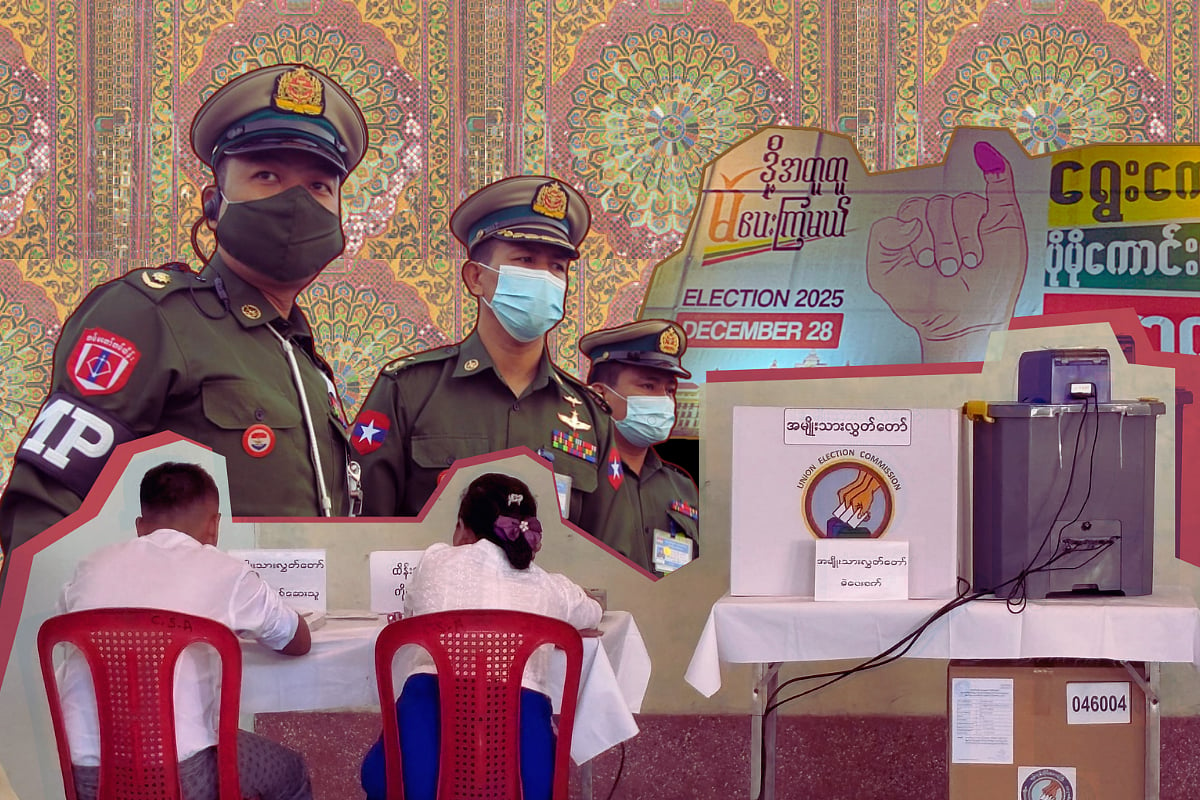
WE FOUND THE NEIGHBOURHOOD sleeping under pale streetlamps and a half moon. A lone old man shuffled past on a 5am errand and pointed the way to the school, where voting was soon to begin.
Inside the dark compound, my Burmese colleague and I found a brightly lit classroom where polling staff were arranging tables, cardboard booths and electronic voting machines. They were mostly female teachers, joined by other junior government staff. When dawn came, so did two soldiers and an armed policeman, taking chairs 50 metres away.
The polling staff made nervous jokes as they primed the voting machines, whose heft and chunky buttons recalled a long-dead gadget from the 1970s. They then fastened seals on adjoining plastic boxes, where printed ballot receipts were to tumble unseen, and prepared pots of indelible ink to mark the fingers of voters.
The machines were new, and had been introduced with little transparency, but the seals and inkpots recalled similar safeguarding rituals from previous votes in 2015 and 2020. These elections were democratic milestones for Myanmar, resulting in landslide wins for the National League for Democracy (NLD) led by the dissident icon Aung San Suu Kyi. But here the rituals were in service of something entirely different. This election, which began on 28 December, with two subsequent phases of voting on 11 and 25 January, is at heart a coronation.