
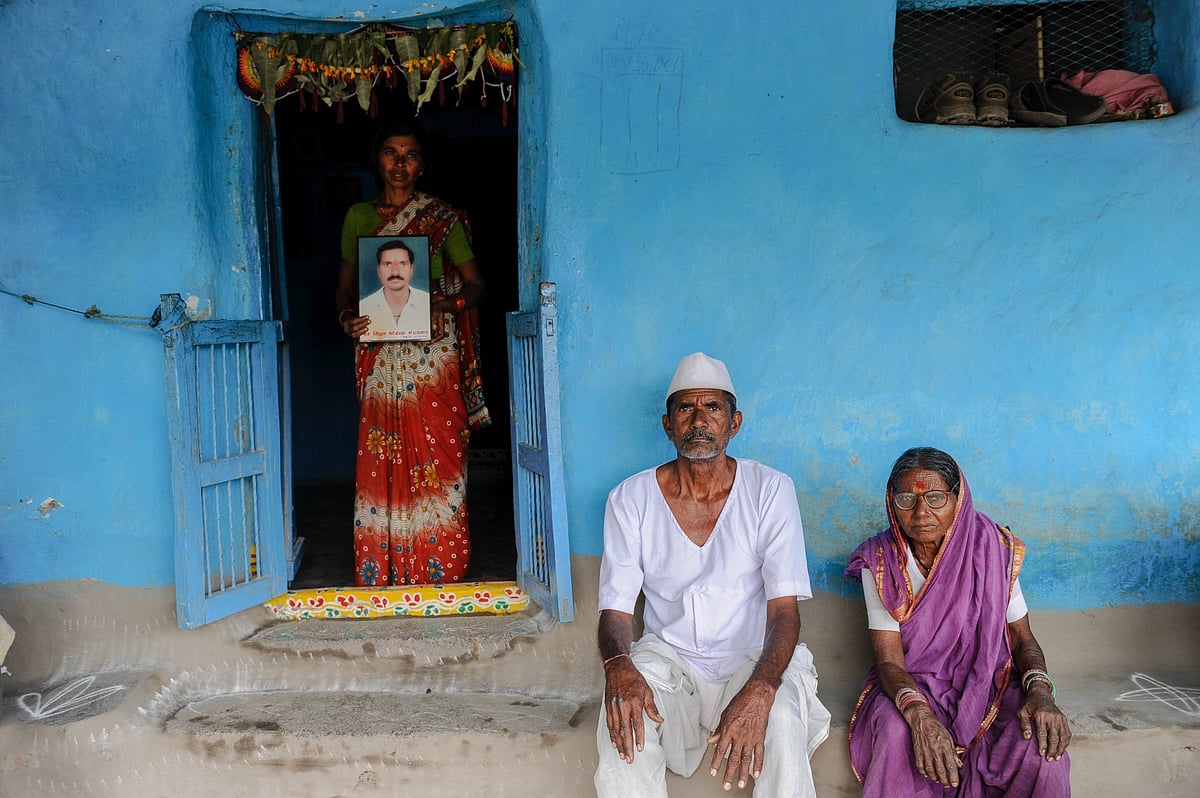
Two images have dominated popular representations of agrarian India. The first is of the over 350,000 farmers who have died by suicide over the last three decades, after being buried in debt and facing successive crop failures. More recently, a rather different image has acquired global prominence: thousands of farmers camped out on roads around India's national capital, fists raised in the air, determined in their defiance of proposed agricultural marketing laws which were believed to facilitate the expansion of corporate agri-business.
These images seem to be radically different, framing the contemporary Indian farmer as a suffering victim on the one hand and an agent of resistance on the other. Yet, the thread that unites these distinct moments – mass death and mass movement – is the same agrarian crisis that pervades the Indian countryside. As a widely circulated social and political category, "farmer suicides" can be read as the tragic culmination of this grave situation. The vociferous – and successful – protests by farmers between 2020 and 2021 were similarly a response to emerging threats to their livelihoods from big capital. While not an immediately apparent manifestation of distress, these protests revealed the continued significance and fragility of rural livelihoods.
In the face of these spectacular moments, it is easy to bypass the more mundane experiences of distress as well as the everyday modes of survival and striving through which cultivators forge a future off the land. Take, for instance, the case of a cultivator in his late twenties, whom I met in western Madhya Pradesh. He holds a Master's degree from a local university and has applied to a number of government jobs with no success thus far. His father has little interest in farming, so he and his younger brother are responsible for cultivating their fields. As a Balai farmer, a member of the Scheduled Castes, he is perhaps exceptional in that his family owns a substantial amount of land. However, much of this land is rocky and arid. An expensive wedding and successively poor harvests have left his household in considerable debt. Nonetheless, he persists in his endeavour to build a better life – planting high-value onions and garlic, planning to drill another well. "After all," he said, "this land is all I have."
This farmer's experience can certainly be placed within this broad framework of distress – encompassing a range of intersecting economic, social and ecological processes ranging from high levels of indebtedness, rising input costs and volatile prices to falling groundwater levels and extreme weather. Yet his life – and that of millions of farmers across India – exceeds the bounds of this narrative that casts the farmer as either victim or rebel.